



The Benefits of Digital Safety Reporting in Construction
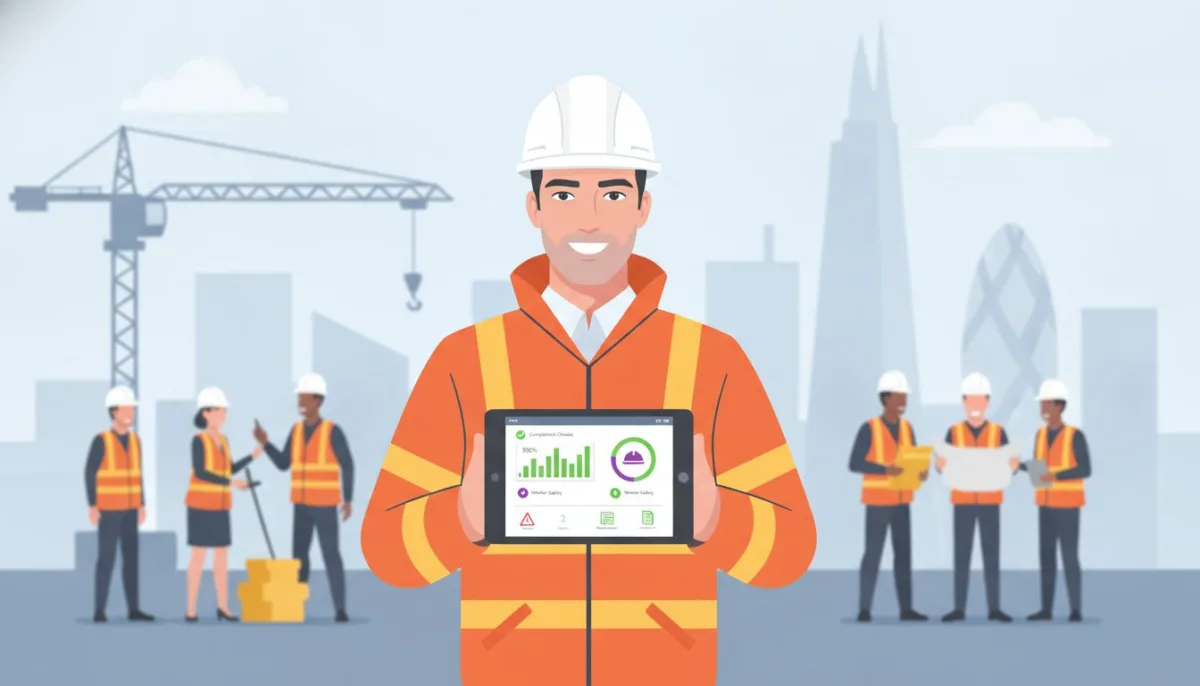
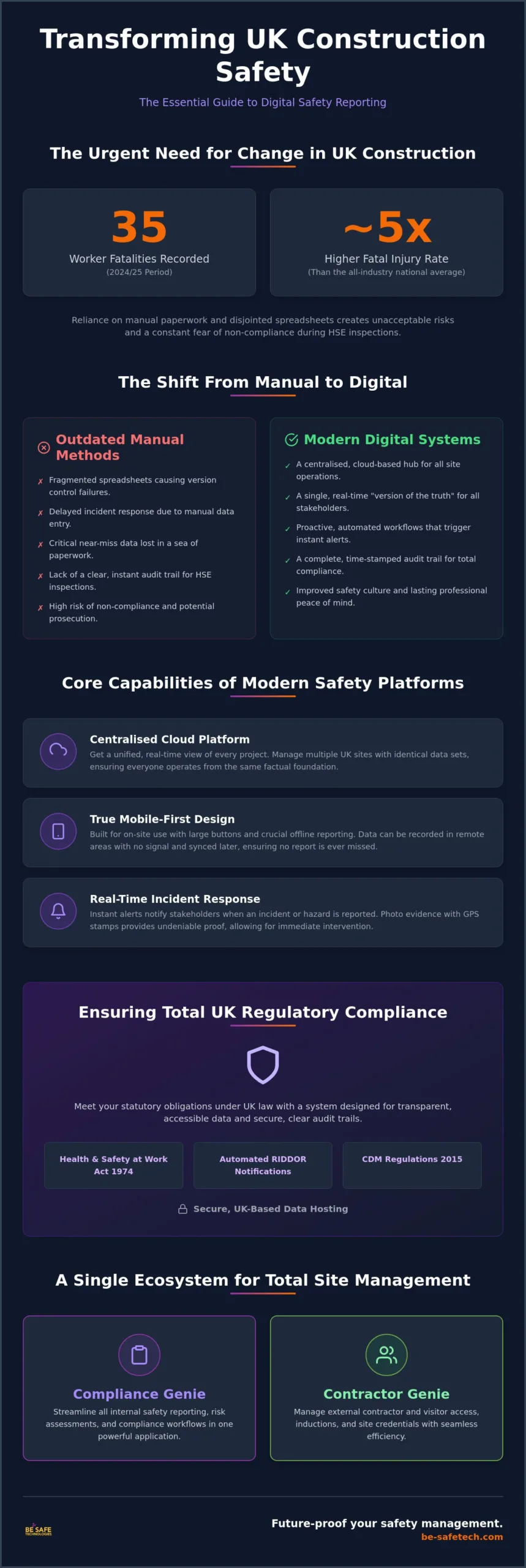
In the 2024/25 period, the UK construction sector recorded 35 worker fatalities, representing 28% of all workplace deaths across the country. Since the fatal injury rate in construction is nearly five times the national average, the pressure to implement reliable digital safety reporting software has never been more urgent. You likely feel the weight of this responsibility whilst managing manual paperwork and disjointed spreadsheets, which often leads to a lack of real-time visibility and a fear of non-compliance during HSE inspections.
Transitioning to a mobile-first system allows you to replace cumbersome paper trails with streamlined workflows that prioritise both efficiency and worker protection. This article explores how to ensure total HSE compliance and data security whilst moving toward a more centralised reporting structure. We will examine how automated RIDDOR notifications and improved data oversight help build a stronger safety culture amongst your workforce and provide lasting professional peace of mind.
Key Takeaways
- Learn how modern digital safety reporting software transforms reactive paperwork into a proactive, centralised hub for all site operations.
- Identify the operational risks and hidden costs of using spreadsheets whilst discovering why cloud infrastructure is vital for oversight across multiple UK sites.
- Understand how to maintain total compliance with the Health and Safety at Work Act 1974 through secure, UK-based data hosting.
- Explore the benefits of automated workflows that trigger immediate notifications to stakeholders to ensure RIDDOR requirements are always met.
- See how tools like Compliance Genie and Contractor Genie streamline internal reporting and external visitor management within a single ecosystem.
What is Digital Safety Reporting Software and Why is it Essential?
Effective digital safety reporting software acts as a centralised cloud-based platform designed to capture, store, and analyse safety-related data in real-time. It moves safety management away from reactive filing systems and towards proactive digital oversight. By establishing a single version of the truth, directors and site managers can access identical data sets simultaneously, ensuring that everyone operates from the same factual foundation. This transparency is vital for maintaining construction site safety standards across multiple UK locations. As we move through 2026, the demand for faster, more transparent reporting has increased significantly, making these platforms a necessity for modern site operations.
The Transition from Paper and Excel to Digital
Relying on fragmented Excel spreadsheets presents substantial hidden risks that many firms overlook until an incident occurs. Version control often fails, leaving teams working from outdated information that doesn’t reflect current site conditions or the latest risk assessments. Manual systems naturally lead to delayed incident response times because data must be physically transported or manually re-entered into a master log. This delay creates the “lost report” phenomenon, where critical near-miss data vanishes amongst a sea of paperwork. In the UK, the inability to produce a clear audit trail during an inspection carries heavy legal implications; it can result in immediate Improvement Notices or even prosecution under the Health and Safety at Work Act 1974.
Why UK Businesses are Digitising Safety Reporting in 2026
The Health and Safety Executive (HSE) continues to increase pressure on firms to provide transparent, accessible data. With the Building Safety Regulator (BSR) now operating as an independent body as of January 2026, the scrutiny on residential projects and high-rise developments has intensified. Digital tools foster a positive safety culture by making it easier for frontline workers to report hazards without the friction of physical forms. Adopting modern safety management software has become a standard business practice for those looking to protect their workforce and their reputation. This transition ensures that safety is treated as a core business function rather than a secondary administrative task. It gives you total control over your data whilst reducing the stress of complex regulatory environments.
Core Capabilities of Modern Safety Reporting Platforms
Cloud-based infrastructure serves as the essential backbone of effective digital safety reporting software, providing a unified view of every project in your portfolio. Instead of waiting for weekly site visits or physical paperwork to arrive at the head office, you see data as it is captured. This transition allows you to manage multiple UK sites with the same level of scrutiny you would apply to a single project. Automated workflows ensure that when a hazard is reported, the relevant stakeholders receive immediate notifications. This proactive approach helps businesses meet their statutory obligations under the Construction (Design and Management) Regulations 2015 whilst maintaining a clear audit trail for every action taken on-site.
Mobile-First vs Mobile-Responsive Design
Many platforms claim to be mobile-friendly, but they are often just mobile-responsive versions of desktop software. These systems frequently fail in the field because they are clunky to navigate on a small screen or require a constant high-speed data connection to function. True mobile-first design is built specifically for handheld use on-site. It prioritises large buttons for users wearing gloves, intuitive navigation for high-vis environments, and, crucially, offline reporting capabilities. This focus on field-ready usability is also central to operational platforms like Repair-CRM, which help businesses digitise their broader service workflows. For remote UK infrastructure projects or deep basement works where signal is non-existent, the ability to record data offline and sync it later is indispensable. It ensures that safety reporting remains a seamless part of the worker’s day rather than a technical frustration.
Real-Time Visibility and Incident Response
Instant alerts can prevent a near miss from escalating into a serious accident by allowing for immediate intervention. When a worker uploads photo evidence with a GPS stamp, the validity of the report is beyond question. This level of verified detail is essential for safety management for multi-site businesses, where directors need to maintain oversight without being physically present on every site. You can track corrective actions to completion in real-time, ensuring that no safety task is left unfinished or ignored. Customisable dashboards then turn this raw data into clear executive insights, giving you total control over your compliance status. If you are looking to upgrade your current processes, you might find it helpful to see how these tools work at Be-Safe Technologies Ltd.
Modern platforms also utilise GPS stamping to confirm exactly where and when a report was filed. This feature provides an extra layer of security and accountability, ensuring that inspections are actually taking place at the required locations. By combining these core capabilities, you create an ecosystem that supports your workers whilst protecting your business from the risks of incomplete or delayed safety data.
Comparing Manual Methods with Digital Reporting Systems
Choosing the right method for managing site records is a strategic decision that directly affects your firm’s bottom line. Paper systems rely on physical presence and manual transport, whilst spreadsheets offer a digital facade that lacks real-time connectivity. Neither can compete with dedicated digital safety reporting software, which provides a live, searchable environment for all compliance data. While physical folders are prone to damage and loss, digital logs offer an immutable audit trail that can be accessed in seconds during an unannounced inspection or a internal audit. This transition ensures that your safety data is an asset rather than an administrative burden.
Many businesses believe that spreadsheets are a cost-effective middle ground because they’re “free” with their office suite. In reality, they’re often more dangerous than paper because they provide a false sense of security. Broken formulas and version control issues mean you’re often looking at ghost data that doesn’t reflect site reality. The administrative burden of manually re-keying data from site notes into an Excel sheet is a significant drain on productivity that prevents your safety team from performing high-value risk assessments.
The Hidden Costs of Paper-Based Reporting
Managers often spend several hours every week chasing missing signatures or clarifying illegible handwriting on site permits. This time could be spent on active risk prevention rather than administrative archaeology. Physical storage also presents a liability; a single leak or fire in a site office can destroy years of mandatory records. Beyond the physical risks, paper systems make it almost impossible to perform long-term trend analysis. You can’t easily search a stack of paper to find every near-miss involving a specific piece of plant machinery over the last five years, which hinders your ability to prevent future accidents.
Overcoming the “Complexity” Objection
A common objection to digitisation is the perceived complexity for site workers. However, modern UI/UX design has made digital safety reporting software more intuitive than the complex, multi-page paper forms it replaces. These systems can be tailored to use your company’s specific terminology, making the transition feel like a natural evolution rather than a forced change. Successful adoption is also supported by diverse and inclusive training materials that reflect the multicultural reality of the UK construction workforce. If you’re concerned about the challenges of going digital, our guide on how to automate safety compliance and bust the myths of digital transformation addresses the most common misconceptions head-on. Even as global cities move toward advanced visual tools like 3D Site Safety Plans to manage risk, the first step for many UK firms is simply moving their core reporting into a reliable, user-friendly digital ecosystem.
Ensuring UK Regulatory Compliance and Data Security
Compliance isn’t just about avoiding fines; it’s about providing a safe environment where every worker is protected by a transparent system of record. High-quality digital safety reporting software facilitates adherence to the Health and Safety at Work Act 1974 by ensuring that every risk assessment, toolbox talk, and incident report is captured accurately. Digital signatures play a vital role here, as they provide a timestamped, legally binding record of accountability that physical paperwork simply cannot match. For UK public sector contractors, G-Cloud approval serves as a critical benchmark for software reliability, confirming that the platform meets stringent government standards for security and performance.
Choosing a provider with secure, UK-based data hosting is essential for maintaining the integrity of sensitive site records. It ensures that your data remains within the jurisdiction of UK law, simplifying your compliance journey and providing peace of mind to corporate stakeholders. This localised approach to data management is a key differentiator for firms that prioritise long-term reliability and legal certainty.
Meeting HSE and RIDDOR Requirements
Digital platforms significantly reduce the risk of non-compliance by automating the identification of RIDDOR-reportable incidents. Instead of relying on manual interpretation of complex regulations, the software flags specific event types that require mandatory reporting to the Health and Safety Executive. This automation creates an “inspection-ready” digital archive, allowing you to present comprehensive safety logs instantly during an unannounced HSE visit. Consistent reporting across all departments ensures that there are no gaps in your safety narrative, protecting the business from the legal repercussions of incomplete documentation. For firms still weighing up the transition, understanding how to automate safety compliance whilst overcoming common digital transformation concerns can make the decision significantly clearer.
The Critical Role of ISO 27001 and Data Security
ISO 27001 represents the international gold standard for information security management systems. It provides a framework for managing risks related to data security, ensuring that sensitive employee and site information remains confidential and available only to authorised personnel. You can learn more about selecting the right platform in our ISO 27001 compliant safety software guide. Encrypted data storage is a fundamental requirement for protecting your organisation against UK GDPR breaches, which can carry severe financial penalties and reputational damage. By centralising your records in a secure environment, you reduce the surface area for data leaks whilst maintaining total control over your compliance status.
If you are ready to secure your site data and streamline your compliance processes, book a demonstration with Be-Safe Technologies today.
Future-Proofing with Compliance Genie and Contractor Genie
Future-proofing your site operations requires more than just a digital version of a paper form; it demands a cohesive ecosystem that bridges the gap between your permanent staff and visiting contractors. Be-Safe Technologies provides this through two primary tools: Compliance Genie and Contractor Genie. Using an award-winning UK platform brings a sense of quiet confidence, knowing your digital safety reporting software is built to handle the unique pressures of the British construction industry. This integrated approach ensures that every person on your site, regardless of their employer, is governed by the same high standards of safety and accountability.
The transition to a digital-first environment is often met with hesitation regarding the learning curve for staff. However, by choosing a platform that is deeply rooted in practical UK site experience, you provide your team with tools that feel like a natural extension of their daily work. This reliability builds trust amongst your workforce, as they see safety management as a supportive part of their role rather than a bureaucratic burden. It creates a culture where reporting is seen as a value-add activity that protects everyone on the project.
Compliance Genie: Your All-in-One Safety Hub
Compliance Genie serves as your primary tool for internal safety digitisation, offering a mobile-first interface designed for ease of use in high-vis environments. Site workers often face challenges like screen glare or the need to use devices whilst wearing protective equipment; this software addresses those realities with an intuitive layout. It digitises risk assessments and site inspections seamlessly, allowing for immediate data capture without the need for physical storage or manual re-entry. This tool is a cornerstone of modern health and safety compliance software strategies, providing directors with a single version of the truth for all internal operations.
Managing External Risks with Contractor Genie
Managing third-party safety on UK sites presents specific challenges, particularly regarding the consistency of inductions and the validity of external certifications. Contractor Genie centralises site visit logs and compliance checks, ensuring that no contractor begins work without first meeting your safety requirements. It automates the onboarding process, which significantly reduces the administrative strain on your site managers. This system provides peace of mind by ensuring that every visitor has been properly inducted and their credentials verified. By centralising these external risks, you maintain total control over your site perimeter and ensure that your safety culture extends to every subcontractor and supplier, including specialised exterior teams like Cassas Bros Roofing & Siding.
Securing a Safer Future for Your Construction Projects
Transitioning away from manual paperwork isn’t just about saving time; it’s about building a robust, transparent framework that protects every worker on your site. By centralising your records within a single version of the truth, you eliminate the risks of lost data and ensure your business remains fully compliant with evolving UK regulations. This shift towards digital oversight empowers your frontline teams whilst providing directors with the real-time visibility needed for informed decision-making.
Implementing high-quality digital safety reporting software allows you to manage internal teams and external contractors with equal precision. As a G-Cloud approved provider with ISO 9001 and 27001 certifications, Be-Safe Technologies offers the reliability and data security required for modern, high-stakes construction environments. Our award-winning UK-based platform is designed to grow with your business, providing total oversight whilst reducing the administrative burden on your site managers.
If you’re ready to move beyond fragmented spreadsheets and embrace a more organised, secure approach to workplace safety, we are here to support your journey. Book a demo of Compliance Genie today to see how our tools can bring operational harmony and lasting peace of mind to your organisation.
Frequently Asked Questions
Is digital safety reporting software legally accepted by the HSE in the UK?
Yes, digital records are fully accepted by the Health and Safety Executive (HSE) as long as they are accurate, legible, and easily accessible for inspection. Modern digital safety reporting software ensures that your documentation meets these criteria by providing timestamped, immutable logs that are far more reliable than physical folders. This level of transparency is exactly what inspectors look for when verifying your adherence to the Health and Safety at Work Act 1974.
How does digital reporting help with RIDDOR compliance?
Digital systems help with RIDDOR compliance by automatically flagging incidents that meet the specific reporting criteria set by the HSE. Instead of relying on manual interpretation, the software guides you through the reporting process and ensures that all necessary notifications are sent within the required legal timeframes. This automation reduces the risk of human error and ensures that your statutory obligations are always met without delay or administrative oversight.
Can our existing paper forms be converted into digital versions within the software?
Yes, your existing paper forms can be digitised and replicated within the software to maintain consistency in your reporting processes. This customisation allows your team to continue using familiar terminology whilst benefiting from the speed and accuracy of digital data entry. Transitioning your current risk assessments and site inspections into a digital format ensures a smoother adoption process for your workforce whilst significantly improving the overall quality and searchability of your safety data.
What happens if there is no internet connection on a remote site?
If there is no internet connection on a remote UK site, the software utilises an offline mode that allows workers to capture data and complete reports as usual. Once the device regains a signal, the captured information automatically syncs with the central cloud database without any manual intervention. This feature is essential for remote infrastructure projects or deep basement works where connectivity is often inconsistent, ensuring that safety reporting never stops due to technical limitations.
How secure is our safety data when stored in the cloud?
Your safety data is highly secure when stored in the cloud, provided the platform utilises encrypted storage and UK-based hosting. You should look for providers that hold ISO 27001 certification, as this is the international gold standard for information security management. These systems protect sensitive site records from unauthorised access and provide a level of resilience against data loss that physical storage or local spreadsheets simply cannot match in a modern business environment.
How long does it typically take to implement a digital safety reporting system?
Implementation time typically varies based on the size of your organisation and the complexity of your existing processes; however, many firms are up and running within a few weeks. A phased rollout often works best, starting with a single site to refine your digital workflows before expanding across the entire business. This methodical approach ensures that your staff feel supported and confident in using the new system from the first day of operation.
Do we need to provide separate devices for all site workers?
You don’t necessarily need to provide separate devices for all site workers, as many platforms are designed to work on existing smartphones and tablets. This “Bring Your Own Device” (BYOD) approach can significantly reduce implementation costs whilst ensuring that reporting is always accessible to those on the frontline. Alternatively, you can provide shared site tablets for specific tasks like inductions or equipment checks, depending on your specific operational needs and site security protocols.
Is the software compliant with UK GDPR requirements?
Yes, professional digital safety reporting software is designed to be fully compliant with UK GDPR requirements for handling personal and sensitive data. The software includes features such as role-based access controls and secure data deletion protocols to help you manage your privacy obligations effectively. By centralising your records in a secure, audited environment, you reduce the risk of data breaches associated with lost paper forms or unencrypted spreadsheets shared via email.