



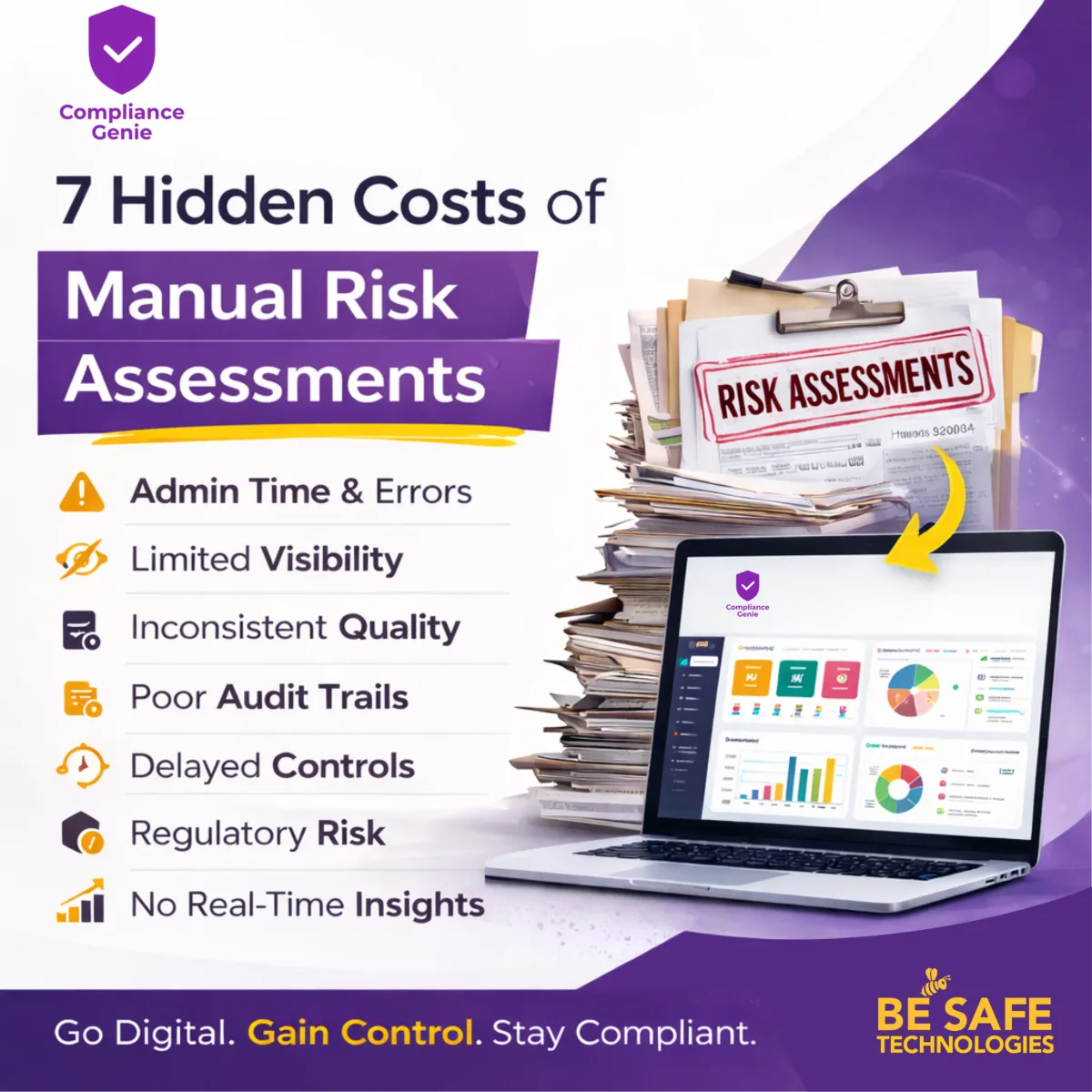
7 Hidden Costs of Manual Risk Assessments in Local Government
Across the UK public sector, risk assessments remain a critical part of protecting employees, contractors, and the public.
Yet many local authorities still rely on paper forms, spreadsheets, and disconnected systems to manage this process.
While these approaches are familiar, they can create significant hidden costs.
- Administrative Time
Manual risk assessments require staff to:
- complete paper forms
- distribute documents
- manually review and approve assessments
- store and retrieve files
When multiplied across thousands of assessments each year, administrative effort can consume substantial staff time.
- Limited Visibility of Risk
Paper or spreadsheet systems make it difficult to gain a clear organisational overview.
Managers may struggle to identify:
- overdue assessments
- high-risk activities
- departments requiring additional safety controls
Without real-time visibility, organisations may react to risks rather than proactively managing them.
- Inconsistent Risk Assessment Quality
Manual systems often rely on individuals creating their own formats or adapting older documents.
This can result in:
- inconsistent structure
- missing control measures
- outdated assessment templates
Standardisation becomes difficult across large organisations.
- Difficulty Demonstrating Compliance
Under the Health and Safety at Work etc. Act 1974 and the Management of Health and Safety at Work Regulations 1999, organisations must demonstrate that risks have been assessed and managed.
Manual systems can make it difficult to produce reliable audit trails when needed.
- Version Control Problems
When risk assessments are stored in multiple formats or locations, it becomes difficult to confirm that teams are using the most recent versions.
This can lead to outdated information being used during safety planning.
- Contractor Communication Gaps
Local authorities frequently work with external contractors across construction, maintenance, and infrastructure projects.
Manual systems may make it difficult to confirm that contractors have reviewed and acknowledged relevant risk assessments.
- Missed Opportunities for Safety Improvement
Digital data can help organisations identify patterns such as recurring hazards or departments with higher risk exposure.
Manual systems rarely provide the analytical insight required to support proactive safety improvements.
The Digital Alternative
Digital safety platforms such as Compliance Genie allow organisations to manage risk assessments through a centralised system.
These platforms typically provide:
- digital templates and workflows
- automated review reminders
- mobile risk assessment completion
- real-time dashboards
- audit trails and compliance reporting
By digitising risk assessments, councils can reduce administrative workload while improving safety oversight.
Conclusion
As local authorities continue to face operational pressures and increasing regulatory expectations, modernising safety management processes is becoming increasingly important.
Digital risk assessment systems provide a practical way to streamline compliance while improving organisational visibility of risk.