


Digital Health and Safety Monitoring: A Reassuring Perspective
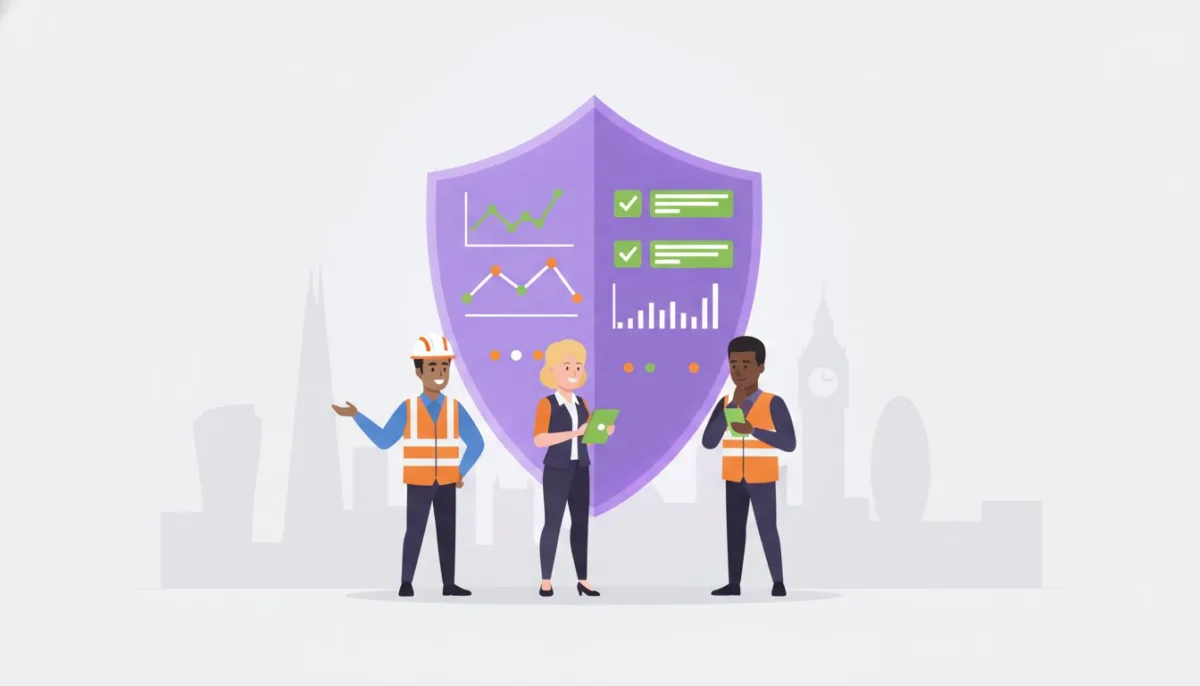
The traditional ring-binder approach to health and safety is no longer just inefficient; it’s a genuine risk to your business’s operational resilience. You likely feel the weight of fragmented data scattered across different sites and the constant worry that a single missing signature could lead to a costly HSE intervention. It’s a common frustration for many UK safety managers who find themselves trapped in a reactive cycle of manual auditing. By adopting a digital compliance monitoring system, you can move beyond this bureaucratic burden. This technology allows you to centralise your oversight and replace guesswork with real-time data, ensuring your business remains robust as regulatory standards evolve.
We understand that maintaining total visibility over multiple locations is a complex task. This article will show you how to turn health and safety into a proactive business asset that fosters a genuine culture of accountability. You’ll discover how automated alerts for expiring certifications can provide peace of mind, whilst preparing your organisation for significant shifts like the Digital Omnibus proposal expected in late 2026. We will outline the practical steps to achieve a streamlined, digital-first safety environment that protects both your people and your reputation.
Key Takeaways
- Learn how a digital compliance monitoring system shifts your focus from periodic snapshot audits to continuous, live oversight of your entire operation.
- Understand how cloud-based architecture and mobile-first design work together to secure your safety data and improve reporting from the field.
- Master the transition from paper to digital by implementing strategies that digitise legacy risk assessments without stalling your site operations.
- Gain clarity on setting compliance KPIs that satisfy both internal safety goals and the latest UK regulatory standards.
- Discover why Compliance Genie provides the professional assurance required for multi-site businesses through its certified approach to data management.
What is a Digital Compliance Monitoring System?
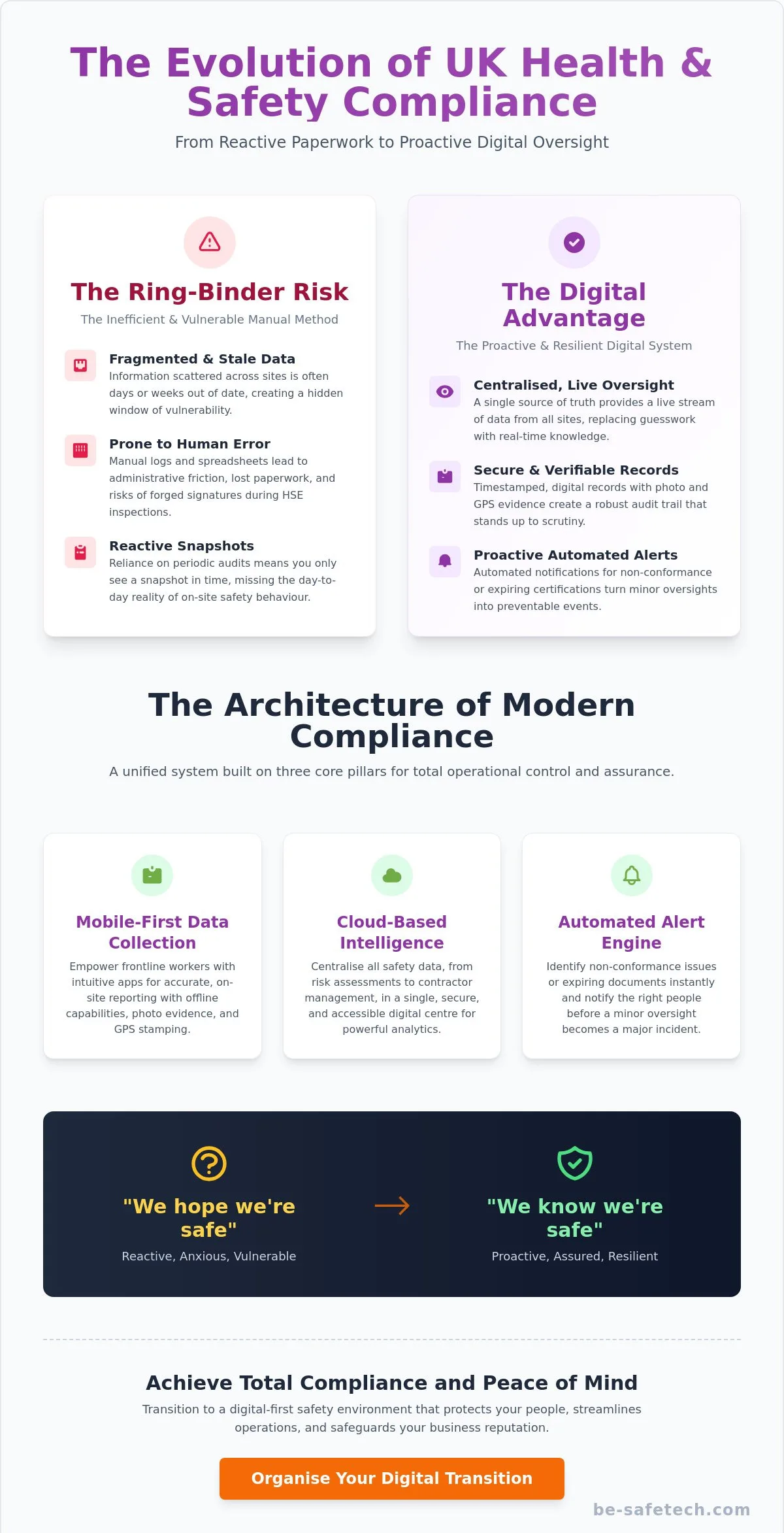
A digital compliance monitoring system is a centralised software platform designed to track, analyse, and report on an organisation’s adherence to safety protocols in real-time. Unlike traditional methods that rely on periodic audits, this technology provides a live stream of data from the shop floor or construction site directly to the management office. It transforms safety from a static box-ticking exercise into a dynamic business function. British businesses are increasingly moving away from disconnected spreadsheets in favour of cloud-based ecosystems. This transition is driven by the need for better Regulatory Compliance, where the goal isn’t just to have a record, but to actively monitor safety behaviours as they happen. If a risk assessment isn’t completed on time, the system knows immediately. It’s about moving from “we hope we’re safe” to “we know we’re safe.”
The Core Components of an Operational System
An effective system relies on several integrated features that work together to create a safety net. First, real-time data ingestion allows for mobile-first site inspections. This means workers can log hazards or complete checklists using their smartphones or tablets instantly, ensuring that the data is accurate and captured at the source. Second, automated notification engines identify non-conformance or expiring documents. These engines send alerts to the right people before a minor oversight becomes a major incident. Finally, centralised dashboards provide total visibility across multiple sites. Senior management can see at a glance which locations are performing well and which require additional support, allowing them to organise resources where they are needed most.
Digital vs. Manual: Why the Spreadsheet is a Risk
Relying on manual logs often results in “stale data,” where the information you’re reviewing is already days or weeks out of date. This delay creates a window of vulnerability that a digital compliance monitoring system eliminates. Manual systems are also prone to administrative friction; the time spent chasing paperwork or deciphering handwriting could be better spent on actual safety improvements. Digital records are secure and timestamped, which removes the risk of lost or forged paperwork that often causes anxiety during Health and Safety Executive (HSE) inspections. By automating these processes, businesses reduce the bureaucratic burden and focus on protecting their workforce. It’s a shift from reactive record-keeping to a proactive, live oversight model that scales with your business.
The Architecture of Modern Compliance Oversight
The architecture of a modern digital compliance monitoring system is built on the principle of unified accessibility. It connects disparate safety functions, such as risk assessments, internal audits, and contractor management, into a single, cohesive digital centre. This integration ensures that your safety data is not only secure but also practically useful for day-to-day operations. For non-technical staff, a well-designed system provides a clear, guided pathway to record information without the fear of making technical errors. By maintaining a high standard of data integrity through automated validation, you create a reliable audit trail that stands up to the most rigorous scrutiny. A case study regarding the implementation of a digital safety monitoring tool demonstrates that user-centric systems lead to significantly higher engagement and more accurate reporting in high-stakes environments. This structural approach allows you to manage your safety obligations with a sense of total control and professional assurance.
Mobile-First Data Collection
The success of any safety programme depends on the people working on the front line. If a system is too difficult to navigate, workers may revert to paper or skip vital steps. Therefore, the user interface must favour the site worker over the IT department. High-quality data comes from intuitive apps that offer offline capabilities, ensuring that compliance monitoring continues in remote areas of the UK with poor signal. Features like photo evidence and GPS stamping in digital audit checklist software add a layer of accountability that paper cannot match. It provides undeniable proof that a check was performed at the correct time and location by the right person.
Cloud-Based Intelligence and Analytics
Once data is captured from the field, cloud-based platforms organise it into actionable safety insights rather than just storing it in a digital folder. This predictive monitoring allows you to spot a rise in near-misses at a specific site before a serious incident occurs. By transforming raw inspection data into visual trends, you can identify systemic issues that require management intervention. Automating the reporting cycle also simplifies board-level compliance reviews. Senior leaders receive clear summaries of the organisation’s safety posture without needing to sift through hundreds of individual reports, allowing for more informed strategic decisions.
Transitioning from Paper to Digital without Operational Disruption
The most common reservation amongst UK site managers is the fear that a digital shift will grind operations to a halt. It’s a valid concern; a busy construction site or manufacturing facility can’t afford hours of downtime for software troubleshooting. However, implementing a digital compliance monitoring system is often less about a “big bang” overhaul and more about a methodical, phased rollout. By introducing digital tools in stages, you allow your team to build confidence without overwhelming their daily workflow. This approach ensures that safety remains a supportive partner to productivity rather than a bureaucratic obstacle.
Managing the cultural shift is just as vital as the technical setup. Many long-serving staff members feel a sense of security in their physical logbooks and paper risk assessments. To ease this transition, it’s effective to use digital templates that mirror the layout of your existing forms. When a worker sees a familiar structure on a tablet screen, the psychological barrier to adoption drops significantly. This familiarity, combined with the clear benefits of reduced paperwork, helps the system become a favourite tool rather than a forced requirement. It’s about making the technology adapt to the person, not the other way around.
The Digital Transformation Roadmap
A successful roadmap begins with an audit of your current paper processes to identify “quick wins.” These are tasks that are high in volume but low in complexity, such as daily vehicle checks or site attendance logs. Digitising these first provides immediate proof of value to both management and field staff. Proper training and onboarding are essential; it’s about showing the team how the software saves them time, rather than just telling them to use it. Once the team sees that a digital compliance monitoring system removes the need for manual filing and chasing signatures, the appetite for further digitisation grows naturally across the organisation.
Maintaining Continuity During the Switch
Continuity is maintained through a brief period of parallel running, where digital and paper systems exist side-by-side until the digital data is proven reliable. This ensures you never lose a day of compliance history or risk a gap in your records. From day one, your new platform should align with ISO 9001 and ISO 27001 standards to guarantee data security and quality management. Many businesses find that implementing digital audit checklist software actually speeds up site inductions. Instead of huddling around a clipboard, contractors can complete their safety briefings on their own devices before they even arrive on site, allowing work to start safely and promptly.
How to Implement Your Digital Compliance Monitoring System
Implementation of a digital compliance monitoring system is a structured journey that begins with a clear understanding of your specific regulatory environment. It’s not enough to simply “go digital”; the system must be configured to meet the precise requirements of the Health and Safety Executive (HSE) and relevant industry bodies. By defining your Key Performance Indicators (KPIs) early, you ensure that every data point collected serves a strategic purpose. You should prioritise a platform that consolidates both internal compliance and contractor management to avoid the data silos discussed previously. This unified approach provides the quiet confidence that your safety oversight is comprehensive and up to date.
Step 1: Defining Your Monitoring Scope
Identifying exactly which regulations require active, real-time monitoring is the foundation of a successful setup. For many UK businesses, this includes tracking RIDDOR-reportable incidents or managing COSHH assessments for hazardous substances. Mapping these existing workflows to a digital structure involves more than just copying a form; it’s about establishing access levels that ensure the right data reaches the right person. A site worker might only need to see daily inspection checklists, whilst a regional manager requires a bird’s-eye view of all safety thresholds across their territory. If you’re looking for a platform that handles these complexities, you can learn more about our integrated safety tools to see how they align with your specific site requirements.
Step 2: Pilot and Scale
A phased implementation is the most reliable way to maintain operational harmony. Starting with a single site or a specific department allows you to gather user feedback without the pressure of a national rollout. During this pilot phase, you can optimise your digital audit checklists based on actual site behaviour, ensuring the forms are as intuitive as possible. Once you’ve refined the process, you can scale the digital compliance monitoring system nationally across all business operations with the confidence that the technology is fit for purpose. Configuring automated alerts for critical safety thresholds acts as an early warning system, notifying you if a safety check is missed or if a certification is nearing its expiry date. Regularly reviewing system performance against your initial safety objectives allows you to see the tangible return on your investment and fosters a culture of accountability. For a comprehensive overview of selecting the right tools for your team, our safety inspection app UK guide for 2026 outlines exactly what to look for when evaluating digital solutions against current HSE requirements.
The Be-Safe Advantage: Compliance Genie as Your Strategic Ally
Compliance Genie is specifically engineered to meet the demands of UK multi-site businesses that require a higher standard of operational clarity. Whilst many generic tools focus on basic record-keeping, our digital compliance monitoring system provides a robust framework for complex regulatory environments. We prioritise data security and quality management, holding both ISO 9001 and ISO 27001 certifications. This ensures that your sensitive safety data is handled with the highest level of professional rigour. By choosing a UK-based partner, you benefit from a system that is inherently aligned with local HSE expectations and British industry standards.
Award-Winning UK Innovation
Our platform wasn’t built by developers in isolation. It was designed by safety experts who understand the practical realities of site management and the administrative friction of traditional safety programmes. This specialist insight is why Compliance Genie is G-Cloud approved, making it a trusted choice for both public sector bodies and private enterprises. We help organisations achieve “Total Oversight” by linking every aspect of their health and safety ecosystem. When you integrate Contractor Genie into your workflow, you can monitor external compliance as easily as your internal team’s performance. This creates a seamless safety net where no contractor or certification falls through the cracks.
Our mobile-first approach is central to this success. By providing site workers with an intuitive interface, we ensure high engagement levels that lead to better data quality. Workers are more likely to report hazards and complete checks when the tool is easy to use and works reliably in the field. This high engagement transforms the digital compliance monitoring system from a management requirement into a valuable daily resource for the entire team.
Getting Started with Be-Safe
Transitioning to a new platform is a significant step, and we’ve designed our onboarding process to be as supportive as possible. We don’t believe in a one-size-fits-all approach; instead, we offer personalised demos that are tailored to the specific challenges of your industry. Whether you manage a nationwide retail chain or a complex construction firm, we show you exactly how our tools adapt to your existing workflows. This methodical onboarding guarantees a smooth transition and ensures your team feels confident using the software from day one. You can organise a demo of Compliance Genie today to see how we can help you turn safety into a proactive business asset.
Modernising Your Safety Culture with Confidence
Adopting a digital compliance monitoring system is more than a technical upgrade; it’s a commitment to a safer and more transparent business environment. By moving away from fragmented paper trails, you gain the ability to identify risks before they escalate into incidents. You’ve seen how a phased rollout and a focus on user-centric design can overcome cultural resistance, ensuring that your team views safety tools as a benefit rather than a burden. This streamlined approach allows you to focus on growth whilst maintaining the highest standards of protection for your workforce across every UK site.
A truly resilient safety culture also recognises the importance of physical recovery and wellbeing. For example, understanding the benefits of advanced recovery treatments, as explored by the Battersea Park Clinic, can help businesses support the physical health of staff in demanding roles.
As a G-Cloud approved supplier with ISO 9001 and ISO 27001 certifications, we provide the reliable infrastructure your organisation needs to stay ahead of regulatory changes. Our award-winning, mobile-first design is built to ensure high engagement and data accuracy from the front line to the boardroom. If you’re ready to replace administrative friction with real-time oversight, we’re here to support your transition with professional assurance and expertise.
Book a demo of Compliance Genie to digitise your safety monitoring and take the first step towards total operational harmony. We look forward to helping you build a more resilient and proactive future.
Frequently Asked Questions
What is the primary purpose of a digital compliance monitoring system?
The primary purpose of a digital compliance monitoring system is to provide real-time oversight of an organisation’s adherence to safety regulations and internal policies. It acts as a centralised hub that replaces manual tracking with automated data collection and reporting. This allows you to identify non-conformance immediately rather than discovering issues during a scheduled audit. By maintaining a live safety record, you transform compliance from a reactive burden into a proactive business asset.
How does a digital system help with HSE inspections in the UK?
A digital system simplifies HSE inspections by providing an instantly accessible, timestamped, and unalterable audit trail of your safety activities. When an inspector visits, you can quickly generate comprehensive reports that prove your adherence to UK standards like RIDDOR or COSHH. This level of transparency reduces the stress of missing paperwork and demonstrates a high level of professional competence. It provides the quiet confidence that your organisation is fully prepared for regulatory scrutiny at any time.
Can digital compliance monitoring work for businesses with multiple sites?
Yes, digital compliance monitoring is specifically designed to provide total visibility across multiple locations from a single dashboard. Senior management can monitor safety performance at various sites simultaneously, identifying trends or issues without needing to be physically present at every location. This centralised oversight ensures that safety standards remain consistent across the entire business, regardless of geographic spread. It allows for more efficient resource allocation by highlighting exactly which sites require additional support or training.
Is digital compliance software secure enough for sensitive safety data?
Modern digital compliance software is highly secure, provided it meets recognised industry standards such as ISO 27001 for information security management. These systems use advanced encryption and secure cloud hosting to protect sensitive safety data and personal information. For businesses that require additional layers of cyber resilience, Safetech Innovations offers specialised vulnerability management and managed detection services to safeguard the digital infrastructure supporting your compliance tools. By choosing a UK-based provider that adheres to GDPR and G-Cloud standards, you ensure that your data is stored and managed according to strict regional legal requirements. This provides peace of mind that your records are safer than physical files stored on-site.
Does a digital system replace the need for a Health and Safety Manager?
A digital system does not replace a Health and Safety Manager; instead, it acts as a strategic ally that frees them from repetitive administrative tasks. By automating the collection of inspection data and certification alerts, the software allows the manager to focus on high-level safety culture and risk mitigation strategies. It provides the manager with the accurate, real-time data they need to make informed decisions and lead the organisation’s safety programme with greater authority.
How long does it take to implement a digital compliance monitoring system?
The time required to implement a digital compliance monitoring system varies depending on the size of your organisation and the complexity of your existing processes. A phased rollout typically begins with a pilot phase lasting a few weeks to refine digital templates and gather user feedback. Full national implementation across multiple sites can then be scaled steadily to ensure minimal operational disruption. This methodical approach ensures that the system is fully optimised for your specific business requirements before being deployed company-wide.
What are the costs associated with moving from paper to digital compliance?
Moving from paper to digital compliance involves an initial investment in software subscriptions and staff training, but these are often offset by significant long-term administrative savings. You’ll reduce the time spent on manual filing, chasing signatures, and preparing for audits. Whilst we don’t provide specific pricing here, businesses typically find that the reduction in administrative friction and the mitigation of potential HSE fines provide a clear return on investment. It’s a shift from a hidden operational cost to a transparent business asset.
Can I monitor contractor compliance through the same digital system?
You can monitor contractor compliance through the same centralised platform by using integrated tools like Contractor Genie. This allows you to track external certifications, site inductions, and risk assessments alongside your internal safety data. Having all compliance information in one digital centre ensures that you maintain the same high standards for third-party workers as you do for your own team. It simplifies the management of complex projects where multiple contractors are operating on a single site. If you want to understand how a dedicated safety inspection app for UK businesses can further strengthen your contractor oversight, our 2026 guide covers the key features and legal considerations in detail.