


The Future of Safety Management Software: UK Trends and Innovations for 2026

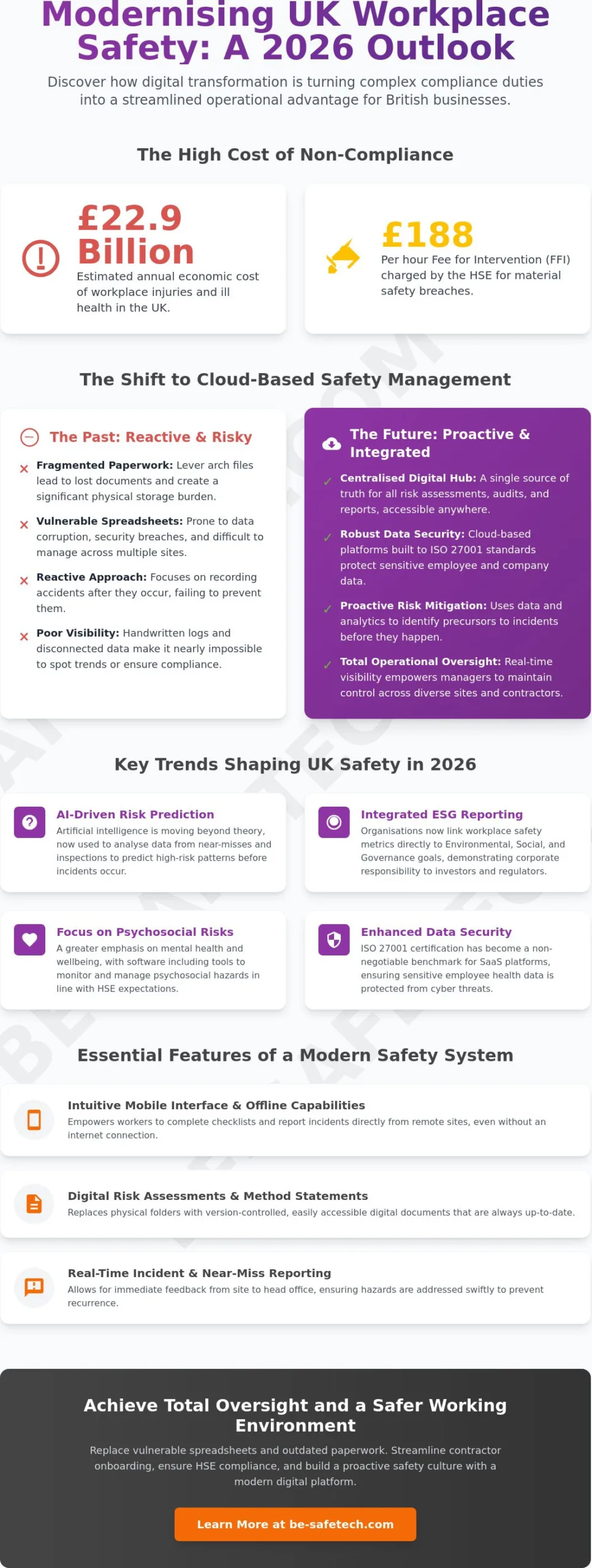
With the economic cost of workplace injuries and ill health in the UK reaching an estimated £22.9 billion, the stakes for health and safety have never been higher. As the Health and Safety Executive (HSE) increases its Fee for Intervention (FFI) rate to £188 per hour, the financial and reputational risks of a material breach are substantial. In this climate, implementing robust safety management software is no longer just a digital upgrade; it’s a fundamental necessity for operational resilience. For many professionals, the daily reality still involves drowning in paperwork whilst struggling to maintain real-time visibility across multiple sites or tracking contractor movements accurately.
You likely recognise the stress of ensuring every risk assessment is current and every RIDDOR requirement is met. It’s a heavy responsibility that can feel like a constant battle against bureaucracy. This article will help you discover how modern safety management software is transforming UK workplace compliance from a bureaucratic burden into a streamlined operational advantage. We’ll explore the key innovations for 2026, including the impact of Martyn’s Law and the shift towards proactive safety cultures, giving you the tools to achieve total oversight and a safer working environment for everyone.
Key Takeaways
- Learn how the transition from reactive accident recording to proactive risk mitigation is redefining workplace safety standards across the UK.
- Discover how AI-driven predictive analytics and ESG reporting are becoming the new baseline for identifying high-risk patterns before incidents occur.
- Understand why replacing vulnerable spreadsheets with cloud-based safety management software is essential for ensuring robust HSE compliance and data security.
- Identify the critical features needed for site-wide adoption, including intuitive mobile interfaces and offline capabilities for remote UK project locations.
- See how centralising your digital safety hub with tools like Compliance Genie can transform complex contractor onboarding into a streamlined operational advantage.
What is Safety Management Software in the 2026 UK Context?
Within the current UK landscape, safety management software represents a sophisticated digital ecosystem that centralises every facet of workplace protection. It’s no longer just a digital filing cabinet; it’s a dynamic tool that integrates risk assessments, audits, and real-time incident reporting into a single source of truth. By aligning with the foundational principles of the Health and Safety at Work etc. Act 1974, this technology ensures that duty holders can demonstrate their commitment to providing a safe environment. A modern Safety Management System (SMS) allows organisations to move away from fragmented processes, creating a cohesive strategy that protects both the workforce and the business’s legal standing.
The most significant evolution in 2026 is the decisive shift from reactive accident recording to proactive risk mitigation. Instead of merely documenting what went wrong after the fact, businesses use these platforms to identify precursors to incidents. This forward-looking approach is particularly vital given the increased scrutiny from the Health and Safety Executive (HSE). Mobile-first technology plays a crucial role here, as it empowers site managers and workers to engage with safety protocols directly from the shop floor or a remote construction site.
The Core Components of a Digital EHS Platform
Modern systems are built on several interconnected modules that ensure no part of the safety cycle is overlooked. These include:
- Digital risk assessment modules that replace physical folders with version-controlled, easily accessible documents.
- Incident and near-miss reporting tools that allow for immediate feedback from the site to the head office, ensuring hazards are addressed quickly.
- Audit and inspection checklists designed specifically for mobile or tablet use, enabling thorough checks in any environment.
These components work together to create a transparent record of safety activities. This makes it easier for managers to maintain control over diverse operational sites whilst ensuring that safety remains a living part of the daily routine.
Why British Businesses are Moving Away from Paper
The era of the safety lever arch file is coming to a close. British businesses are increasingly wary of the physical storage burden and the very real risk of lost or damaged paperwork. Handwritten logs are notoriously difficult to analyse, making it nearly impossible to spot trends across multiple sites. When an HSE inspector arrives, the demand for instant, verifiable compliance evidence is absolute. With the Fee for Intervention (FFI) rate now at £188 per hour as of April 2026, the cost of being unable to produce a current risk assessment or training record is simply too high to ignore. Transitioning to safety management software provides the peace of mind that all documentation is secure, searchable, and ready for inspection at a moment’s notice.
Emerging Trends Shaping UK Workplace Safety in 2026
According to recent UK workplace safety statistics, the focus on mental health and psychosocial risks has intensified. Modern safety management software now includes features specifically designed to monitor these areas, ensuring compliance with the latest HSE expectations. This shift reflects a broader commitment to holistic worker wellbeing that goes beyond traditional physical hazards.
The Impact of AI on Risk Prediction
Artificial Intelligence has transitioned from a buzzword into a practical operational partner. Modern platforms now analyse historical incident data to suggest specific corrective actions before a similar event recurs. By automating the extraction of key actions from lengthy, complex risk assessments, these tools ensure that critical safety measures aren’t buried in text. By providing consistent, data-driven insights, AI significantly reduces the potential for human error and oversight during UK safety audits. This predictive capability allows safety officers to focus their attention where it’s most needed, moving the needle from reactive monitoring to proactive prevention. To see how AI-native platforms can unify fragmented enterprise data for better governance, you can visit DataGOL.
Beyond general incident prediction, specialised tools are emerging to tackle physical strain; for example, safety managers can find out more about AI Ergonomics Platform Subscriptions to better understand and mitigate musculoskeletal risks in real-time.
Mobile Connectivity and Real-Time Reporting
The reality of British infrastructure often involves working in remote utility sites or rural construction projects where signal is unreliable. Consequently, offline functionality has become a vital feature of safety management software, allowing workers to record data that syncs automatically once a connection is restored. We’re also seeing a shift towards “photo-evidence” as the standard for site inspections, providing an indisputable visual record of compliance. To encourage engagement amongst a younger “Gen Z” workforce, interfaces have become more intuitive and mobile-first, mirroring the apps they use in their daily lives. Instant push notifications now provide immediate alerts for safety policy updates or high-priority hazards. If you’re looking to modernise your approach, exploring how a digital safety hub can centralise these trends is a logical next step.
Moving Beyond Spreadsheets: The Shift to Cloud-Based EHS Platforms
For many years, the humble Excel sheet has been the backbone of British safety records. It’s familiar and appears low-cost. However, in 2026, relying on local server files or offline spreadsheets is a significant liability. The future of workplace safety depends on data that is accessible, secure, and verifiable. Unlike local files that can be accidentally deleted or left on an unencrypted laptop, cloud-based safety management software offers a level of protection that meets modern UK standards, including the rigorous requirements of ISO 27001. This transition provides a foundation for reliability that manual systems simply cannot match.
Spreadsheet Risks: Version Control and Data Loss
The most immediate danger of using spreadsheets is the breakdown of version control. It’s common to find multiple “final” versions of a risk assessment stored across different departments. This fragmentation makes it impossible to maintain the immutable audit trail required for a robust legal defence. Managing complex health and safety risk assessment software tasks across disconnected Excel files leads to data silos. When information is scattered, critical hazards are easily overlooked. This increases the risk of an HSE material breach and the subsequent financial penalties that follow.
The Advantages of a Centralised “Single Source of Truth”
Transitioning to a centralised platform provides Directors with real-time dashboards that show compliance status at a glance. You don’t have to chase site managers for updates; the data is already there. Automatic reminders for document renewals and training expiries ensure that no certification lapses. This level of organisation is invaluable during an unannounced HSE inspection. External auditors can be granted restricted access to specific folders, allowing them to verify compliance quickly and efficiently. This transparency builds trust and demonstrates a proactive safety culture across the entire organisation. For businesses operating across multiple locations, understanding the specific challenges of safety management for multi-site businesses is essential to achieving this level of centralised control.
To avoid “digital overwhelm” amongst your staff, we recommend a phased rollout. Start with a single site or a specific module, such as incident reporting, before expanding across the whole company. This allows teams to become comfortable with the new interface at a manageable pace. From a financial perspective, the cost-benefit analysis is clear. Whilst subscription fees are a visible monthly expense, they’re a fraction of the cost of non-compliance. With HSE Fee for Intervention rates at £188 per hour, a single investigation can quickly exceed the annual cost of high-quality workplace health and safety software. Investing in digital infrastructure is a strategic move that provides long-term peace of mind and financial predictability.
Key Features to Look for in a Modern Safety Management System
Selecting the right safety management software requires a focus on practical utility rather than a long list of abstract features. A truly modern system prioritises an intuitive mobile interface that site workers actually want to use. If the software is too complex or slow, adoption rates will inevitably plummet. User-centric design is the primary factor in determining the long-term success of any digital safety programme, as it ensures that data entry becomes a natural part of the workday rather than a chore.
Because many UK infrastructure projects occur in rural areas or within steel-framed buildings with unreliable mobile signal, offline capabilities are essential. Workers must be able to complete audits or report hazards without a live connection, knowing their data will sync automatically once they return to a signal centre. This reliability prevents data loss and ensures that site managers maintain a complete record of activity, regardless of geographical challenges.
Compliance is further bolstered by customisable audit templates that reflect specific UK industry standards. Whether you’re managing a construction site under CDM regulations or a manufacturing plant, your checklists must be relevant to your specific risks. Automated RIDDOR reporting triggers are another vital feature; they ensure that legal deadlines are met by alerting the correct personnel the moment a reportable incident is logged. For construction teams in particular, understanding the full advantages of digital safety reporting software can help build a stronger compliance framework and reduce the risk of missed submissions. This proactive approach protects the business from the legal repercussions of late or missing submissions.
Robust contractor management is equally important for tracking external site visitors. A high-quality system allows you to verify that every contractor has completed their induction and holds the necessary permits before they even step onto the site. This level of oversight creates a secure perimeter around your operations and ensures that everyone on-site adheres to your safety culture.
Integration and Scalability
As your business expands, your software must grow with you without requiring a complete system overhaul. The ability to link with existing HR or project management tools through API capabilities ensures that data flows seamlessly across the organisation, reducing duplicate entry. Security remains paramount, which is why choosing ISO 27001 compliant safety software is critical for protecting sensitive employee data and maintaining stakeholder trust. If you are ready to centralise your operations, you can explore our range of safety software solutions to find the perfect fit for your business.
User Support and Training
Technical proficiency shouldn’t be a barrier to workplace protection. Look for providers that offer UK-based support desks to provide immediate assistance during British business hours, avoiding the frustration of time-zone delays. In-app training videos can also significantly reduce the learning curve for new users, making the transition from paper to digital a smooth and stress-free process for the entire team.
Navigating Compliance with Compliance Genie and Contractor Genie
Navigating the complexities of British health and safety legislation requires more than just a policy; it requires a reliable execution partner. This is where Compliance Genie and Contractor Genie provide a comprehensive solution for organisations seeking to modernise their approach. By centralising every safety process into a single, user-friendly ecosystem, these tools ensure that safety management software becomes a driver of efficiency rather than a source of stress. This transition allows safety officers to move away from administrative firefighting and focus on strategic risk reduction.
Compliance Genie: Your Digital Safety Assistant
Compliance Genie serves as the all-in-one digital safety hub, designed specifically for the UK market. It addresses the administrative burden by allowing teams to digitise risk assessments and audits in minutes rather than hours. This speed does not come at the expense of accuracy. The platform enforces high standards through mandatory photo and GPS evidence for incident reporting, creating a transparent and indisputable record of site conditions. This level of detail is essential for maintaining a robust health and safety compliance software strategy that stands up to the closest scrutiny from the HSE or internal auditors.
Contractor Genie: Managing External Risks
Managing third-party risks is often the most challenging part of site safety. Contractor Genie simplifies this by automating contractor inductions before they even arrive on site. This ensures that every operative is fully briefed on your specific site rules whilst their insurance and certifications are verified through a single digital portal. You maintain total oversight of all third-party movements, ensuring that external risks are managed with the same rigour as internal ones. This proactive onboarding process reduces the time spent on site-gate administration and ensures that work begins safely and promptly.
Choosing a partner with UK-based development provides an extra layer of reassurance. Our status as a G-Cloud approved provider means that our systems meet the stringent security and procurement standards required by the UK public sector and highly regulated industries. This certification ensures that your safety management software is not only effective but also aligned with national standards for data handling and digital service delivery. It provides the peace of mind that your safety data is stored securely within a framework you can trust.
Starting your digital transformation journey is a manageable process when broken down into practical steps. We recommend beginning with a clear audit of your current paper-based or spreadsheet processes to identify the areas with the highest administrative friction. Once these are identified, you can prioritise them for digitisation, perhaps starting with a single site or a specific module. Our team is here to support you through every stage, from the initial setup to site-wide adoption, ensuring that your transition to a digital safety culture is seamless, professional, and successful.
Future-Proofing Your Workplace Safety and Compliance
The transition towards digital-first operations is no longer a luxury for UK businesses; it’s a strategic requirement for maintaining resilience in 2026. By moving beyond the limitations of spreadsheets and embracing cloud-based safety management software, you gain the real-time visibility needed to protect your workforce and your reputation. This shift ensures that compliance remains a streamlined part of your daily routine rather than a frantic exercise in document recovery. You’ve seen how user-centric design and mobile connectivity are essential for high adoption rates on-site, turning safety from a checkbox into a shared value.
As an award-winning, UK-based EHS platform, Be-Safe Technologies Ltd provides the reliability of an ISO 9001 and 27001 certified partner. Our G-Cloud approved status reflects our commitment to the highest standards of data security and operational excellence. To see how our tools can transform your site oversight and simplify your administrative burden, book a demo of Compliance Genie and Contractor Genie today. Taking these steps now creates a culture of proactive safety that will serve your business and your employees for years to come.
Frequently Asked Questions
Is safety management software mandatory for UK businesses?
No, it isn’t strictly mandatory by law, but any business with five or more employees is legally required to have a written health and safety policy. Using safety management software is the most reliable way to demonstrate that you are meeting your duties under the Health and Safety at Work etc. Act 1974. It provides a structured framework that ensures your risk assessments and training records are always current and accessible during an inspection.
How does digital software help with RIDDOR reporting?
Digital platforms automate the identification of reportable incidents and alert the relevant personnel the moment an event is logged. This ensures that your business meets the strict legal deadlines set by the Health and Safety Executive (HSE) for RIDDOR submissions. By centralising witness statements, photo evidence, and GPS logs, the software builds a complete case file that simplifies the formal reporting process and reduces the risk of non-compliance.
Can safety management software work offline on remote sites?
Yes, professional-grade systems include offline capabilities designed specifically for remote UK construction, utility, or agricultural projects. Workers can complete inspections, fill out checklists, and log hazards without a live internet connection. The data is stored securely on the device and syncs automatically with the central cloud hub once the user returns to an area with a stable mobile or Wi-Fi signal.
What is the difference between EHS software and a simple spreadsheet?
The primary difference lies in data integrity and the ability to generate an immutable audit trail for legal defence. Spreadsheets are static, prone to manual entry errors, and lack the version control needed to prove compliance. Safety management software offers real-time dashboards, automated reminders for training expiries, and centralised storage that ensures every department is working from the same “single source of truth.”
How much does it cost to implement safety management software in the UK?
Implementation costs typically follow a subscription-based model that scales according to your business size and the number of active users or sites. Most providers offer tiered packages based on the specific modules you require, such as risk assessments, audits, or contractor management. It’s best to request a tailored quote to ensure the solution aligns with your operational needs whilst providing a clear return on investment through reduced administration.
Is my data secure in a cloud-based safety platform?
Cloud-based platforms are highly secure, provided you choose a provider that adheres to recognised international and UK standards. You should ensure your chosen software is ISO 27001 certified, which confirms they have robust systems for protecting sensitive employee data. Being a G-Cloud approved supplier further demonstrates that the platform meets the rigorous security and procurement requirements expected by UK public sector organisations.
Does the software integrate with existing UK payroll or HR systems?
Many modern platforms offer API capabilities that allow for seamless integration with your existing HR, payroll, or project management tools. This connectivity ensures that employee data and certification dates are automatically synchronised across all your business systems. It eliminates the need for duplicate data entry and provides a more holistic view of your workforce’s compliance status and training requirements.
What certifications should I look for in a safety software provider?
You should prioritise providers that hold ISO 9001 for quality management and ISO 27001 for information security. These certifications indicate that the company follows rigorous, independently audited processes to ensure service reliability and data protection. For UK businesses, choosing a G-Cloud approved supplier is also a significant indicator of technical competence and alignment with national digital standards.