


Paperless Health and Safety: The 2026 Guide to Digital Compliance in the UK

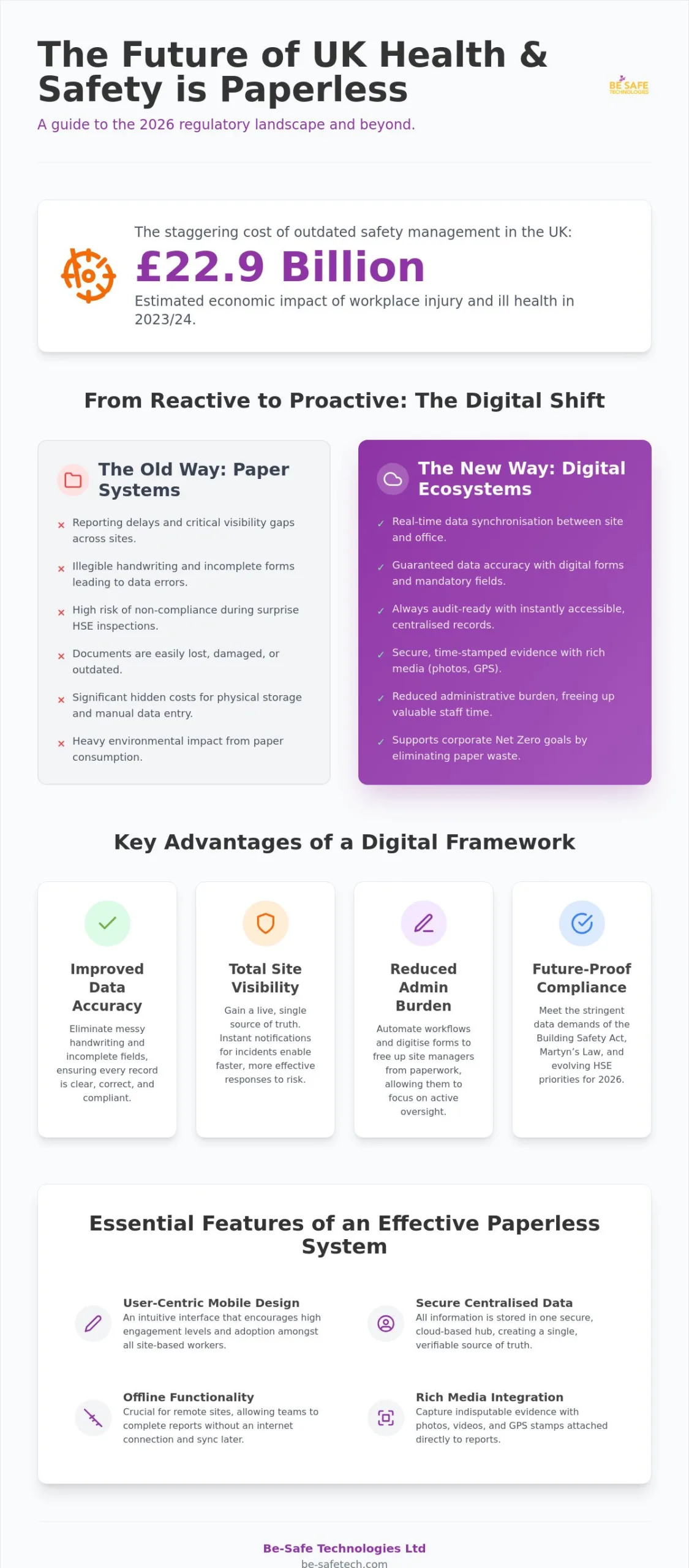
Did you know that workplace injury and ill health cost the UK economy an estimated £22.9 billion in 2023/24? This staggering figure highlights the gravity of modern safety management, yet many organisations still struggle to adopt a paperless health and safety framework, often finding themselves drowning in physical folders and delayed incident reports. You’ve likely felt the stress of trying to prove compliance during a surprise HSE inspection whilst grappling with inconsistent data from various site teams across the country.
We understand that moving away from traditional, manual methods can feel like a significant shift in operations, but it’s a vital step for maintaining total control and peace of mind. This guide provides a clear roadmap for the 2026 regulatory landscape, showing you how to establish a single source of truth for all your safety data. We’ll explore how real-time incident reporting and automated risk assessment updates can reduce your administrative burden, ensuring your organisation remains fully audit-ready and resilient against evolving safety challenges.
Key Takeaways
- Understand the fundamental shift from reactive, folder-based filing to a proactive, cloud-based ecosystem that ensures your business remains ahead of UK regulatory changes.
- Learn how to implement a paperless health and safety framework to eliminate illegible paperwork and gain instant visibility into live site activities and incident reports.
- Discover how user-centric, mobile-first design can overcome team resistance and ensure high engagement levels amongst site-based workers.
- Identify the essential technical features needed for reliable compliance, including offline functionality for remote sites and secure, centralised data storage.
- Explore how integrating a comprehensive digital hub like Compliance Genie can provide the quiet confidence of being fully audit-ready at all times.
What is Paperless Health and Safety and Why Does it Matter in 2026?
Paperless health and safety is the digitisation of all safety workflows to ensure real-time compliance. This transition represents a fundamental shift from the reactive, folder-based methods of the past to a proactive, cloud-based management system. In 2026, the Health and Safety Executive (HSE) prioritises data integrity and accessibility, making digital records the gold standard for proving compliance. With the implementation of Martyn’s Law and the standalone status of the Building Safety Regulator in 2026, the demand for rigorous, transparent record-keeping has never been higher. By moving safety processes online, businesses create a dynamic environment where risk assessments, incident reports, and training logs are always current and instantly retrievable. This ensures that every stakeholder has access to a single version of the truth, which is essential for meeting the stringent requirements of the Building Safety Act.
The Evolution of H&S Documentation in the UK
For decades, the “Big Red Folder” sat on site office shelves, often filled with outdated policies and illegible handwritten logs. This static approach frequently led to reporting delays and visibility gaps that left organisations vulnerable. Today, the role of workplace health and safety software has transformed these site operations into streamlined digital workflows. Modern 2026 technology ensures that when a supervisor completes a check on their mobile device, the data synchronises instantly with the head office. These mobile-first applications allow for the integration of rich media, such as photos and GPS stamps, which provide a level of evidence that paper could never offer. This creates a transparent chain of custody for safety information, much like how an Electronic Health Record (EHR) provides a centralised, secure history in clinical settings.
Why the UK is Moving Away from Paper Records
The shift towards digital isn’t just about convenience; it’s about business resilience and environmental responsibility. Paper systems carry significant hidden costs, including physical storage space, hours of manual data entry, and the constant risk of documents being lost or damaged. As UK industries strive towards Net Zero targets, reducing paper consumption has become a core component of sustainable operations. Beyond environmental goals, the risk of non-compliance during a surprise HSE inspection is far higher with paper records. Specialists at Be-Safe Technologies Ltd understand that the efficiency of digital systems isn’t a luxury; it’s a necessity for maintaining a robust safety culture and ensuring that no critical detail is lost amongst a sea of physical paperwork.
Adopting a paperless health and safety strategy provides several key advantages for modern UK businesses:
- Reduced Administrative Burden: Site managers spend less time filing and more time on active oversight.
- Improved Data Accuracy: Digital forms eliminate the issues of messy handwriting and incomplete fields.
- Environmental Impact: A significant reduction in physical waste supports corporate social responsibility and Net Zero goals.
- Real-time Synchronisation: Instant data flow between site and office enables faster response times to emerging risks.
The Core Benefits of Digitising Your Safety Management
Transitioning to a paperless health and safety system offers more than just digital storage; it creates a framework of precision and accountability that paper simply cannot match. When you eliminate illegible handwriting and incomplete forms, you remove the ambiguity that often leads to safety failures. Digital systems provide time-stamped evidence trails and secure digital signatures, ensuring that every inspection and risk assessment is verified at the source. This level of detail aligns perfectly with the HSE guidance on record keeping, which emphasises the necessity of maintaining accurate, accessible data to protect employee health and safety.
Real-Time Data and Site Visibility
Instant notifications represent a significant leap forward for site managers. Instead of waiting days for a paper report to reach the office, management receives immediate alerts about near-misses or equipment faults. This allows for immediate intervention before an incident escalates. For organisations managing multiple locations, a digital platform provides a single source of truth. You can view the safety status of a project in London and another in Glasgow from a single dashboard. This bird’s-eye view enables data analytics to identify recurring hazards, allowing you to allocate resources where they’re needed most. It’s about moving from a reactive stance to a position of total control.
Enhancing Accuracy and Audit Readiness
Maintaining a state of constant audit readiness is a primary goal for compliance officers. Utilising digital audit checklist software ensures that no critical step is overlooked during complex inspections. Every document is organised, searchable, and backed up in the cloud, removing the stress of locating missing paperwork during a surprise visit. This system also helps in standardising safety briefings and toolbox talks. You can ensure that the same high-quality safety information is delivered to every worker, regardless of their location, fostering a consistent and inclusive safety culture across your entire workforce.
Beyond safety, the financial benefits are clear. You save on physical resources and eliminate the need for administrative staff to re-key data from paper forms into spreadsheets. By streamlining these processes, your team can focus on active risk management rather than filing. If you’re ready to see how these efficiencies could transform your operations, exploring a comprehensive digital compliance hub is the logical next step. This shift not only protects your business from regulatory fines but also builds a culture of trust and reliability amongst your employees.
Overcoming the Challenges of a Digital Transition
The prospect of digitising safety management often brings a specific set of concerns to the boardroom. The most common hurdle isn’t the technology itself but the perceived resistance from the workforce. However, implementing a paperless health and safety framework doesn’t have to be a source of friction. By choosing a system designed with the end-user in mind, you can replace the dread of paperwork with the ease of a mobile app. Modern platforms reduce the bureaucratic burden by automating repetitive tasks, allowing site teams to focus on their actual work rather than wrestling with ring binders. Be-Safe Technologies Ltd has observed that when the tool simplifies the user’s day, adoption happens naturally.
Addressing “Tech-Phobia” Amongst Site Workers
Adoption succeeds when the software feels as intuitive as the apps workers already use in their daily lives. Simple, “app-like” interfaces remove the need for extensive training sessions. To ensure a smooth rollout, identify “super-users” within different site teams to champion the new system. When colleagues see a peer completing a risk assessment in seconds, the benefits become tangible. Emphasising the “What’s in it for me?” factor is essential; workers appreciate faster sign-offs and the ability to report near-misses without trekking back to a central office. This cultural shift turns safety from a mandated chore into a collaborative effort.
Ensuring Data Security and ISO Standards
Reliability is another frequent concern for those used to physical filing. It’s vital to prioritise software providers that hold recognised certifications, such as ISO 27001, to ensure high-level data security. Unlike a physical folder that can be lost or damaged, encrypted cloud storage within a paperless health and safety system provides a permanent, searchable record. This approach also simplifies GDPR compliance, as sensitive personal data is managed within a secure, controlled environment rather than being left on a desk. Choosing a UK-based provider like Be-Safe Technologies Ltd ensures your data management remains aligned with local regulations and British standards.
Moving safety processes online offers a level of operational harmony that paper systems simply cannot match. It’s a shift from hoping the paperwork is correct to knowing the data is secure. This transition builds a foundation of trust, where everyone from the site operative to the managing director has clear, reliable information at their fingertips. By addressing the human element of technology adoption, you turn a potential obstacle into a powerful driver for a safer workplace culture. This strategic move ensures your business is not just compliant, but resilient and prepared for the future of UK safety standards.
Key Features of an Effective Paperless H&S System
A truly effective paperless health and safety system is defined by its ability to adapt to the unpredictable nature of site work. It isn’t enough to simply move forms onto a screen; the technology must be built for the environment where the work actually happens. This requires a mobile-first design that prioritises ease of use for workers in the field, ensuring that safety checks are completed at the point of activity rather than hours later. Offline functionality is equally critical, particularly for UK sites in remote areas or basement levels where connectivity is often unreliable. Without the ability to capture data offline and sync later, a digital system becomes a hindrance rather than a help.
Customisation and automation further distinguish a robust platform from a basic digital filing cabinet. Your software should allow you to adapt forms to your specific business processes, ensuring that every risk assessment or site diary entry captures the exact data you need. Automated reminders play a vital role in maintaining compliance by notifying managers before training certifications or equipment inspections expire. This proactive approach ensures that your workforce remains qualified and your machinery stays safe, reducing the risk of the work-related injuries that affected 680,000 UK workers in 2024/25. For organisations with hybrid or home-based staff, understanding the full scope of health and safety for remote workers in the UK is an equally important dimension of a comprehensive digital safety strategy.
Essential Functionality for UK Sites
Daily operations rely heavily on the accuracy of risk management. Utilising digital risk assessment tools allows site teams to update assessments dynamically as conditions change. Integrating incident reporting with photo evidence and GPS location data provides an indisputable record of events, which is invaluable for internal investigations or HSE enquiries. When this data is fed into dynamic dashboards, management can monitor compliance levels across the entire organisation at a glance, identifying trends before they lead to accidents.
Integrating Contractor Management
Managing third-party workers is often where paper-based systems fail, yet it is a vital piece of the compliance puzzle. Implementing dedicated contractor management software in the UK ensures that every external partner adheres to your organisation’s safety standards. This includes digitising site inductions and permit-to-work systems, ensuring that no contractor begins work without the necessary safety briefings. By centralising this information, you maintain a consistent safety culture amongst both your direct employees and your supply chain.
Choosing the right tools is the foundation of a resilient safety culture. If you are ready to modernise your approach and secure your documentation, you can explore our comprehensive digital safety solutions to find the perfect fit for your organisation. This investment not only streamlines your daily operations but also provides the long-term data security required in the modern regulatory environment.
Implementing Your Paperless Strategy with Be-Safe Technologies Ltd
Transitioning from a manual system to a digital one requires more than just new software; it demands a partnership with a seasoned specialist who understands the intricacies of UK regulation. Be-Safe Technologies Ltd acts as that practical ally, providing the tools and expertise needed to modernise traditional, paper-heavy processes without causing operational friction. Implementing a paperless health and safety framework doesn’t have to be an overwhelming shift. Our award-winning platforms are designed to provide the quiet confidence of an audit-ready system whilst remaining accessible to organisations of all sizes and across all sectors.
Compliance Genie: Your Digital Safety Hub
Compliance Genie serves as the comprehensive hub for your entire safety ecosystem. It simplifies essential daily tasks by replacing cumbersome paperwork with streamlined digital workflows that adapt to your specific operational needs. The platform’s design facilitates immediate site-to-office communication, ensuring that critical data is captured at the source and shared instantly with management. This real-time visibility allows for faster decision-making and a more proactive approach to hazard management than traditional filing methods ever could. The peace of mind offered by our ISO 9001 and 27001 certifications ensures that your sensitive compliance data is managed according to the highest international security standards.
A Phased Approach to Digital Transformation
We believe that a successful digital transition is often achieved through a methodical, phased approach. Instead of attempting to digitise every process overnight, we recommend starting with high-impact areas where the administrative burden is heaviest. This allows your team to experience the immediate benefits of reduced paperwork and faster sign-offs, building trust in the new system from the ground up. Be-Safe Technologies Ltd supports your journey through every stage, offering guidance from the initial setup to ongoing support to ensure the platform remains a perfect fit for your evolving business. The next step in your digital journey is a simple conversation to see how our tools can fit your unique requirements. Booking a discovery call allows us to assess your organisation’s needs and demonstrate how our technology can turn safety management into a manageable, integrated part of your daily operations.
Securing Your Future with Digital Compliance
The transition to a digital framework is a fundamental step in ensuring your organisation remains resilient against the complexities of modern UK legislation. By establishing a paperless health and safety ecosystem, you replace the administrative burden of manual filing with a streamlined, proactive approach to risk management. This shift provides the transparency needed to protect your workforce whilst maintaining total control over your compliance data at all times. It’s about moving from a reactive chore to a culture of quiet confidence and operational harmony.
With our ISO 27001 certified security and dedicated UK-based expert support, you can move forward with the peace of mind that your records are both secure and audit-ready. Our mobile-first design ensures that your site teams have the functional tools they need to capture data accurately, regardless of their location. Discover how Compliance Genie can revolutionise your safety management; book your demo today. We’re here to support your journey towards a safer, more efficient workplace where compliance is a natural part of your daily success.
Frequently Asked Questions
Is paperless health and safety legally compliant in the UK?
Yes, paperless health and safety systems are fully legally compliant in the UK. The Health and Safety Executive (HSE) accepts digital records provided they are accurate, accessible, and secure. As long as your digital documentation is retrievable during an inspection and maintains a clear audit trail, it meets all current UK regulatory requirements.
Can I use a paperless system for COSHH assessments?
You can certainly use a digital system for COSHH assessments. Digital platforms allow you to store Safety Data Sheets (SDS) centrally and link them directly to specific task-based assessments. This ensures that site workers always have the most current information regarding hazardous substances at their fingertips, which is far more effective than relying on a static paper folder.
How much time can a business save by going paperless with H&S?
Businesses typically see a substantial reduction in administrative hours by automating their safety processes. By eliminating manual data entry, physical filing, and the need to chase incomplete forms, site managers can redirect their focus toward active hazard prevention. Some industry professionals report that digitisation can reduce the time spent on compliance admin by approximately 50 per cent.
What happens if there is no internet connection on-site?
High-quality digital platforms include offline functionality to handle areas with poor connectivity. This feature allows site teams to complete inspections, risk assessments, and incident reports without an active internet connection. Once the device reconnects to a network, the data synchronises automatically with the central hub, ensuring no information is lost or delayed.
Is digital health and safety software secure against data breaches?
Digital systems are exceptionally secure when they are backed by recognised standards like ISO 27001. Unlike physical folders that can be lost, damaged, or accessed by unauthorised personnel, encrypted cloud storage provides a robust layer of protection. Be-Safe Technologies prioritises data security through regular audits and high-level encryption to safeguard your sensitive organisational information.
Do I need to train all my staff to use a paperless H&S app?
While a brief orientation is helpful, modern user-centric apps require minimal formal training. Compliance Genie is designed with an intuitive interface that mirrors the apps your team already uses in their daily lives. This approach reduces the friction often associated with new software, ensuring that staff with varying levels of technical experience can navigate the system with confidence.
Can paperless systems help with ISO 45001 accreditation?
A digital framework is a powerful tool for achieving and maintaining ISO 45001 accreditation. The standard requires rigorous documentation of safety processes, continuous improvement, and clear evidence of worker participation. A paperless system provides the time-stamped audit trails and centralised data required to demonstrate these elements clearly to external auditors during the certification process.
How do I transition from paper to digital without losing my historical data?
Transitioning to a digital system is best managed through a phased approach that prioritises your most critical historical data. You can upload existing digital files directly into your new hub or scan essential paper documents to create a searchable digital archive. This ensures that your historical compliance record remains intact whilst you build a more efficient, paperless health and safety future.