


Cloud Based Safety Management: A Guide to Modern UK Compliance
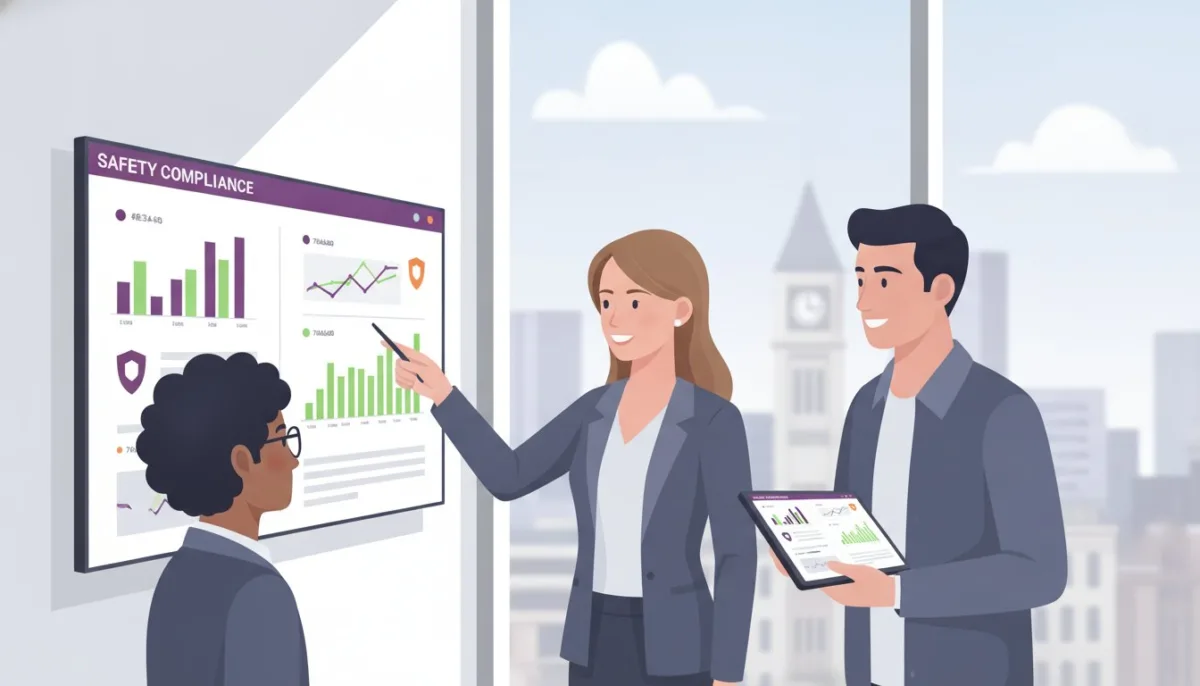
Could your current approach to health and safety be the very thing holding your business back? With 40.1 million working days lost to work-related ill health and injury in Great Britain during the 2024/2025 period, the traditional reliance on paper-heavy processes is no longer just a nuisance; it’s a significant operational risk. You likely feel the weight of manual risk assessments whilst lacking real-time visibility across your various UK sites. It’s a common frustration that often leads to anxiety over data security and the ever-present pressure of GDPR compliance.
Adopting cloud based safety management changes this dynamic by shifting safety from a back-office burden to a mobile-first operational advantage. This guide will show you how a centralised digital system creates a single source of truth that empowers your workforce and simplifies complex regulatory requirements. We’ll examine how these modern tools ensure your organisation remains aligned with UK HSE standards and the latest 2026 cyber security legislation, providing you with the total control and peace of mind you need to focus on growth.
Key Takeaways
- Learn how a centralised digital ecosystem replaces traditional paper-based systems to provide a single source of truth for your safety data.
- Discover how cloud based safety management enhances real-time visibility across multiple UK sites whilst empowering your workforce with mobile tools.
- Understand the importance of ISO 27001 standards and UK regulatory frameworks in ensuring your sensitive safety data remains secure and compliant.
- Master a structured approach to auditing your current processes and selecting a mobile-first platform that aligns with your team’s daily behaviour.
- Explore how dedicated solutions like Compliance Genie and Contractor Genie can modernise your health and safety oversight and contractor management.
What is Cloud Based Safety Management in the Modern UK Workplace?
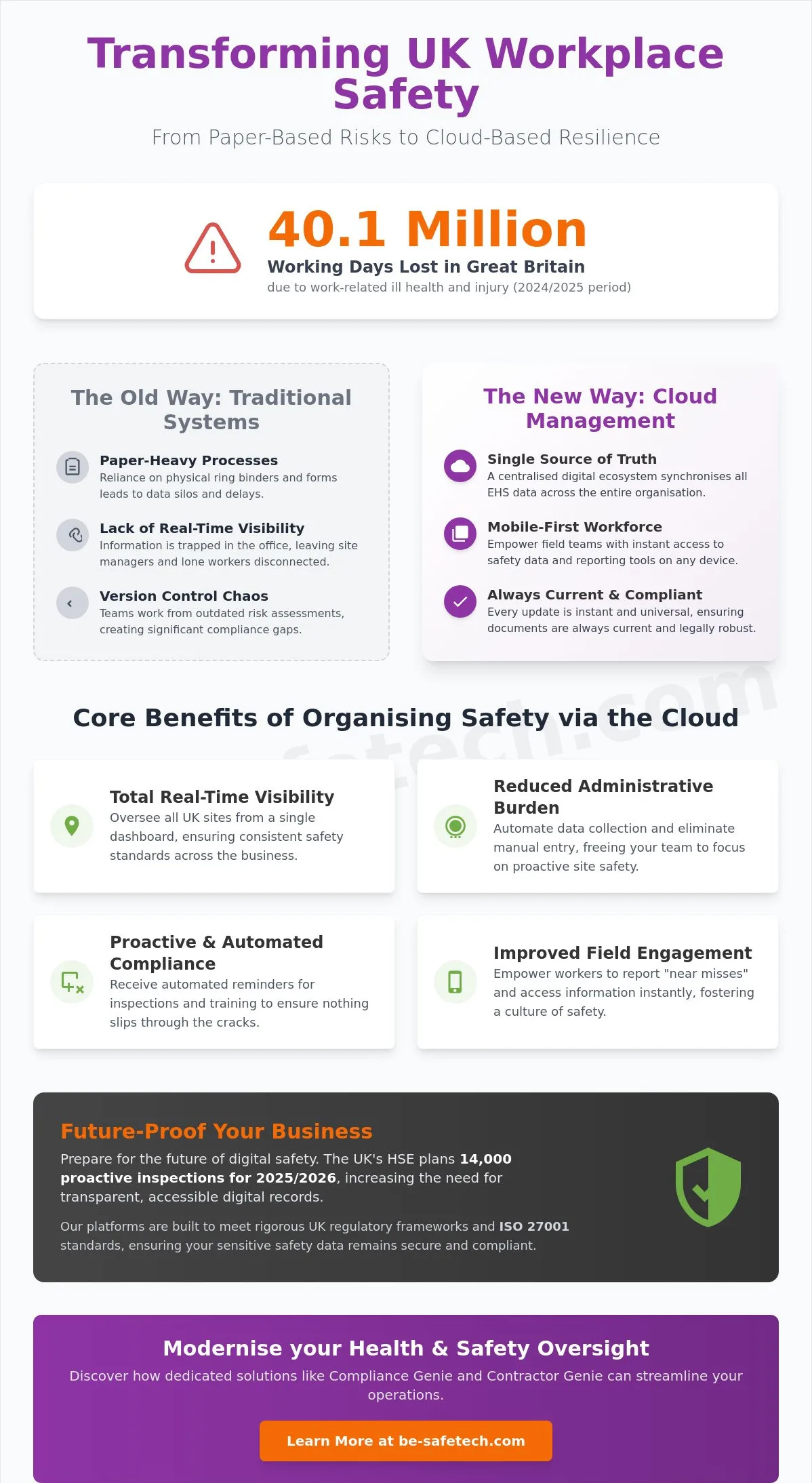
Modern cloud based safety management is far more than a digital filing cabinet for your risk assessments. It’s a centralised digital ecosystem that synchronises environment, health, and safety (EHS) data across your entire organisation in real time. Whilst legacy systems rely on physical ring binders or local servers that are difficult to access from the field, cloud platforms host data on secure, remote servers accessible from any device with an internet connection. This shift allows UK businesses to move away from the “paper mountain” towards a streamlined, transparent way of working.
The transition from local hardware to Software as a Service (SaaS) is driven by the need for agility. Managing safety on a local server often means your data is trapped in the office, leaving site managers and lone workers disconnected from vital updates. By adopting a cloud model, you ensure that every member of your team has the same information at the same time. When migrating to these platforms, understanding cloud computing security is vital for protecting sensitive employee data and ensuring business continuity. This infrastructure is now the baseline for any organisation that views safety as an operational advantage rather than a box-ticking exercise.
For organisations that require highly specialised functionality beyond standard SaaS offerings, the option to explore Laravel Web Development provides a pathway to building bespoke, high-performance systems that align perfectly with complex UK compliance needs.
The Evolution from Spreadsheets to SaaS
Static safety records, such as spreadsheets or Word documents, carry significant risks in a fast-moving regulatory environment. Version control is perhaps the biggest hurdle; it’s all too easy for a site team to be working from “Risk Assessment v2” whilst the head office has already updated to “v4” to reflect new HSE guidance. Cloud systems eliminate this confusion by maintaining a single, “live” version of every document. Every update is instant and universal, ensuring that your compliance documents are always current and legally robust. This level of organisation transforms safety from a reactive scramble into a proactive, controlled process.
Why 2026 is the Year of Digital Safety
The UK regulatory landscape is becoming increasingly data-driven. With the Health and Safety Executive (HSE) planning 14,000 proactive inspections for 2025/2026, there is a clear expectation for businesses to provide transparent and easily accessible safety records. These inspections will focus heavily on modern challenges like workplace stress and musculoskeletal disorders, which require the detailed tracking that only digital systems can provide. The role of modern safety management software is pivotal in this transition, as it allows businesses to demonstrate a culture of active care rather than just passive compliance. Cloud based safety management serves as the essential infrastructure for UK businesses aiming to achieve ambitious zero-harm targets whilst managing the complexities of a multicultural, multi-site workforce.
Core Benefits of Organising Safety via the Cloud
Organising safety through the cloud provides a level of oversight that physical folders simply cannot match. For organisations managing multiple UK locations, the ability to see exactly what is happening on a site in Manchester whilst sitting in a London office is transformative. This real-time visibility ensures that no site is left behind and that safety standards remain consistent across the entire business. Beyond visibility, cloud based safety management significantly reduces administrative red tape. By automating the collection of data, you eliminate the need for manual entry and the inevitable human errors that follow. This shift moves your team away from tedious data entry and towards more meaningful site-based protection.
The system handles the heavy lifting of compliance by issuing automated reminders for equipment inspections, staff training renewals, and upcoming audit deadlines. This proactive approach ensures that nothing slips through the cracks, allowing your safety team to focus on high-level strategy rather than chasing paperwork. The benefits of cloud computing extend to every level of the hierarchy, creating a more reliable and stress-free environment for everyone involved. It builds a foundation of trust where every stakeholder knows that the necessary checks are being performed on time and recorded accurately.
Mobile Accessibility and Field Engagement
Engagement is often the missing piece of the safety puzzle. When reporting a “near miss” involves walking back to a site office to fill out a paper form, it often doesn’t happen. Mobile apps change this behaviour by putting compliance tools directly into the hands of the workforce. Workers can report hazards or complete checklists instantly using their own devices, which fosters a sense of ownership and accountability. There is also a psychological benefit to using a clean, reassuring digital interface; it makes complex tasks feel manageable for non-technical staff. Implementing mobile first safety software is a practical way to bridge the gap between office-based policy and site-based reality. This mobile-first approach ensures that safety is seen as a supportive tool rather than a hurdle to overcome.
Data-Driven Insights and Proactive Prevention
Cloud platforms excel at turning raw data into actionable safety dashboards. Instead of digging through files to find trends, you can identify “hotspots” or recurring hazards with a few clicks. Utilising cloud based safety management allows you to shift from reactive reporting to proactive safety leadership. If the data shows a spike in minor slips in a specific warehouse, you can intervene before a major incident occurs. This level of insight is essential for businesses looking to move beyond basic compliance. If you’re ready to see how these tools can work for your team, you might want to explore our digital safety solutions to start your transition.
Security and Standards: The UK Regulatory Framework
Is cloud-based safety data actually secure? This is the most common question raised by UK compliance officers when considering a digital transition. Moving sensitive health and safety records from a locked cabinet to a remote server can feel like a leap of faith. However, modern cloud based safety management often provides a level of protection that physical files or local spreadsheets simply cannot match. By hosting data in UK-based data centres, organisations ensure full compliance with UK GDPR and maintain data sovereignty, keeping sensitive employee information within the national jurisdiction.
Cloud systems are specifically designed to support the Health and Safety Executive’s “Plan, Do, Check, Act” (HSG65) framework. They create a continuous loop of improvement where data is not just stored but actively used to verify that safety controls are working as intended. This structured approach moves your organisation away from fragmented, reactive safety measures towards a cohesive and legally robust ecosystem. It provides the quiet confidence that your data is not only accessible but also protected by the same level of security used by financial institutions.
ISO 27001 and Data Integrity
ISO 27001 is the international gold standard for Information Security Management. It’s particularly significant for UK SaaS providers because it guarantees that a business has rigorous controls in place to protect data integrity. For safety professionals, this means your accident logs and training records cannot be lost, accidentally deleted, or altered without authorisation. Be-Safe Technologies holds both ISO 9001 and ISO 27001 certifications, reflecting a commitment to both quality management and the highest levels of digital security. These certifications provide peace of mind that your safety infrastructure is built on a foundation of recognised industry standards.
Meeting UK Legal Obligations Digitally
Ensuring that your risk assessments are “suitable and sufficient” is a core requirement of the Management of Health and Safety at Work Regulations 1999. Digital platforms facilitate this by providing standardised templates that guide your team through the necessary steps, reducing the risk of missing critical hazards. These systems also play a vital role in RIDDOR reporting, ensuring that reportable incidents are flagged and submitted to the HSE within the strict legal timeframes. Using digital audit checklist software allows your business to maintain an “audit-ready” status at all times. Instead of a frantic search for missing documents during a spot check, you can present a complete, timestamped history of your safety activities with a few clicks. This level of organisation demonstrates a proactive safety culture to inspectors and stakeholders alike.
Transitioning from Paper to Cloud Without Disruption
Moving away from a legacy of physical ring binders requires a methodical approach rather than a sudden overhaul. The goal is to integrate technology into your existing workflows whilst minimising operational downtime. A successful transition to cloud based safety management follows a structured roadmap that prioritises user adoption and data integrity. By following a logical sequence, you can transform your safety culture without overwhelming your workforce.
To ensure a smooth migration, follow these five tactical steps:
- Audit the archive: Identify the processes that carry the most risk or consume the most administrative time. Start by digitising these high-impact areas first to show immediate value.
- Prioritise mobile-first: Choose a platform that mirrors how your teams actually work in the field. If the software is difficult to use on a tablet or smartphone, adoption will stall.
- Implement a phased rollout: Don’t attempt to digitise everything at once. Introduce the system department by department, allowing for adequate training and support at each stage.
- Localise your templates: Tailor your digital forms to meet specific UK industry standards. Standardised templates ensure consistency across different sites and teams.
- Refine through data: Use monthly reviews to identify bottlenecks and recognise team improvements. Celebrating safety wins encourages long-term engagement with the new system.
Overcoming Internal Resistance
Veteran staff often hold the most institutional knowledge; their buy-in is vital for any digital project. Introducing new technology requires a sense of quiet confidence rather than a forced mandate. By identifying internal champions amongst your site teams, you create a network of peer-to-peer support that is far more effective than top-down instructions. It’s essential that the software adapts to the user’s existing behaviour. When workers see that the tool makes their day easier, resistance naturally fades. This human-centric approach ensures that cloud based safety management becomes a permanent part of your operational DNA.
Digitising Your Risk Assessments
Transitioning to dedicated health and safety risk assessment software turns a static obligation into a dynamic asset. Unlike paper forms that are often filed and forgotten, digital assessments allow you to “close the loop” by linking identified hazards directly to corrective actions. This ensures that every risk is not just recorded but actively managed. A digital risk assessment should be a living document, updated whilst on the move to reflect the actual conditions on-site. For a practical roadmap on how to reduce health and safety paperwork across your entire operation, a structured digital approach is essential. If you’re ready to digitise your operations, you can book a personalised demo of our compliance platform today to see these tools in action.
Future-Proofing Your Business with Be-Safe Technologies
Adopting cloud based safety management is a strategic decision that protects your most valuable asset: your people. As UK regulations continue to evolve, having a flexible and scalable digital infrastructure becomes a necessity rather than a luxury. Be-Safe Technologies provides the tools you need to move beyond basic compliance and into a state of operational harmony. We position ourselves as a supportive ally in your digital journey, offering professional assurance that your safety systems are robust, secure, and ready for the challenges of 2026 and beyond.
Our approach is built on the belief that safety should be accessible to everyone, regardless of their technical expertise or location. By centralising your data, you create a culture of total oversight where every site manager and safety officer has the clarity they need to make informed decisions. This partnership allows you to reduce the stress associated with complex regulatory environments, giving you the peace of mind that your business is operating to the highest industry standards.
Compliance Genie: Total Oversight for UK Teams
Compliance Genie is our award-winning, mobile first safety software solution designed specifically for the needs of UK SMEs. It serves as your “single source of truth,” housing everything from risk assessments and incident reporting to real-time safety dashboards in one secure location. The platform is built with diversity in mind, featuring a multicultural-friendly interface that ensures ease of use for the entire UK workforce. This inclusive design encourages higher engagement levels, as staff from all backgrounds can navigate the system with confidence. Whether your team is conducting a routine inspection or reporting a near miss, Compliance Genie provides a streamlined experience that turns safety data into a tangible business advantage.
Contractor Genie: Secure Site Visit Management
Managing the risks associated with third-party workers is a frequent pain point for UK businesses. Contractor Genie simplifies this process by allowing you to manage site visits and external workers in one secure place. By linking contractor compliance to your wider contractor management software UK strategy, you ensure that every person on your site meets your specific safety requirements before they even begin work. This level of control is essential for maintaining a zero-harm environment whilst managing complex supply chains. If you’re ready to see how our tools can transform your operations, you can book a demo of Compliance Genie today to begin your transition to a modern, cloud-based future.
Elevating Your UK Compliance Standards
Transitioning to a digital safety ecosystem is about more than just replacing paper; it’s about building a resilient and future-proof organisation. By adopting cloud based safety management, you gain the real-time visibility required to manage multiple UK sites with total control and quiet confidence. This shift ensures your business remains aligned with evolving HSE expectations whilst empowering your workforce through intuitive, mobile-first tools. You’ve seen how a centralised “single source of truth” reduces administrative red tape and transforms compliance into a genuine operational advantage. It’s time to modernise.
Be-Safe Technologies is here to support your digital journey with a partnership built on reliability and recognised standards. As an ISO 9001 and 27001 Certified provider, we ensure your sensitive data remains protected by the highest levels of digital security. Our mobile-first platform is specifically designed for the practicalities of site-based operations, backed by an award-winning UK-based support team. Take the first step towards total oversight and request a personal demo of Compliance Genie today. We’re ready to help you simplify your safety management and protect your people more effectively.
Frequently Asked Questions
Is cloud-based safety management more secure than keeping paper records?
Yes, digital systems are significantly more secure than traditional paper-based methods. Whilst physical folders can be lost, damaged by fire, or accessed by unauthorised personnel, cloud based safety management uses high-level encryption and secure UK data centres to protect your information. Digital audit trails ensure that every entry is timestamped and attributed to a specific user, providing a level of data integrity that physical files simply cannot match.
How does cloud safety software help with UK HSE inspections?
It transforms the inspection process by providing instant access to organised, “audit-ready” records. Instead of searching through binders during a spot check, you can present a complete history of risk assessments and training logs with a few clicks. This transparency demonstrates a proactive safety culture to the Health and Safety Executive (HSE). It proves that your business isn’t just reacting to incidents but is actively managing risks through a structured framework.
Can my team access safety documents on-site without an internet connection?
Yes, modern platforms like Compliance Genie include offline capabilities to support teams working in remote locations or basements. Workers can complete checklists and report incidents on their mobile devices whilst offline. The system then automatically synchronises the data once a Wi-Fi or mobile signal is restored. This ensures that safety protocols are followed even in the most challenging environments without any loss of data.
Is cloud safety management software compliant with UK GDPR regulations?
Yes, provided the software provider hosts data in UK-based centres and adheres to strict data processing standards. Digital systems often make GDPR compliance easier than paper records because they allow for granular access controls and automated data retention policies. You can ensure that sensitive employee health information is only visible to authorised staff, helping you meet your legal obligations under the Data Protection Act 2018.
How long does it take to transition from paper to cloud-based safety software?
A typical transition usually takes between a few weeks and a few months, depending on the size of your organisation. Adopting a phased approach allows you to digitise high-priority processes first, such as risk assessments, before moving on to broader areas like training matrices. This gradual rollout ensures that your staff feel supported and prevents the operational disruption that can occur with a sudden “big bang” implementation.
Do I need technical expertise to manage a cloud-based safety platform?
No, technical expertise isn’t required to use modern cloud based safety management tools. These platforms are designed for site-based workers and managers who need to complete tasks quickly and efficiently. If your team can use a standard smartphone app, they can navigate these systems. The software provider handles the complex technical infrastructure, including security updates and backups, leaving you free to focus on safety leadership.
What happens to our safety data if we lose internet access?
Your data remains safe and accessible on your local device. Modern SaaS platforms use local storage to cache information whilst you’re offline. Once your connection returns, the system performs an auto-sync to update the central dashboard. This means your “single source of truth” is always maintained without manual intervention, ensuring that your head office and site teams remain aligned even after temporary connectivity issues.
Can cloud safety software be customised for specific UK industries?
Yes, the best systems are highly flexible and can be tailored to reflect the unique hazards of sectors like construction, manufacturing, or healthcare. You can customise digital templates to include specific risk factors such as Work at Height or COSHH requirements. This ensures that the software adapts to your existing operational behaviour rather than forcing your team to follow a generic, one-size-fits-all process that doesn’t fit your workplace reality.