


Why Mobile-First Safety Software is Defining UK Compliance in 2026
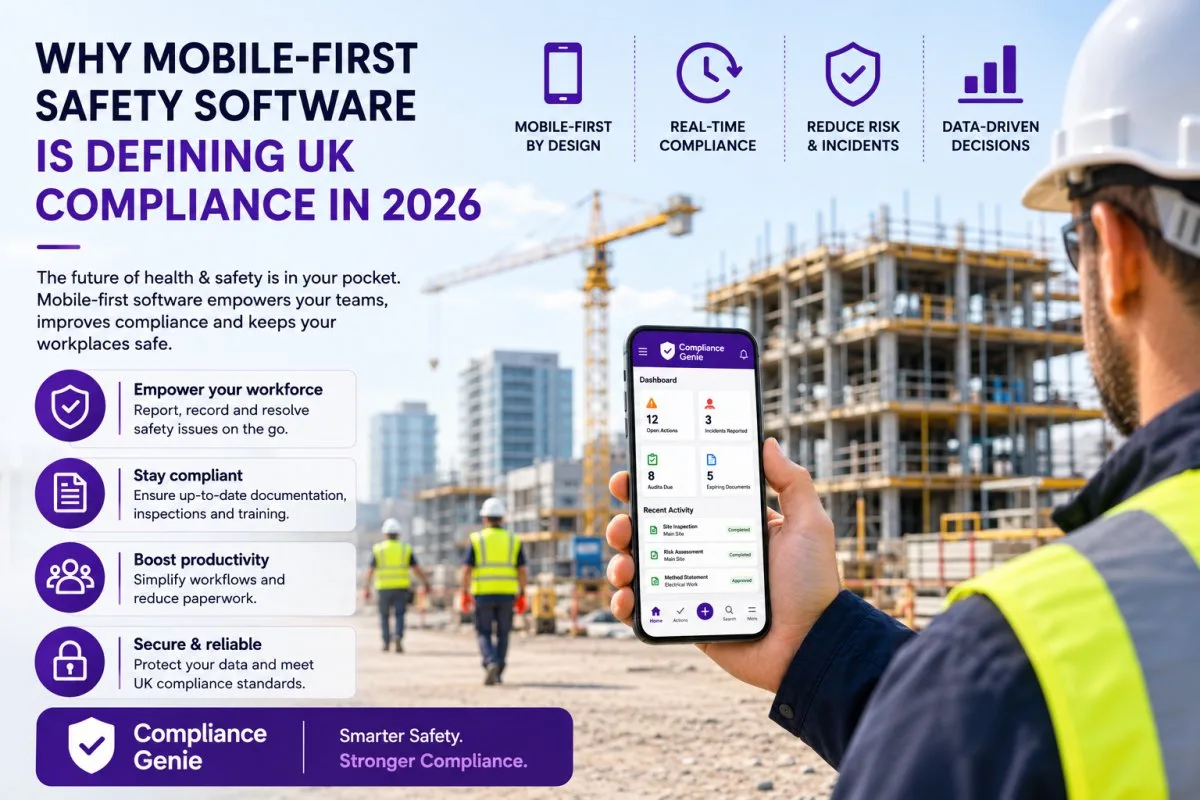
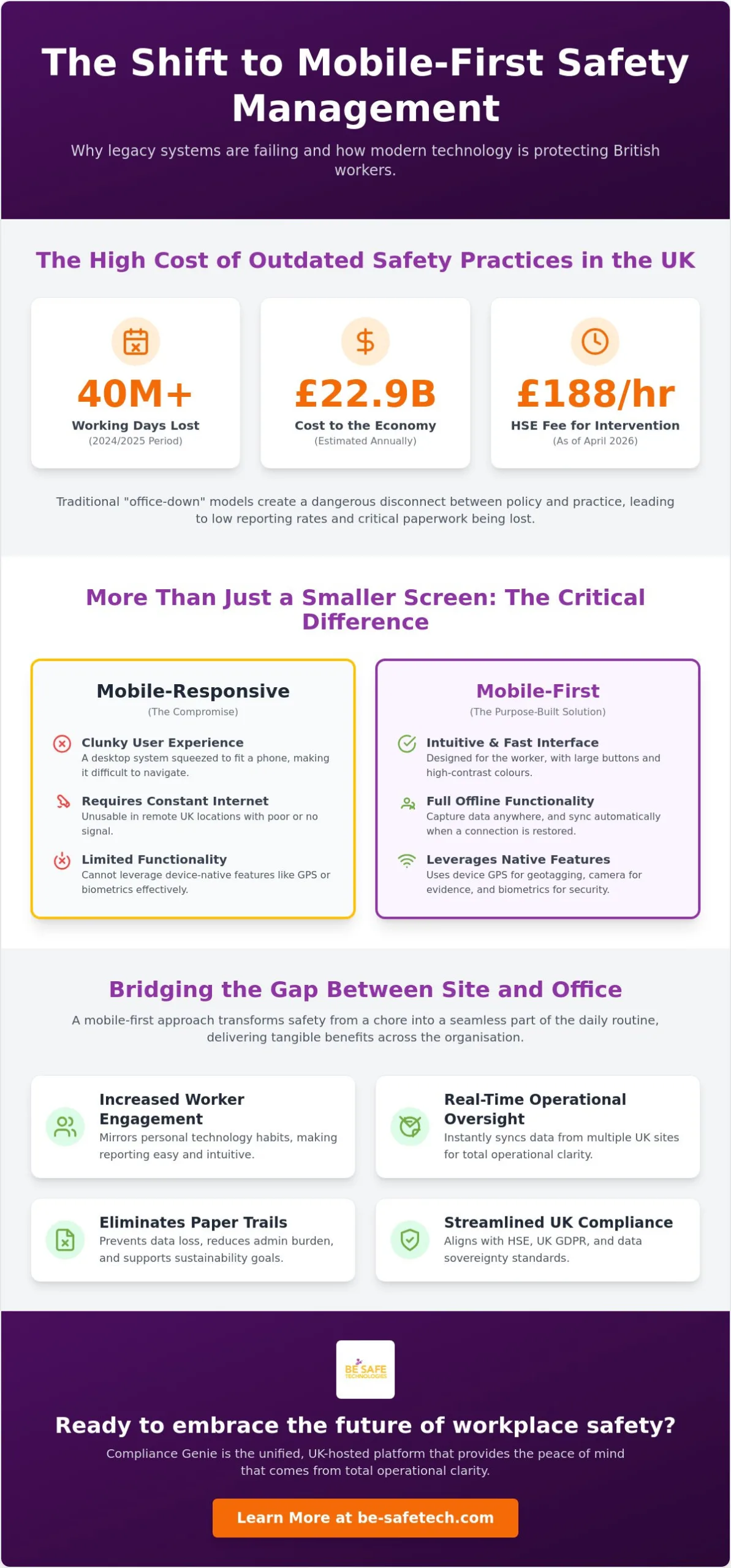
Over 40 million working days were lost in the UK during the 2024/2025 period due to work-related illness and injury, costing the economy an estimated £22.9 billion. If you’re managing safety across several sites, you’ve probably experienced the frustration of low reporting rates from frontline staff or the anxiety of losing critical paperwork. It’s difficult to maintain total control whilst juggling complex HSE requirements and rising Fee for Intervention rates, which reached £188 per hour in April 2026. Transitioning to mobile first safety software is no longer just a digital upgrade; it’s a vital step in ensuring your team remains engaged and your business stays protected.
We believe that managing compliance should be a source of peace of mind rather than an administrative headache. This guide will show you how mobile-first technology is redefining workplace safety by making reporting intuitive for every worker. By linking real-time data capture to automated reporting, these tools help you eliminate paper loss and reduce the stress of regulatory audits. You’ll discover how to simplify your safety processes and navigate the latest requirements of the Data (Use and Access) Act 2025 with quiet confidence.
Key Takeaways
- Understand why the shift from desktop-centric systems to frontline-led reporting is essential for meeting modern HSE expectations and driving real-time compliance.
- Learn the critical differences between mobile-responsive and mobile first safety software, including why offline functionality is a necessity for remote UK work sites.
- Discover how mirroring personal technology habits through mobile apps can significantly increase worker engagement and reporting rates across your organisation.
- Gain a clear step-by-step approach to transitioning from paper-based systems whilst ensuring your data management aligns with UK GDPR and data sovereignty standards.
- Explore how a unified, UK-hosted platform like Compliance Genie integrates risk assessments and incident reporting to provide total operational oversight.
The Evolution of UK Workplace Safety: Why Desktop-Only is No Longer Enough
Traditionally, safety management in the UK followed a rigid, “office-down” model. Policies were drafted in boardrooms, printed into thick manuals, and stored in lever-arch folders that rarely left the site office. This top-down approach created a significant disconnect between those designing the rules and the frontline workers tasked with following them. In 2026, this fragmented way of working is no longer sufficient to meet modern Occupational safety and health standards. The Health and Safety Executive (HSE) has increasingly prioritised the need for real-time data and active oversight, moving away from static, retrospective reporting.
Spreadsheets and desktop-bound systems often fail when applied to the dynamic reality of remote site operations. A supervisor working on a rail project in the Highlands or a construction site in Manchester cannot be expected to return to a central office just to log a minor incident or update a risk assessment. These legacy systems are often cumbersome and inaccessible, leading to skipped steps and incomplete data. True mobile first safety software solves this by providing a native solution designed specifically for the worker on the move. It isn’t just a website viewed on a phone; it’s a purpose-built tool that lives where the work actually happens.
The Death of the Paper Trail in British Industry
For decades, physical risk assessments and paper audit logs were the backbone of British industrial safety. However, the administrative burden of managing these physical records is immense. Paper-based systems are prone to damage, loss, and “compliance lag,” where critical information takes days or weeks to reach safety managers. As the UK pushes towards more sustainable, paperless operations, the environmental impact of these manual processes is also under scrutiny. Moving to a digital-first approach ensures that records are permanent, searchable, and instantly available for inspection. If your organisation is still relying on manual filing systems, our practical guide on how to reduce health and safety paperwork digitally provides a clear roadmap for making the switch.
Bridging the Gap Between Site and Office
There is a fundamental difference between a hazard being spotted and a hazard being logged. When a worker has to wait until the end of their shift to report a concern, the details often become blurred or the report is forgotten entirely. Using mobile first safety software allows for instant data synchronisation, which means head office can see exactly what is happening across multiple UK sites in real time. This immediate flow of information reduces the friction of compliance for workers in the field. It transforms safety from a chore that happens after the work is done into a seamless part of the daily routine, providing everyone with the peace of mind that comes from total operational clarity.
Defining ‘Mobile-First’ Safety Software: More Than Just a Smaller Screen
There’s a common misconception that having a mobile-responsive website is the same as being mobile-first. In reality, the two represent entirely different architectural philosophies. A mobile-responsive platform is essentially a desktop system squeezed down to fit a smaller display; it’s often clunky and relies on a constant internet connection to function. Conversely, mobile first safety software is built from the ground up to leverage the specific hardware of a smartphone or tablet. This approach empowers workers by providing a tool that feels natural to the user, rather than a bureaucratic hurdle they have to navigate on a tiny screen.
True mobile-first design prioritises the environment of the worker. This means interfaces are designed with high-contrast colours for outdoor visibility and large, tactile buttons that accommodate gloved hands on a cold morning in Birmingham. It also integrates native device features that a web browser simply cannot access as effectively. For instance, using a device’s GPS ensures that incident reports are accurately geotagged, whilst biometric security like face or fingerprint ID allows for secure, password-free access in the rain. These features don’t just make life easier; they ensure the data you collect is high-quality and tamper-proof.
Native Functionality and Offline Reliability
Signal drops happen. Whether your team is working in a reinforced concrete basement in London or a remote utility site in the Peak District, 4G and 5G coverage is rarely guaranteed. “Lite” web versions of software often fail exactly when they’re needed most, leading to lost data or abandoned reports. A native app continues to function without a connection, allowing a worker to complete a full risk assessment offline. Once they return to an area with signal, the system uses automatic syncing to upload the data. This ensures total data integrity and gives managers the peace of mind that no critical information has slipped through the cracks. If you’re looking to upgrade your current systems, exploring a dedicated mobile safety solution can bridge these connectivity gaps.
The Psychology of the Mobile Interface
Modern workers are already comfortable with apps in their personal lives. By mirroring these familiar tech habits, mobile first safety software reduces “app fatigue” and lowers the barrier to entry for new users. Simplified, task-focused workflows mean a worker can log a near-miss in seconds rather than minutes. This ease of use is particularly important for the UK’s diverse, multicultural workforce. Intuitive icons and clear, logical navigation ensure that safety processes remain accessible to everyone, regardless of their technical background. When reporting becomes as simple as sending a message, engagement levels naturally rise, creating a more proactive safety culture across the entire organisation.
Just as safety tools are evolving, so too are the digital resources available for personal and professional growth. To explore a marketplace that provides high-quality digital guides and lifestyle items, you can discover Adamase and see how their range of products can complement your team’s development.
Comparing Adoption Trends: How Mobile-First Drives Frontline Engagement
Traditional desktop portals often feel like a administrative chore. They require a worker to leave their post, locate a shared terminal, and navigate complex menus that were never designed for a touchscreen. In contrast, mobile first safety software meets workers exactly where they are. With approximately 85% of the UK population owning a smartphone as of 2025, the barrier to digital adoption has effectively vanished. Most employees are already experts at using mobile interfaces; the challenge for businesses is simply providing a tool that matches that existing expertise.
We often refer to this as the “Social Media Effect.” Workers today expect professional tools to mirror the intuitive, fast-paced apps they use in their personal lives. This desire for digital simplicity often extends into the home, where systems like Samora help parents bring structure and calm to their morning routines. When a safety platform feels as familiar as a messaging app, reporting rates naturally climb. It isn’t about forcing compliance through rigid mandates. Instead, it’s about making safety the path of least resistance. This shift moves the needle from a reactive culture of logging accidents after they happen to a proactive culture of hazard awareness. When reporting is instant, workers are far more likely to flag a trailing cable or a blocked fire exit before it leads to a RIDDOR-reportable incident.
Trust is a vital component of this transition. Some workers initially fear a “Big Brother” scenario where digital tools are used for surveillance. Addressing this myth head-on is essential. Transparency about how data is stored under UK GDPR and how it’s used to improve site conditions helps to build a partnership. When the focus remains on collective protection rather than individual policing, the software becomes a trusted ally on the frontline.
Empowering the Worker with Instant Information
Workers gain immediate access to critical data, such as COSHH sheets and safety method statements, directly on their devices. There’s no longer a need to hunt through dusty folders in a site hut for vital information. Digital signatures and instant verification of site inductions ensure that everyone present is fully briefed and qualified. For those managing diverse teams, Contractor Genie streamlines external worker oversight, ensuring third-party staff are just as integrated into your safety culture as your direct employees.
Gamification and Positive Reinforcement
Safety management doesn’t have to be a purely negative process. Mobile alerts can be used to celebrate safety milestones or recognise exemplary practice on site. Push notifications serve as helpful prompts for daily checks, maintaining awareness without the need for constant supervision. This approach shifts the focus from “policing” behaviour to “organising” safety together. By using positive reinforcement, businesses can transform compliance from a bureaucratic requirement into a shared point of pride for the entire team.
Implementing a Mobile-First Strategy: Navigating UK Compliance and Security
Moving from weathered site diaries and spreadsheets to a digital ecosystem requires more than just downloading an app. It’s a strategic shift that prioritises data integrity and frontline ease of use. Whilst the transition may seem daunting, a methodical approach ensures that your safety records remain secure, accessible, and fully aligned with British regulatory standards. Adopting mobile first safety software allows you to replace fragmented paper trails with a unified, UK-hosted platform that provides total operational oversight.
The first step in this journey is auditing your current processes to identify where paper loss or reporting delays occur most frequently. Often, the friction lies in the time it takes for a site-based observation to reach a central database. By digitising these touchpoints, you ensure that every risk assessment and incident report is timestamped and geotagged at the source. This level of transparency is essential for maintaining peace of mind during HSE inspections or internal audits. For a deeper look at how to systematically reduce health and safety paperwork across your organisation, our dedicated guide walks you through each stage of the digital transition.
UK Security Standards and Data Protection
Data sovereignty is a critical consideration for any UK business. Choosing ISO 27001 compliant safety software is non-negotiable for ensuring that sensitive employee health data is stored securely. Under the Data (Use and Access) Act 2025, businesses now have specific obligations regarding how they handle data protection complaints and automated decision-making. Working with a G-Cloud approved provider further validates that the software meets the rigorous security standards required for both private and public sector procurement in the UK. If you’re evaluating your options and want to understand how a purpose-built British platform compares to global enterprise solutions, our detailed Intelex vs Compliance Genie 2026 UK EHS software comparison examines the key differences in mobile-first agility, G-Cloud compatibility, and frontline user adoption. If you’re ready to secure your safety data, you can explore our UK-hosted compliance solutions to see how we protect your business interests.
Strategies for Successful Workforce Onboarding
Overcoming tech-resistance is often the biggest hurdle during implementation. We’ve found that identifying “Safety Champions” amongst your site teams can lead to much faster mobile adoption. These individuals act as peer mentors, demonstrating the practical benefits of the software to their colleagues. Instead of overwhelming staff with lengthy manuals, provide bite-sized, instructional videos that focus on specific tasks like logging a near-miss or completing a DSE assessment. Measuring success through key performance indicators (KPIs), such as the percentage of reports submitted via the app versus legacy methods, helps you track engagement and identify areas where additional support might be needed. This supportive approach transforms the software from a management tool into a valuable daily ally for every worker.
Compliance Genie: The Future of British Mobile-First Safety Management
Compliance Genie represents a fundamental shift in how UK organisations approach their legal and moral obligations. Unlike legacy systems that added mobile components as an afterthought, our platform was engineered from its very first line of code as mobile first safety software. This distinction is vital for safety leaders who require a system that feels natural to the operative on the ground whilst providing the robust data oversight needed at the boardroom level. By hosting all data within the UK, we offer the grounded reliability that modern businesses demand.
Whether you are a growing SME or a large-scale enterprise, our technology adapts to your specific operational structure. It isn’t about forcing your team to change how they work; it’s about providing tools that enhance their existing workflows. Be-Safe Technologies Ltd has become a trusted partner for safety professionals by prioritising the ease of the end-user experience without compromising on technical proficiency or certification standards. We understand that true efficiency comes from tools that workers actually want to use.
An All-in-One Digital Safety Ecosystem
The true power of an all-in-one digital safety ecosystem lies in its ability to connect high-level strategy with real-world site activity. By utilising our health and safety compliance software, you can ensure that every policy is actionable and every risk is mitigated in real time. Our customisable modules allow you to manage everything from fire risk assessments to periodic equipment inspections within a single interface. Having digital audit checklist software in your pocket means that quality control and safety verification are no longer restricted to the site office. This accessibility ensures that compliance is a living part of your business culture rather than a static document.
Take the Next Step in Your Safety Journey
Starting your digital transition is a significant step towards long-term operational harmony. We invite you to book a tailored demonstration to see how mobile first safety software can be configured to meet your unique challenges. Our UK-based support team is here to assist you at every stage, from initial setup to workforce onboarding, ensuring that your transition is as smooth as possible. We focus on reducing the stress of safety management by offering total control and clarity across all your sites. Experience the power of Compliance Genie today and discover how we can help you build a safer, more efficient future for your organisation.
Lead the Future of UK Workplace Safety
The shift toward a frontline-led safety culture is essential for any organisation navigating the regulatory complexities of 2026. Transitioning to mobile first safety software provides more than just a digital record; it creates a living ecosystem where every worker is empowered to lead compliance. By prioritising native functionality and offline reliability, you ensure that critical data is captured accurately at the source, regardless of site location or signal strength. This approach replaces administrative burdens with total operational clarity and the peace of mind that comes from robust data security.
As an award-winning EHS digital platform, we’re proud to be ISO 9001 and ISO 27001 Certified. Be-Safe Technologies Ltd and our UK-based development and support team are dedicated to helping you streamline your processes whilst maintaining the highest industry standards. We’re here to ensure your digital transition is a success and that your team remains protected at all times.
Request a demo of our award-winning mobile-first safety software and discover how we can help you build a safer, more efficient workplace. It’s time to transform your safety management into a streamlined part of your daily success.
Frequently Asked Questions
What exactly does mobile-first mean in the context of safety software?
Mobile-first means the platform is architected specifically for mobile devices before any desktop version is considered. It prioritises native functionality like GPS and cameras to enhance the user experience on-site. This approach ensures that mobile first safety software is intuitive and responsive in the field, rather than being a scaled-down version of a complex desktop programme that’s difficult to navigate on a small screen.
Is mobile-first safety software compliant with UK HSE regulations?
Yes, digital systems are fully recognised by the Health and Safety Executive (HSE) provided they accurately record and store required data. Using mobile first safety software often improves compliance because it captures timestamped, geotagged information in real time. This level of detail provides a more robust audit trail than traditional paper records, helping your business meet the strict requirements of the Health and Safety at Work etc. Act 1974.
How does a mobile safety app work in areas with no internet connection?
Native mobile apps utilise local device storage to allow workers to complete risk assessments and audits whilst offline. Once the device re-establishes a 4G, 5G, or Wi-Fi connection, the data synchronises automatically with the central cloud database. This ensures that safety reporting continues uninterrupted in remote UK locations, such as basement sites or rural utility projects, without any risk of data loss or administrative delay.
Can mobile-first software help with our ISO 45001 or ISO 9001 certifications?
Digital platforms significantly streamline the evidence-gathering process required for ISO certifications. By centralising all safety documentation and audit logs, the software provides a clear, searchable history of your safety management system. This transparency demonstrates a commitment to continuous improvement and operational control. These are core pillars of both ISO 45001 and ISO 9001 standards, making the annual certification audit much more manageable for your team.
Is our data secure when using a mobile-first safety platform?
Data security is a top priority, especially with the requirements of the Data (Use and Access) Act 2025. Reputable UK providers use encrypted cloud storage and maintain ISO 27001 certification to protect sensitive health and safety information. Choosing a system that hosts data within the UK ensures you remain compliant with UK GDPR whilst benefitting from robust backup protocols and biometric access controls on individual devices.
How long does it take to transition from paper to a mobile-first system?
A typical transition can take anywhere from a few weeks to a couple of months, depending on the size of your organisation. The process involves digitising your existing forms, setting up user hierarchies, and conducting initial team training. Starting with a pilot project on a single site often helps to refine the workflow before rolling the system out across the entire business for a smoother, more confident transition.
Do we need to provide company phones for workers to use safety software?
Not necessarily, as many UK businesses successfully implement “Bring Your Own Device” (BYOD) policies for their teams. Modern safety apps are designed to be lightweight and secure, ensuring they don’t interfere with personal data on a worker’s phone. However, some firms prefer providing ruggedised tablets for site use to ensure consistency and to support workers who may not own a compatible smartphone or prefer not to use it.
Can mobile safety software handle complex risk assessments and COSHH data?
Yes, the software is designed to manage high-level technical data including complex risk assessments and COSHH requirements. Digital modules store safety data sheets and method statements, making them instantly accessible to workers on the frontline. This ensures that critical safety information is always available at the point of use, which reduces the risk of errors and significantly improves overall site safety and compliance.