



What Does COSHH Stand For? UK Regulations Guide 2026

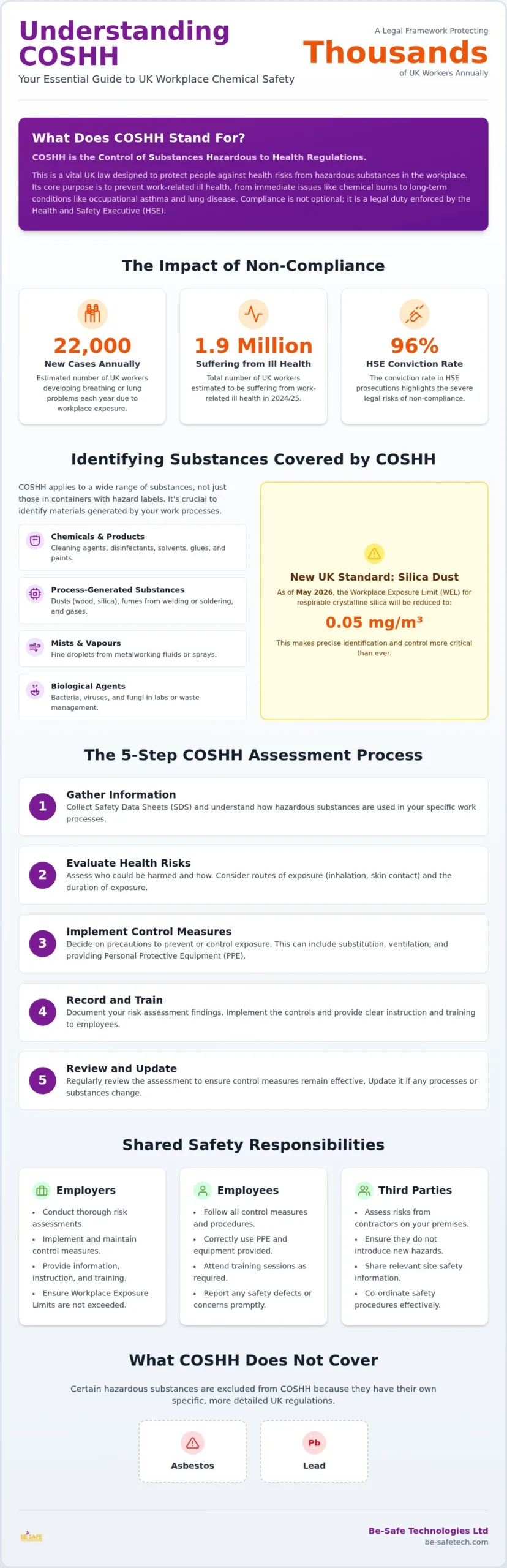
With an estimated 22,000 UK workers developing new breathing or lung problems every year, understanding exactly what coshh stands for is more than a simple box-ticking exercise; it’s a vital part of your duty of care. You likely recognise that protecting your team is the absolute priority, yet the mountain of manual paperwork and the constant pressure of HSE inspections can make compliance feel like an overwhelming burden. It’s a common struggle to track Safety Data Sheets across multiple sites whilst trying to stay ahead of evolving regulations and the risk of significant legal breaches.
This guide outlines your legal obligations as a UK employer under the updated 2026 standards and shows you how to modernise your chemical safety management for total peace of mind. We’ll explore the latest Workplace Exposure Limits and provide a practical framework to streamline your assessments. By the end, you’ll have a clear path to move from fragmented paper records to a state of total operational harmony, ensuring your business remains both safe and fully compliant without the administrative stress.
Key Takeaways
- Understand exactly what coshh stands for and how these statutory UK regulations serve as a vital framework for protecting your workforce from harmful exposures.
- Learn to identify both obvious and hidden hazards, such as silica dust and welding fumes, to ensure total safety coverage across all your operational sites.
- Master the five-step assessment process to move beyond simple box-ticking and create a robust safety culture that prioritises employee health and long-term compliance.
- Clarify which substances are excluded from COSHH, such as lead and asbestos, so you always apply the correct specialised UK safety legislation for every hazard.
- Discover how modern software like Compliance Genie can replace manual paperwork with instant, mobile-first access to critical safety data and cloud-based audit trails.
What COSHH Stands For and Why It Matters for UK Businesses
COSHH is a cornerstone of UK health and safety law that every business owner must understand to operate safely and legally. If you’ve ever wondered exactly what coshh stands for, it is the Control of Substances Hazardous to Health Regulations. This legislation acts as a statutory instrument across the United Kingdom, designed specifically to protect employees and others from the harmful effects of substances encountered in the workplace. It isn’t just a suggestion; it’s a legal mandate that carries significant weight in the eyes of the Health and Safety Executive (HSE). Breaching these regulations can lead to severe consequences, including unlimited fines in Crown Court or even personal imprisonment for directors and managers. Fundamentally, COSHH serves as the comprehensive framework for identifying, assessing, and controlling chemical and biological risks within your business operations.
The Core Purpose of COSHH Regulations
Beyond legal compliance, the real value lies in protecting your most important asset: your people. The primary goal of the Control of Substances Hazardous to Health Regulations 2002 is to prevent preventable ill health. This includes immediate issues like chemical burns or dermatitis, as well as chronic, long-term conditions such as occupational asthma and debilitating lung diseases. These conditions affect thousands of UK workers annually, with an estimated 1.9 million people suffering from work-related ill health in 2024/25. A critical part of the regulation involves ensuring that Workplace Exposure Limits (WELs) are never exceeded amongst your workforce. By following these rules, you don’t just avoid the risk of a 96% conviction rate in HSE prosecutions; you build a culture of professional care where every hazardous material is handled with precision.
Who is Responsible for COSHH Compliance?
Maintaining safety is a collective effort. The law is clear. Primary responsibility lies with the employer to provide a safe working environment by conducting thorough assessments and implementing robust controls. This includes keeping up-to-date records and ensuring that safety information is accessible to those who need it. However, the legislation also places a duty on employees. They must follow the control measures put in place, attend training, and correctly use any personal protective equipment (PPE) provided. Managing third parties is equally vital. You must ensure that contractors brought onto your premises don’t introduce new risks that could endanger your site or your staff. Effective oversight means that everyone, from the managing director to the newest apprentice, understands their role in maintaining a hazard-free workplace.
Identifying Substances Covered by COSHH Regulations
Correctly identifying what coshh stands for in a practical, day-to-day context is the first step toward a safe operation. Many managers assume that if a substance doesn’t arrive in a container with a red diamond warning label, it isn’t hazardous. This is a common oversight that can be easily corrected with the right approach. COSHH covers a vast range of materials, including those generated by your processes, such as wood dust, silica dust, and welding fumes. In fact, as of May 2026, the HSE has reduced the Workplace Exposure Limit for respirable crystalline silica to 0.05 mg/m³. This change makes precise identification more critical than ever. To manage these effectively, you must maintain a comprehensive substance inventory based on up-to-date Safety Data Sheets (SDS). These documents provide the technical data needed to assess risk. For more detailed technical specifications on specific substances, you can refer to the official HSE guidance on COSHH.
Common Examples of COSHH-Regulated Materials
- Cleaning chemicals: Disinfectants and industrial detergents used in healthcare or hospitality.
- Process fumes: Harmful gases produced by soldering, welding, or complex chemical reactions during manufacturing. For fabrication teams handling hazardous hot work, digital platforms such as SOCWeld simplify technical welding documentation while site extraction controls keep dangerous fume exposure within legal limits.
- Mists and vapours: Fine droplets from metalworking fluids or vapours released from solvent-based paints and glues.
- Biological agents: Bacteria, viruses, and fungi that employees might encounter, particularly in waste management or laboratory settings.
Routes of Entry: How Substances Harm the Body
Understanding how a substance enters the body is essential for choosing the right control measures. There are three primary routes you must consider during your assessments. Inhalation is the most common, where workers breathe in fumes, dust, or vapours directly into their lungs. Ingestion occurs when substances are accidentally swallowed, often through contaminated hands or food in rest areas. Finally, absorption happens through direct contact with the skin or eyes. This can cause immediate irritation or lead to systemic damage as the chemical enters the bloodstream. Whilst tracking these variables across multiple sites can be daunting, using a digital compliance platform can help you organise your SDS library and ensure every worker has instant access to safety information. This modern approach transforms a complex requirement into a manageable, transparent process that protects everyone on site.
The 5 Steps to a COSHH Risk Assessment
Conducting a COSHH assessment is a vital operational procedure that ensures you meet the standards set out in the official text of the COSHH regulations. Whilst the term coshh stands for the Control of Substances Hazardous to Health, the actual practice involves a methodical, five-step process to safeguard your team. It’s not just about filling in a form. It’s a proactive way to understand how substances are handled on-site and where potential failures might occur. By following this structured path, you transform a complex legal duty into a manageable part of your daily routine.
Step one begins with identifying the hazards. You’ll need to review your SDS library and observe actual workplace behaviour, as how a chemical is supposed to be used often differs from reality. Once identified, step two requires you to decide who might be harmed and how. You must consider everyone, including cleaners, maintenance staff, and particularly vulnerable groups such as pregnant workers or young apprentices who may lack experience. In step three, you evaluate the risks and decide on control measures. Step four involves recording your significant findings and implementing the chosen controls. This documentation provides the essential evidence of your compliance should an inspector ever visit your premises.
Implementing the Hierarchy of Control
When deciding on control measures, you must follow a specific order of priority known as the Hierarchy of Control. This ensures the most effective protection is used first. Consider these options in order:
- Elimination: The most effective method. Can you remove the hazardous substance from the process entirely?
- Substitution: If elimination isn’t possible, can you replace a harmful chemical with a safer, less toxic alternative?
- Engineering Controls: This involves physical changes to the workplace, such as using local exhaust ventilation (LEV) to capture harmful fumes directly at the source.
Monitoring and Reviewing Your Assessments
The final part of the process, step five, is reviewing your assessment. Safety isn’t static. You must review your findings regularly or whenever a process changes, such as introducing a new chemical or a different piece of machinery. Relying on manual reminders often leads to missed deadlines and legal exposure. Modern businesses now use automated systems to ensure no assessment becomes outdated or invalid. If you are looking to upgrade your current processes, it’s worth mastering health and safety risk assessment software to gain total oversight. This digital approach ensures that your safety framework remains current, providing you with the peace of mind that your workforce is always protected by the latest data and control measures.
What COSHH Does Not Cover: Understanding the Exclusions
Whilst coshh stands for the Control of Substances Hazardous to Health, it is a common misconception that these regulations act as a “catch-all” for every dangerous material on your site. The UK legal framework is highly specific; it reserves dedicated legislation for substances that pose unique or extreme risks to human health. If your business handles materials with specialist handling requirements or long-term environmental consequences, you must look beyond the standard COSHH assessment to find the correct legal standard. Failing to distinguish between these regulations can leave significant gaps in your safety management system and increase the risk of an HSE breach.
Why Separate Regulations Exist for Specific Hazards
The primary reason for these exclusions is the need for specialist controls and licensing that go far beyond standard workplace hygiene. For example, asbestos is managed under the Control of Asbestos Regulations 2012. Because asbestos fibres are so uniquely dangerous, the law requires specific surveying, air monitoring, and removal licences that aren’t covered by a typical COSHH assessment. Similarly, the Control of Lead at Work Regulations 2002 provides a framework for medical surveillance and blood-lead level monitoring that is specific to that substance. Radioactive materials are governed by the Ionising Radiations Regulations 2017, which demand highly technical physical shielding and dose monitoring. In addition, highly flammable chemicals require separate evaluation under fire safety legislation, where professional services from UK Fire Risk Assessments help duty holders identify premises hazards and stay legally protected. These separate streams ensure that the most dangerous materials are handled with the extreme precision they require.
Environmental vs. Workplace Health
You must also understand the boundary between workplace health and environmental protection. COSHH focuses entirely on the health of people within the workplace environment, such as your employees and contractors. It does not govern the impact your substances might have on the wider world. If a chemical spill leaks into a local watercourse or contaminates the soil, you are dealing with environmental legislation, which carries its own set of heavy penalties and reporting requirements. A clearer understanding of what coshh stands for helps you define the limits of your safety policy, ensuring you don’t overlook external environmental duties.
When managing public or industrial spaces, professional sanitation and street cleaning experts like Ecobiotech Environnement provide the necessary expertise to manage hazards that fall outside internal workplace safety but within critical environmental mandates.
Managing these overlapping duties is much simpler when you use integrated workplace health and safety software to track all your regulatory obligations in one place. This digital oversight ensures that whether you are dealing with a COSHH-regulated cleaning fluid or a specialist asbestos removal project, your documentation remains accurate and accessible. To discover how a digital approach can eliminate the stress of managing multiple safety standards, book a demonstration of Compliance Genie today.
Digitising COSHH: How Compliance Genie Streamlines Safety
The Benefits of a Cloud-Based COSHH Inventory
The benefits of a cloud-based COSHH inventory go far beyond simple record-keeping. In the event of a chemical spill, your team can access emergency procedures in seconds. This speed can prevent a minor incident from becoming a major health breach. Digital templates and automation allow you to reduce administrative time by up to 50%, freeing your safety officers to focus on site-based improvements. Version control is also handled automatically. Every site uses the most recent risk assessment, eliminating the risk of workers relying on outdated safety information. As a G-Cloud approved app, Compliance Genie ensures that your data is stored following the highest UK security standards, providing a level of reliability that paper systems simply can’t match.
Managing Contractor COSHH Compliance
Maintaining a unified safety culture requires oversight of your entire supply chain. Contractor Genie allows you to vet external workers before they bring hazardous chemicals onto your site. You can ensure they have read and signed off on your specific COSHH rules, creating a transparent record of their compliance. This streamlined vetting process ensures that contractors don’t introduce new risks to your environment. A clearer understanding of what coshh stands for in a digital age means embracing tools that work as hard as you do. By digitising these interactions, you move from a reactive stance to one of total operational harmony. Every person on your site is protected by the same high standards of digital oversight, ensuring that safety is never compromised by external factors.
Future-Proofing Your Chemical Safety Management
Mastering the intricacies of workplace safety begins with a clear understanding of what coshh stands for, yet the real value lies in how you apply that knowledge. By identifying hidden hazards and implementing a rigorous five-step assessment process, you protect your workforce from long-term health risks whilst shielding your business from legal breaches. Transitioning from fragmented paper records to a centralised digital system ensures that your safety data is accurate, accessible, and always up to date across every site you manage.
As an award-winning UK safety platform that is both ISO 9001 and 27001 certified, Be-Safe Technologies Ltd provides the professional assurance you need to maintain total compliance. Our G-Cloud approved software is designed to adapt to your specific operational needs, reducing administrative burdens and providing a clear audit trail for any inspection. Book a demo of Compliance Genie to digitise your COSHH assessments and discover how modern efficiency can bring you lasting peace of mind. Taking control of your regulatory obligations has never been more straightforward; we’re here to help you build a safer, more resilient workplace.
Frequently Asked Questions
What does COSHH stand for in the UK?
In the United Kingdom, coshh stands for the Control of Substances Hazardous to Health Regulations 2002. It is the primary statutory instrument that requires employers to assess and control the risks from hazardous materials in the workplace. This legislation covers a wide range of substances, including chemicals, dusts, fumes, and biological agents, ensuring that workers are protected from both immediate injuries and long-term health conditions.
Is a COSHH assessment a legal requirement for my business?
Yes, conducting a COSHH assessment is a mandatory legal requirement for any UK employer whose staff work with or around hazardous substances. If you employ five or more people, you must record the significant findings of your assessment in writing. Failing to comply is a criminal offence that can lead to heavy fines, making it essential to maintain accurate, up-to-date safety records for every site you operate.
What are the 8 principles of COSHH control?
The eight principles focus on minimising exposure through effective design and management. They include designing processes to minimise emissions, considering all routes of exposure, and ensuring control measures are proportionate to the risk. You must also choose the most reliable control options, provide personal protective equipment as a last resort, and regularly check that controls remain effective. Finally, you must provide training and ensure that new controls don’t increase overall risk.
Does COSHH cover asbestos and lead?
No, COSHH does not cover asbestos, lead, or radioactive substances because these materials are governed by their own specific UK regulations. Asbestos is managed under the Control of Asbestos Regulations 2012, whilst lead falls under the Control of Lead at Work Regulations 2002. If your business handles these high-risk materials, you must follow the specialist legislation alongside your standard COSHH duties to ensure full legal compliance.
How often should I review my COSHH assessments?
You should review your COSHH assessments whenever there is a significant change to your workplace processes or if you suspect the current assessment is no longer valid. Whilst the law doesn’t specify a fixed timeframe, most UK businesses adopt an annual review cycle as best practice. Regular reviews ensure that your controls remain effective against new hazards, such as the updated 2026 workplace exposure limits for silica and diesel exhaust emissions.
What are the consequences of breaching COSHH regulations?
Breaching COSHH regulations can result in unlimited fines in Crown Court and up to two years’ imprisonment for responsible directors or managers. The HSE maintains a high conviction rate, which reached 96% in 2024/25, highlighting the gravity of non-compliance. Beyond legal penalties, breaches often lead to significant reputational damage and the high cost of civil compensation claims from employees who have suffered work-related ill health.
Do I need a COSHH assessment for household cleaning products?
Can I manage COSHH assessments digitally using software?
You can certainly manage your assessments digitally, which is becoming the industry standard for efficient safety oversight. Using a platform like Compliance Genie allows you to move away from manual paperwork and provides your team with instant, mobile access to Safety Data Sheets. Digitisation ensures that your assessments are always accessible during inspections and helps you maintain a secure, cloud-based audit trail that simplifies your entire compliance journey.