



Common Workplace Injuries in the UK: A Comprehensive 2026 Guide

Did you know that 40.1 million working days were lost to workplace injury and illness across Great Britain in 2024/25 alone? It’s a staggering figure that highlights the scale of common workplace injuries uk businesses must manage within an increasingly complex commercial environment. You’re likely already aware that maintaining health and safety often feels like a constant battle against rising administrative burdens and the persistent fear of an unexpected HSE inspection.
Whether it’s the frustration of paper-based risk assessments or the difficulty of tracking near-misses across multiple sites, the pressure to maintain compliance whilst protecting your staff can feel overwhelming. In this guide, we’ll examine the most frequent incidents, from falls from height to manual handling, and show you how to move from reactive reporting to proactive prevention. You’ll discover how modern digital tools like Compliance Genie can transform your safety culture, replacing outdated systems with a streamlined, paperless approach that ensures full legal compliance and keeps your team safe.
Key Takeaways
- Understand the legal distinctions between minor accidents and RIDDOR-reportable incidents under the Health and Safety at Work etc. Act 1974.
- Identify the primary causes of harm, such as slips, trips, and falls, which remain the most common workplace injuries uk employees experience.
- Review the latest fatality data for high-risk sectors like construction and agriculture to better understand where robust prevention strategies are most critical.
- Learn how to implement the HSE’s five-step risk assessment framework to move your business from reactive reporting to proactive hazard management.
- Discover how modern tools like Compliance Genie can replace outdated paper systems, providing a more efficient, mobile-first approach to workplace safety.
Understanding the Landscape of Common Workplace Injuries in the UK
In the United Kingdom, the legal framework for safety is built upon the Health and Safety at Work etc. Act 1974. This legislation places a primary duty on employers to ensure, so far as is reasonably practicable, the health, safety, and welfare of their entire workforce. An Occupational injury under this act covers any physical harm sustained during the course of work activities. Whilst many incidents are minor, such as small cuts or bruises that only require basic first aid, others fall under the Reporting of Injuries, Diseases and Dangerous Occurrences Regulations (RIDDOR). Understanding these distinctions is the first step in building a robust safety culture that prioritises people over paperwork.
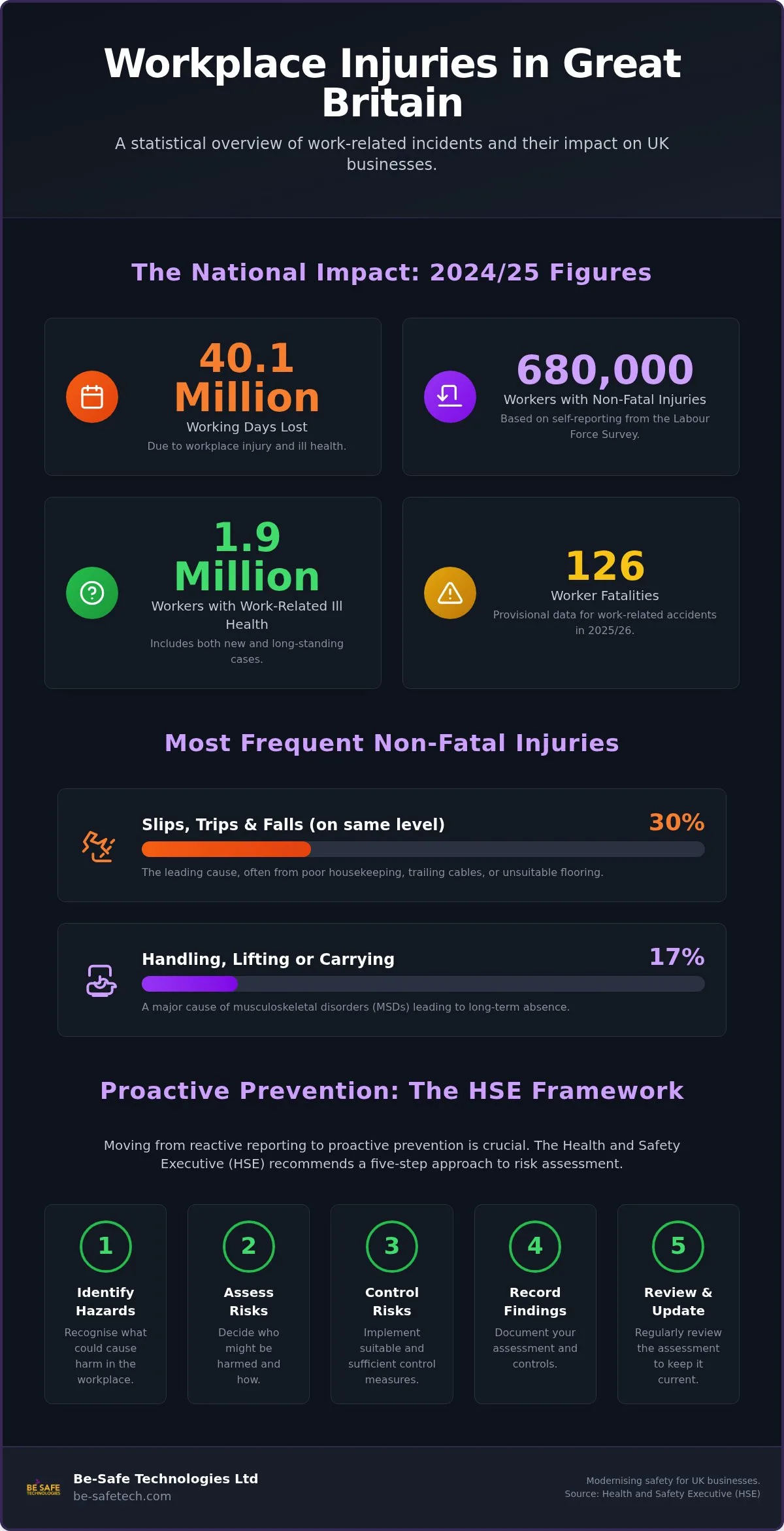
Current figures for 2026 show the landscape remains sobering for many employers. Provisional data for 2025/26 reveals that 126 workers lost their lives in work-related accidents across Great Britain. Beyond these tragic fatalities, an estimated 680,000 workers suffered non-fatal injuries in the previous year. These aren’t just statistics. They represent a massive impact on productivity and morale. With 40.1 million working days lost to injury and ill health in 2024/25, managing common workplace injuries uk businesses face is a vital operational requirement. The burden is compounded by the 1.9 million workers suffering from work-related ill health, highlighting a need for total oversight and clearer reporting.
The Role of the Health and Safety Executive (HSE)
Operating as the national regulator for workplace health and safety, the HSE monitors trends to understand where risks are highest. Because RIDDOR data relies on employer reports, it often misses the full picture of minor incidents. This is why the HSE uses the Labour Force Survey to capture a more accurate estimate of non-fatal harm across different demographics. By identifying patterns in this data, the HSE can target specific sectors, like construction or manufacturing, for more frequent site visits and enforcement actions. Their goal is to ensure that every business, regardless of size, adheres to recognised industry standards and maintains a safe working environment.
Why Accurate Reporting is a Legal Necessity
Maintaining an accident book to record any injury is a baseline requirement for every UK business. For more serious incidents, reporting to RIDDOR is a strict legal obligation that must be completed within specific timeframes. Failing to do so can lead to severe penalties, including the HSE’s Fee for Intervention (FFI) scheme, where businesses are charged for the regulator’s time. Digital records provide a transparent, time-stamped audit trail that is far easier to manage during a surprise inspection. This level of oversight ensures that your business remains compliant whilst significantly reducing the administrative burden on your management team, allowing for a more streamlined approach to safety.
The Most Frequent Non-Fatal Workplace Injuries
Non-fatal incidents represent the vast majority of safety challenges for UK employers. According to the latest Health and Safety Executive (HSE) statistics, an estimated 680,000 workers experienced a non-fatal injury in 2024/25. These incidents aren’t random; they follow clear patterns that define the most common workplace injuries uk staff encounter daily. Whilst the rate of fatal accidents is at a historic low, the volume of non-fatal harm remains a significant operational burden that requires constant oversight.
Slips, Trips, and Falls on the Same Level
These incidents account for 30% of all non-fatal harm, making them the single most frequent cause of injury. They often stem from simple oversights like poor housekeeping, trailing cables across walkways, or unsuitable flooring in areas prone to spills. You can reduce these risks through environmental changes like improved lighting and anti-slip mats. Immediate digital reporting is vital here; it ensures hazards are identified and cleared before they cause another accident, turning a potential hazard into a resolved task.
Manual Handling and Repetitive Strain
Handling, lifting, or carrying causes 17% of non-fatal injuries, often resulting in “musculoskeletal disorders” (MSDs) that can lead to long-term absence. The Manual Handling Operations Regulations 1992 require businesses to avoid hazardous manual handling where possible. When lifting is unavoidable, you must assess the risks and provide proper equipment. Using digital training records ensures your workforce is competent in safe lifting techniques, allowing you to track compliance across multiple sites without the need for physical paperwork.
Struck by Moving Objects
In warehouses and factories, being struck by moving objects accounts for 10% of injuries. Falling items from poorly stacked racking or collisions with moving machinery are primary risks in these fast-paced environments. Designated safe zones and clear signage are essential to keep pedestrians away from danger. Exclusion zones serve as a critical safety barrier to prevent unauthorised access to high-risk areas. Implementing these physical controls, backed by digital monitoring, creates a transparent safety culture where everyone knows their boundaries.
Fatal Injuries and High-Risk Sectors in Great Britain
While non-fatal incidents are more frequent, the most severe common workplace injuries uk employers face are those resulting in fatalities. Provisional data for the 2025/26 period records 126 worker deaths, with falls from height remaining the most prevalent cause, claiming 31 lives. Being struck by a moving vehicle (24 deaths) and being struck by a moving object (21 deaths) also feature prominently in transport, logistics, and agriculture. These figures underscore the necessity for total control in high-risk environments where margins for error are non-existent.
Falls from Height: The UK’s Leading Killer
Falls from height accounted for roughly a quarter of all workplace fatalities in Great Britain in 2025/26. Under the Work at Height Regulations 2005, employers have a strict legal duty to ensure all work is properly planned, supervised, and carried out by competent persons. Traditional paper assessments often fail to capture the changing conditions of a live site. Digital dynamic risk assessments allow workers to identify new hazards in real-time, ensuring safety controls are active before work begins. This mobile-first approach moves your business beyond static forms into a state of active oversight.
Managing Risks in Construction and Manufacturing
Construction continues to account for the largest share of fatal falls, whilst manufacturing and agriculture face constant risks from moving machinery and collapsing structures. Alongside physical barriers, sourcing modern, well-maintained plant equipment from trusted providers such as rocketrentals.co.uk helps minimise mechanical hazards on site. Managing these risks also demands a rigorous approach to Site Safety Inductions, especially for new or temporary staff who may be unfamiliar with specific site hazards. In these fast-paced sectors, the human element is often the most variable factor, making consistent training and clear communication vital for incident reduction.
In specialised agricultural sectors such as equine management, reducing the need for physical presence in high-risk zones through surveillance systems like BovEquine can significantly lower the risk of unpredictable animal-related injuries.
High-risk sectors often rely heavily on external expertise, making the oversight of third-party workers an essential priority. When contractors are on-site, their safety performance directly reflects your business standards. You can find more detail on how to streamline these processes in our Contractor Management Software UK guide. Effective management ensures that every individual, regardless of their employment status, adheres to your safety protocols.
Safety in these sectors isn’t only about the most dramatic risks. Even minor incidents can contribute to a culture of complacency if left unaddressed. For instance, Preventing slips and trips may seem secondary on a busy construction site, but these smaller accidents often precede more serious failures. Centralising your safety data allows for a holistic view of site health, ensuring that every worker returns home safely at the end of their shift.
Prevention Strategies: Moving Beyond the Paperwork
Reducing the frequency of common workplace injuries uk businesses encounter requires a shift from reactive reporting to proactive prevention. The Health and Safety Executive (HSE) provides a clear framework through their “Five Steps to Risk Assessment”. This process involves identifying hazards, deciding who might be harmed, evaluating risks, recording significant findings, and regularly reviewing the assessment. While these steps are fundamental, the traditional method of conducting static annual reviews is no longer sufficient for the fast-paced operational demands of 2026. Modern safety management relies on dynamic monitoring to keep pace with changing site conditions. Alongside day-to-day hazard tracking, businesses and landlords often turn to professionals such as UK Fire Risk Assessments to carry out dedicated property reviews and maintain full statutory compliance.
Fostering a “Safety First” culture is equally vital. When you empower employees to report hazards as they see them, you transform your workforce into an active safety network. This cultural shift works best when supported by intelligent workplace design. Organising your site to include dedicated walkways, superior lighting, and ergonomic workstations directly minimises the physical hazards discussed in previous sections. By designing out risk, you create an environment where safety is a natural outcome of daily operations rather than a bureaucratic hurdle.
The Power of Digital Risk Assessments
Paper-based risk assessments are often limited by their static nature, frequently becoming outdated the moment they are filed. Moving to a cloud-based system offers the flexibility needed to manage risks across multiple locations simultaneously. Using health and safety risk assessment software ensures that every assessment follows a consistent, high-quality standard regardless of who conducts it. Digital tools also allow for the inclusion of instant photo evidence. This provides a clear visual record of hazards, making it much easier for management to understand the context of a report and take immediate corrective action.
Tracking Near-Misses to Predict Injuries
A near-miss is an unplanned event that didn’t result in an injury but had the clear potential to do so. These incidents are invaluable leading indicators that often precede more serious accidents. To capture this data effectively, you must encourage staff to report near-misses without the fear of blame or disciplinary action. Data trends in near-misses allow for targeted safety interventions, helping you identify high-risk areas before a person is harmed. By analysing these patterns, you can address root causes and implement preventative measures that are based on evidence rather than guesswork.
If you’re looking to modernise your approach and reduce administrative stress, you can explore the features of Compliance Genie to see how digital tools can protect your team more effectively.
Modernising Your Safety Culture with Compliance Genie
Transitioning from paper-heavy processes to a digital-first ecosystem is the most effective way to manage the common workplace injuries uk businesses face in 2026. Compliance Genie provides a comprehensive SaaS platform that replaces unreliable manual logs with a single, authoritative data source. By putting safety tools directly into every worker’s pocket via a mobile-first interface, you ensure that hazard reporting becomes a natural part of the workday rather than a separate administrative chore. This immediate accessibility is what transforms a reactive safety culture into a proactive, life-saving operation.
Reliability is at the heart of our platform. Being ISO 27001 certified, Compliance Genie offers total peace of mind regarding the security of your sensitive safety records. This high standard of data protection ensures that your business remains compliant with both UK health and safety laws and modern data privacy requirements. The system also automates the complexities of RIDDOR reporting, ensuring that you are always audit-ready and prepared for an HSE inspection without the usual stress of gathering disparate paper records.
Centralising Safety for Multi-Site Businesses
Managing safety across various locations requires a “single version of the truth” to prevent critical information from falling through the cracks. Implementing digital audit checklist software allows H&S managers to oversee multiple sites through real-time dashboards, providing instant clarity on compliance status everywhere. This centralised oversight is explored further in our Ultimate Guide to Workplace Health and Safety Software, which details how integrated systems create operational harmony across the entire business.
Securing Your Workplace for the Future
The move away from fragmented spreadsheets towards integrated safety management software is a strategic investment in your workforce’s well-being. Digitisation reduces the administrative burden on your team, allowing them to focus on active safety improvements rather than data entry. This streamlined approach ensures that your business is not just meeting legal minimums but is actively building a resilient, future-proof safety culture. Discover how Compliance Genie can protect your workforce today and bring a new level of professional assurance to your daily operations.
Building a Safer, More Efficient Future for Your Team
Managing health and safety shouldn’t feel like a bureaucratic burden. By moving away from paper-based risk assessments and embracing dynamic, real-time monitoring, you can significantly reduce the frequency of common workplace injuries uk businesses face. We’ve explored how identifying patterns in near-misses and prioritising high-risk activities can move your organisation from reactive reporting to proactive prevention.
As an award-winning, UK-based safety platform, Be-Safe Technologies Ltd provides the tools you need to maintain total oversight across multiple sites. Our Compliance Genie software is ISO 9001 and 27001 certified, ensuring your data is secure whilst you focus on protecting your staff. As a G-Cloud approved vendor, we offer a reliable, streamlined solution that simplifies RIDDOR compliance and audit readiness. It’s time to replace outdated spreadsheets with a modern, mobile-first approach that empowers every member of your workforce. Book a demo of Compliance Genie and transform your safety culture today to ensure your team remains protected and your business stays compliant.
Frequently Asked Questions
What are the three most common workplace injuries in the UK?
Slips, trips, and falls on the same level; handling, lifting or carrying; and being struck by a moving object are the primary causes. Slips and trips account for 30% of non-fatal injuries, whilst manual handling follows at 17%. These represent the most common workplace injuries uk employees experience across sectors like retail, manufacturing, and healthcare. Managing these effectively requires a blend of physical controls and consistent staff training to maintain a safe working environment.
How do I report a workplace injury to the HSE under RIDDOR?
You must report specified injuries, diseases, and dangerous occurrences online via the official Health and Safety Executive website. Only “responsible persons”, such as employers or site managers, should submit these reports. For most incidents, you have 15 days from the date of the accident to notify the authorities. Fatalities or specified injuries should be reported without delay. Keeping an accurate digital record of the incident ensures you have all necessary details ready for the official submission.
What is the difference between a workplace accident and a near-miss?
A workplace accident results in actual physical harm or damage, whilst a near-miss is an event that had the potential to cause injury but didn’t. For example, a worker slipping on a wet floor and bruising their knee is an accident. If they slip but catch themselves without injury, it’s a near-miss. Both are critical data points. Tracking near-misses is a vital proactive strategy, as these often serve as leading indicators for more severe future incidents.
Are employers legally required to provide health and safety software?
No, there is no specific legal requirement to use software, but you must meet the duties outlined in the Health and Safety at Work etc. Act 1974. Employers must maintain records, conduct risk assessments, and report incidents. Whilst paper systems are legal, they’re often inefficient for modern businesses. Digital tools like Compliance Genie help you meet these legal obligations more reliably by providing an unalterable audit trail and ensuring that your safety records are always accessible for inspections.
What industries have the highest rate of non-fatal injuries in the UK?
Agriculture, forestry, and fishing typically have the highest rates, followed by construction and manufacturing. These sectors involve high-risk activities like working with heavy machinery or at height. Public administration and defence also see significant numbers, often related to manual handling or physical stress. Understanding these trends helps businesses in these sectors prioritise their safety interventions. By focusing on the most common workplace injuries uk data highlights, you can allocate resources where they’re needed most.
How can digital risk assessments help reduce workplace accidents?
Digital risk assessments improve safety by ensuring that hazard checks are completed consistently and are based on real-time site conditions. Unlike paper forms that stay in a folder, digital assessments are dynamic and easily updated. They allow for the inclusion of photo evidence and instant notifications to management when a high-risk hazard is identified. This speed of communication ensures that corrective actions are taken immediately, preventing a known hazard from turning into a preventable workplace accident.
Does a minor injury need to be recorded in the accident book?
Yes, any injury sustained at work, regardless of how minor it seems, should be recorded in your company’s accident book. This is a legal requirement under Social Security law for businesses with ten or more employees. Recording minor cuts or stumbles helps you identify patterns that might indicate a larger systemic issue. If a minor injury later develops into something more serious, having a contemporaneous record protects both the employee’s rights and the employer’s legal position.
Can I use a mobile app for site safety inductions and reporting?
Yes, using a mobile-first platform like Compliance Genie allows you to digitise inductions, risk assessments, and incident reporting. This approach ensures that every worker has the necessary safety tools in their pocket. Mobile apps streamline the induction process for contractors and new staff, ensuring they’ve read and understood safety protocols before starting work. It also allows for immediate reporting of hazards or accidents from the shop floor, creating a more responsive and transparent safety culture.