



How to choose workplace safety technology for UK workplaces
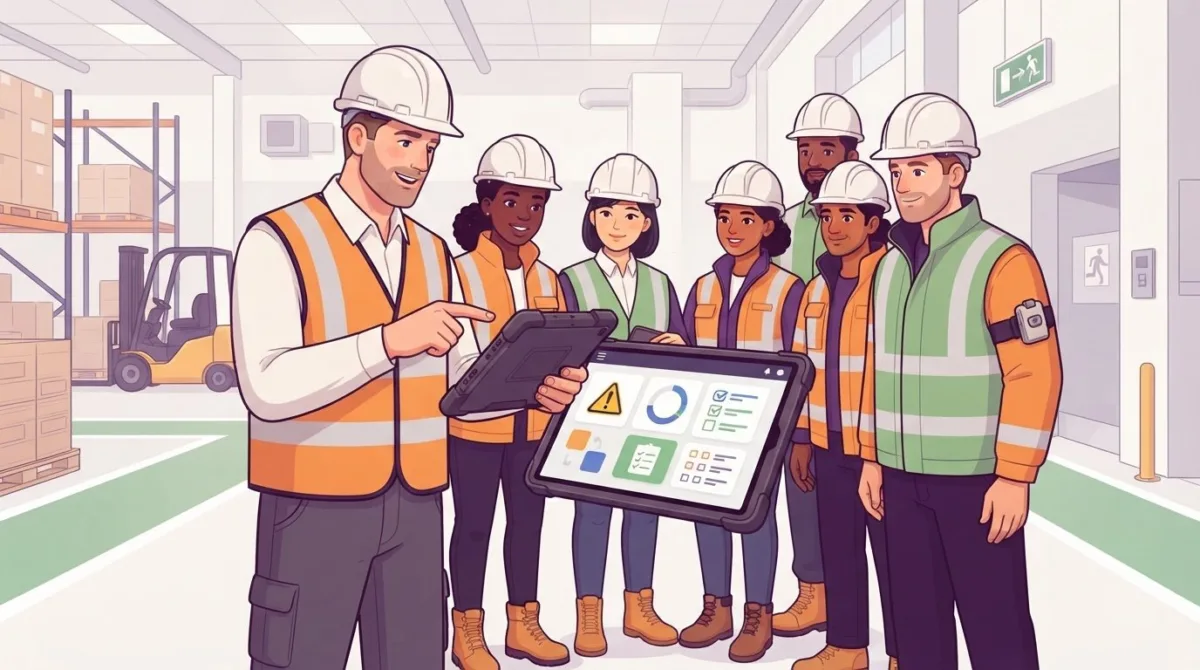
Choosing workplace safety technology in the UK starts with the risks your people face, not the newest device on the market. Choose tools that fit the work, make it easier to report hazards and incidents, and help managers organise training, audits and safety records. Wearables and immersive training may support this approach, but technology works best when workers have a voice in how it is introduced.
When wearables, apps and safety software promise different benefits, it can be difficult to compare them. The practical choice is the one that supports your existing safety processes, provides useful information for action and is straightforward for the people expected to use it.
This article explains how to assess safety software and wearables, involve workers in implementation, and weigh new tools against changing risks and regulations. It also considers why evidence for some emerging technologies remains mixed, and how to focus on tools that make safety management clearer and more consistent.
Key Takeaways
- Choose tools around the hazards and work practices they need to address, rather than novelty alone.
- Wearables and immersive training can support safety, but involve workers and assess whether each tool is useful in practice.
- Consider how automation and data analysis could reduce exposure to hazards while keeping worker wellbeing in view.
- Safety software can bring incident records, training and audits into a more organised process.
- System costs depend on the scope of the setup and the tools required, so compare options against your operational needs.
Research and regulation keeping pace with technological change
New safety tools can move faster than evidence of their effects. A technical report assessed six emerging technologies through a literature review and expert consultation. Its breadth helps frame the discussion, but it does not make every tool suitable for every workplace. Employers should connect each technology to a defined hazard, then assess whether it changes exposure or improves prevention.
The evidence remains uneven. Research on emerging workplace technologies is patchy, and newer tools often lack high-quality studies. Findings on augmented and virtual reality suggest they may support engagement and motivation in learning, but evidence that they independently improve safety knowledge is mixed. Research on collaborative robots is also insufficient to establish their potential benefits and risks. These limitations matter when employers compare claims and decide what to trial.
Scale does not remove that uncertainty. An analysis highlighted in a white paper examined more than 19,000 patented technologies addressing falls from height. Yet industrial adoption remains limited where effectiveness and value are unclear. For product design, this points to a practical step: test a tool against the task, workplace conditions and workers’ experience. For example, a reporting app should fit how employees raise hazards during a shift, not simply collect more data.
UK sector research offers a snapshot of the organisations developing safety technology. It engaged 11 businesses, received 14 survey responses about recruitment and skills, and included interviews with UK safety technology representatives lasting 60 minutes. Organisations identified in the wider sector were primarily micro businesses, representing 59%, while small businesses represented 31%. These figures describe the sector, not the effectiveness of its products. Employers still need evaluations that reflect their own workforce and work.
Research into changing work should also inform design. A literature review by the British Safety Council and Robertson Cooper brings together evidence, mostly from the UK, on future work and likely effects on physical and mental wellbeing. The British Safety Council recommends continued government and industry research into emerging risks and ways to reduce them. Its recommendations also place worker health, safety and wellbeing at the centre of AI regulatory frameworks. According to the UK legislation register, the Health and Safety at Work Act is dated 1974.
Which UK grants or funding schemes support workplace safety technology? Funding depends on the project: product development, workplace deployment and research may fit different competitive public funding calls. Review each call’s stated aims and eligibility before building funding into a technology plan.
For employers, the next step is to treat new tools as a design and evidence question, not an automatic upgrade. Involve workers in testing, record what changes in practice, and review whether the tool reduces hazards or supports safer decisions. That approach makes emerging technology easier to assess as research and regulation continue to develop.
Technology implementation and worker participation
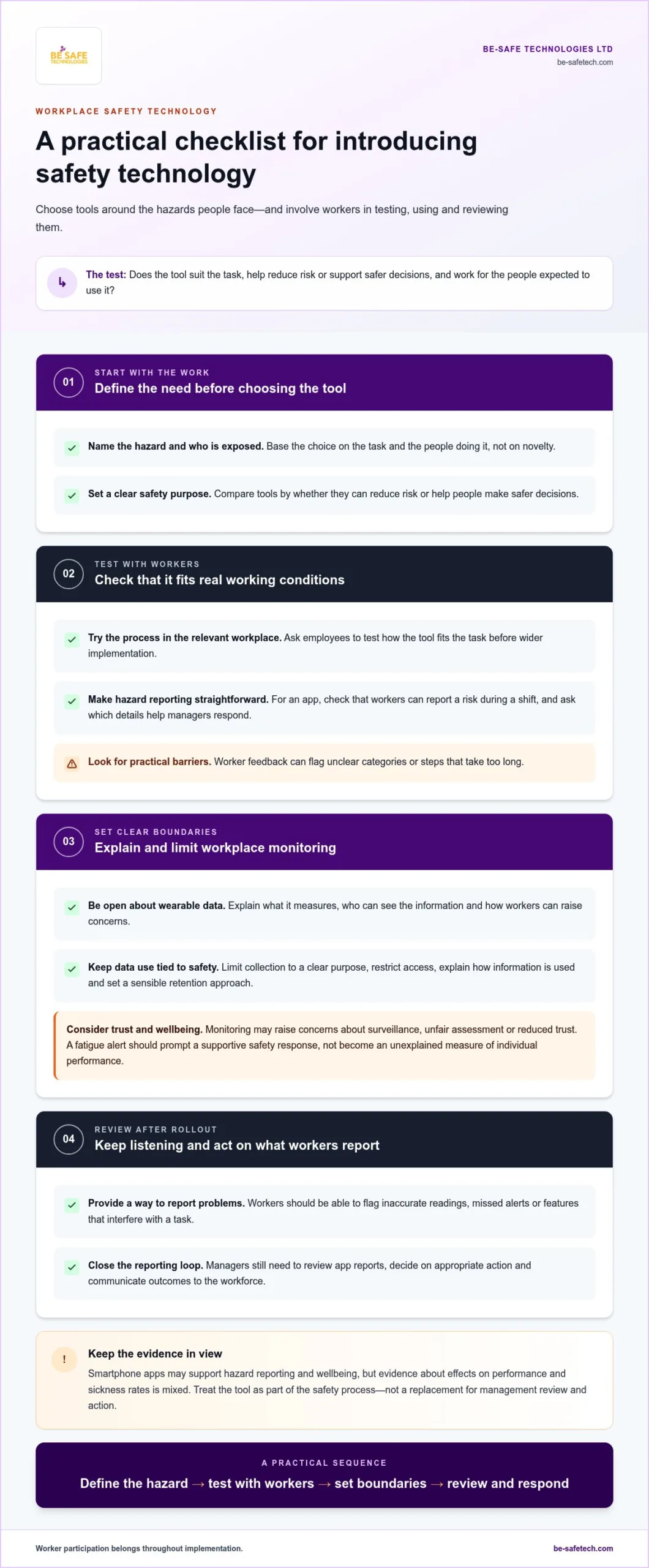
Introduce technology for a specific task and involve the workforce in decisions about how it works. A hazard-reporting app, for example, should make it straightforward for employees to describe a risk during their shift. Ask workers to test the process and explain which details help managers respond. Their feedback can reveal practical barriers, such as unclear categories or steps that take too long.
How do UK employers choose workplace safety technology? Start with the hazard and the people exposed, then compare tools by how they reduce risk or support safer decisions. Test usability in the relevant workplace and involve employees before wider implementation.
Involve workers after rollout, too. Give them a clear way to report inaccurate readings, missed alerts or features that interfere with a task. A wearable intended to flag fatigue, for example, needs to suit the role and working conditions. Explain what it measures, who can see the information and how workers can raise concerns. This can reveal problems that a technical trial alone may miss.
Smartphone apps can help employees report hazards in real time and help managers prioritise safety. They may also encourage healthy habits and support wellbeing, but evidence about effects on performance and sickness rates is mixed. Treat an app as one part of a safety process: managers still need to review reports, decide on appropriate action and communicate outcomes to the workforce.
What privacy and data protection risks apply to workplace monitoring technology in the UK? Monitoring may collect sensitive or identifying information, including details about a worker’s location, physical condition or behaviour. Limit collection to a clear safety purpose, restrict access, explain how information is used and set a sensible retention approach.
Emerging tools can also affect workplace relationships. Wearables, algorithmic management and emotional artificial intelligence may raise concerns about surveillance, unfair assessment or reduced trust. Design and collaborative implementation can influence these risks. A system that flags fatigue, for instance, should prompt a supportive safety response rather than become an unexplained measure of individual performance.
What workplace safety technology trends are emerging in the UK? Examples include smartphone hazard-reporting apps, sensor-equipped smart helmets, wearables, algorithmic management and emotional artificial intelligence. Assess each against its intended safety use and its effects on workers.
Before adopting a tool, discuss these points with employees and their representatives:
- Which hazard or task is the technology intended to address?
- What information does it collect, and who needs access?
- How will workers report errors or raise concerns?
- What changes will managers make after receiving alerts?
These conversations help distinguish useful safety support from monitoring that adds pressure without improving decisions. They also give employers practical evidence about whether a technology fits the work across different roles and industries.
Employer preparation for future risks
Future planning starts by matching innovation to work that exposes employees to harm. Autonomous robots can undertake hazardous tasks, while warehouse robots can transport heavy items and reduce manual lifting. These examples show how technology may change the task itself, rather than simply record what happens. Employers can map high-risk activities, identify where people remain exposed, then assess whether automation alters that exposure.
Artificial intelligence can analyse historical incident data to identify patterns linked with workplace accidents and suggest preventive measures. Repeated incidents around a particular task, for example, may prompt managers to review its process, equipment or timing. These insights are most useful when records are accurate and consistently categorised. An algorithm can highlight patterns, but managers still need to interpret them in light of employees’ experience on site.
Shift planning offers another application. Organisations can use AI algorithms to optimise schedules and reduce fatigue-related incidents. A practical review should consider how working patterns interact with demanding tasks, handovers and rest opportunities. If a schedule changes, managers can compare reported fatigue concerns and incident patterns with the previous arrangement. This provides a clearer basis for deciding whether the change supports safer work.
A useful comparison framework is the 4Ps, which builds on the Hierarchy of Controls. It helps practitioners assess whether a technology reduces hazards, lowers the likelihood of incidents or mitigates their consequences. Apply the framework to each proposed tool. A warehouse robot, for instance, may reduce manual handling, while an analytical system may help identify where preventive action is needed. The technology’s role should be clear before procurement.
To prepare for emerging risks, employers can connect technology decisions to operational reviews:
- Map hazardous tasks and identify where automation could change exposure.
- Review incident records for recurring locations, tasks or contributing conditions.
- Assess whether AI-generated insights support a practical preventive measure.
- Review shift patterns for fatigue risks before and after schedule changes.
- Record how each technology affects employees and the work they perform.
This approach keeps the focus on prevention, not novelty. It also helps organisations distinguish a useful safety intervention from a system that produces data without changing decisions. An AI pattern alert, for example, has practical value when a manager can connect it to a task review or preventive action. Revisit that link as processes change, new equipment enters a site or employees take on different duties. A defined review process gives innovation a clear place in the safety framework.
Safety management software and compliance
Safety management software can organise recurring tasks. It can track incidents, manage safety training and support audits. A manager, for example, can record an incident, assign follow-up and keep related information together. This gives clearer oversight of work that might otherwise be spread across spreadsheets, forms and filing systems.
What are the best workplace safety software and devices in the UK? The right fit depends on the hazards and processes an organisation needs to manage. Software can organise incidents, training and audits, while devices such as wearables or smart helmets can support specific monitoring needs.
Software supports compliance work, but does not make an organisation compliant by itself. Managers still need to review records, decide on appropriate action and keep processes aligned with the work being done. A useful test is whether a recorded incident leads to clear follow-up, such as reviewing a risk assessment or arranging relevant training. If the record is stored but nobody acts on it, digitisation has not improved control.
Start by mapping the existing process. An incident record may include the event, location, task and action taken. Training records can help managers see what learning has been completed and where follow-up is needed. Audit records can organise findings so teams can track actions through to completion. Software can support routine oversight without replacing professional judgement or worker input.
Before selecting a system, compare its role with these practical requirements:
- Incident management: Can the organisation record events and follow the resulting actions?
- Training records: Can managers organise learning information relevant to their teams?
- Audit processes: Can findings and follow-up actions be kept together?
- Worker access: Can employees take part in reporting and safety processes?
Digital systems also bring challenges. Poorly structured records can make patterns harder to identify, while unclear ownership can leave actions unfinished. Agree who reviews reports, follows up findings and shares relevant information with teams. For instance, an issue recorded across several audits should prompt a review of the process, not simply another entry in the system.
Technology choices should account for wellbeing as well as administration. Virtual reality may support training, while software can organise learning records and identify follow-up needs. Treat these as distinct opportunities: training tools support learning activities, while management software supports records and workflows. A clear purpose for each makes it easier to assess whether it helps employees and managers handle safety tasks.
Choose software to improve visibility of the management processes that need it, then define how teams will use its records. Keep human review at the centre so digital information supports decisions rather than standing in for them.
How much do UK workplace safety technology systems cost?
There isn’t one UK-wide price for workplace safety technology systems. A cloud software subscription, sensor-equipped wearable and site inspection device have different cost structures. The price depends on the case and is given after a quote request; key factors include user numbers, chosen functions, hardware, implementation and any required integrations.
For software, clarify whether the price covers a subscription, one-off configuration or both. Ask how the selected functions affect the quote and whether the organisation can start with a focused scope. A business seeking incident records and training management, for example, may need a different setup from one also organising contractor activity. The relevant cost driver is the work the system must support.
Physical technology brings separate considerations. A wearable or monitoring device may involve equipment, installation, maintenance and replacement. A mobile app may rely on employees using existing phones, while another setup could require dedicated devices. Compare the full operating model, not just the initial purchase, and identify who manages faults, updates and equipment changes.
Implementation can also affect the budget. Existing records may need organising, staff may need training, and managers need time to set up workflows. If a system must connect with existing business software, integration requirements can shape the work involved. Compare what is included in the initial setup with what will require ongoing internal time.
Before comparing quotes, write down the intended safety outcome and the processes involved. Separate essential requirements from optional features. If the main challenge is keeping audit actions visible, for instance, assess the functions needed to record findings and follow them through. Avoid paying for capabilities that do not support a defined task or hazard.
Use a consistent comparison across suppliers and system types:
- Scope: Which sites, workers and safety processes are included?
- Cost structure: Which charges recur, and which apply during setup?
- Hardware: Are devices required, and who maintains them?
- Integration: Does the system need to exchange information with existing tools?
- Use: What training and management time will implementation require?
Then assess value against the current process. If staff maintain separate incident, training and audit records manually, compare the system’s cost with the time and oversight needed to manage those tasks. Do not assume digitisation automatically saves money; assess whether the proposed setup improves visibility and supports follow-up.
For a tailored price for safety software, request a quote. A defined scope, user requirements and integration needs help make the proposal relevant to the organisation’s operations.
Be-Safe Technologies: Compliance Genie – SaaS health and safety software
Be-Safe Technologies Ltd offers Compliance Genie, mobile-first, cloud-based health and safety software that helps organisations digitise and manage processes and risk assessments. It can support organisations looking to organise safety management digitally and make risk assessment work easier to manage.
For organisations managing contractors and site visits, Contractor Genie centralises contractor management in one place. The two systems address different operational needs, so the right option depends on whether the priority is internal health and safety processes, contractor coordination or both.
To discuss which software may fit your organisation’s safety processes, contact Be-Safe Technologies Ltd.
Make your next safety technology decision count
Turn your technology decision into a focused improvement plan. Before making a change, name the process owner, identify the outcome the organisation wants and decide how teams will review progress. A hazard-reporting project, for example, could track whether reports lead to clear actions and whether employees can use the process easily. This gives managers a practical basis for refining the approach as work changes.
Choosing workplace safety technology in the UK is not a one-off purchasing decision. It is an opportunity to build a process that adapts as tasks, teams and risks evolve. Keep the next step manageable: set a defined scope, involve the people affected and establish how feedback will shape future decisions.
For support with digital health and safety management, contact Be-Safe Technologies to discuss your needs. A considered start can help your organisation make safety processes clearer and easier to manage.
Frequently Asked Questions
What workplace safety technologies are used in the UK?
Workplace safety technology in the UK includes digital systems, mobile apps, wearables and monitoring devices for different safety tasks. Examples include software for recording incidents, managing training and organising audits; apps for reporting hazards; and smart helmets that monitor physical condition. Construction teams may also use drones to survey sites or inspect hard-to-reach areas. The right technology depends on the work and the hazard it is intended to address.
What are the UK legal requirements for workplace health and safety technology?
There is no single technology choice that suits every workplace; tools should support the risks and safety processes relevant to your operations. According to the UK legislation register, the Health and Safety at Work Act is dated 1974. That date does not specify a particular app, wearable or software platform. Treat digital tools as support for safety management, not as a substitute for assessing hazards and taking appropriate action.
How does workplace safety technology support compliance with HSE regulations?
Technology can organise safety records and make follow-up easier to track, but using software does not itself demonstrate compliance. A digital audit, for example, can capture a finding, assign an action and keep progress visible for review. Incident and training records can also be brought together to help managers see relevant information. The organisation still needs to make decisions, complete actions and keep its processes suited to the work.
What are the benefits and limitations of wearable safety devices for UK workers?
Wearables can monitor aspects of workers’ physical condition, and smart helmets with sensors can alert workers to potential heat stroke or fatigue. They are useful when the information helps people take appropriate safety action. Devices can also affect health and workplace relationships, particularly if monitoring feels intrusive or its purpose is unclear. Explain how a device is used, involve workers in its introduction and consider their feedback during use.
How is AI used in UK workplace health and safety monitoring?
Artificial intelligence can analyse historical incident information to identify patterns associated with accidents and suggest preventive measures. Organisations can also apply algorithms to shift schedules to help reduce fatigue-related incidents. Managers might use a pattern in recorded events, for instance, to prompt a review of a task or work schedule. AI-generated insights need human interpretation: managers must consider the work context before deciding whether to change a process.
How do UK businesses implement workplace safety technology?
To implement workplace safety technology in the UK, begin with a defined operational need, such as making point-of-work risk assessments easier to complete and authorise. Map who will use the tool, what information they need and how managers will act on reports. Run a practical trial with the relevant team, then assess whether the system fits the task and produces useful records. For example, Compliance Genie supports digital risk assessments with business-specific control measures and an authorisation workflow.