



The Contractor Induction Records Irish Sites Must Hold

On many Irish sites, induction happens at the gate and leaves no trace afterwards. Whether that describes your site or not, the problem is the same: without a record, you cannot prove it happened.
This guide sets out the minimum induction, permit and site-rule records an Irish site must hold for each contractor type, and why the record belongs to the visit rather than the contract relationship. We begin with why unrecorded inductions fail, then work through who counts as client, contractor and project supervisor under the construction regulations. From there we cover the minimum induction records by contractor type, what changes when you record per visit rather than per contract, and how routine maintenance visits fit the project-based rules. You will also find guidance on permits and site-specific risk records, retention and retrieval for inspections and audits, and a contractor induction record template you can actually hold to. Finally, we look at where a system replaces the paperwork, and how to turn the record into a habit.
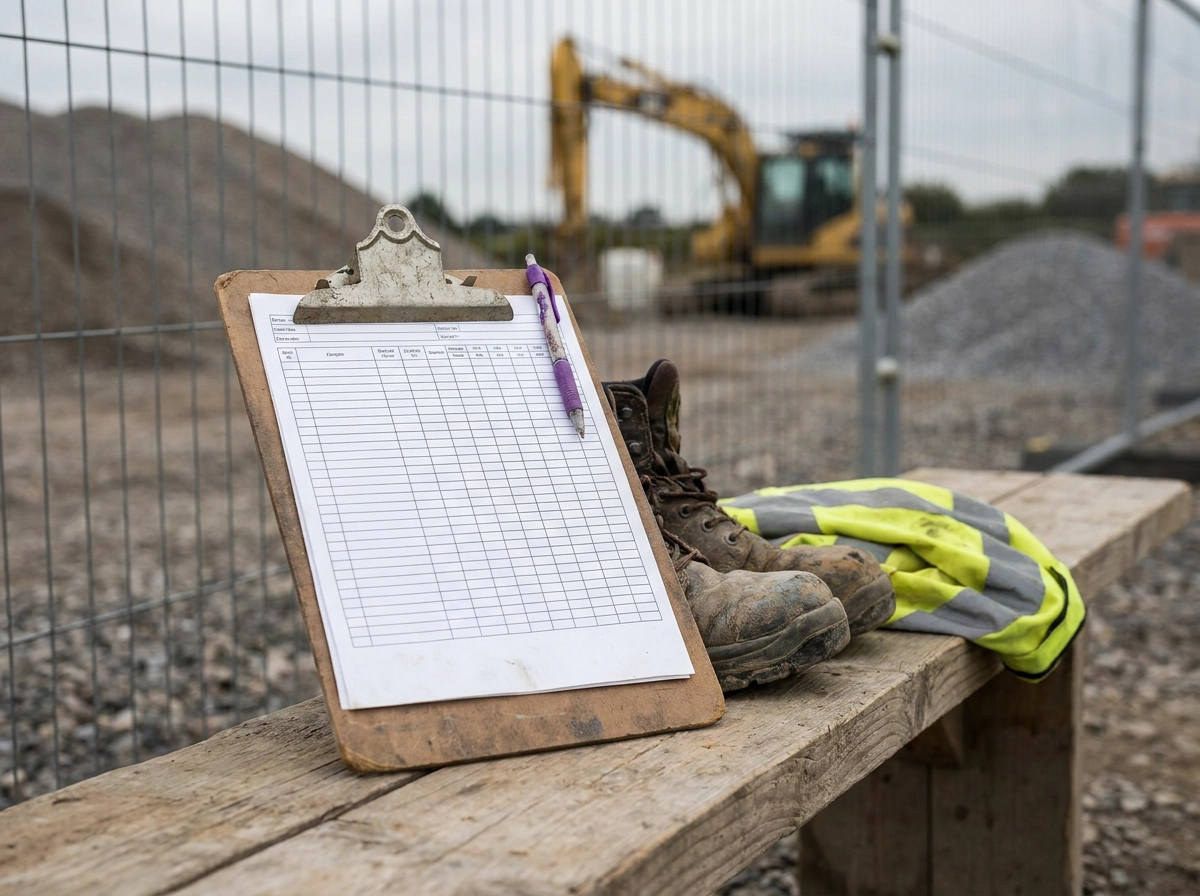
Why an Unrecorded Induction Is Worth Nothing in an Inspection
On plenty of Irish sites the induction happens as a conversation at the gate. Ask for it a week later and nothing exists on paper.
That is exposure, not merely untidiness. If you cannot produce a record, you cannot demonstrate that the induction took place, who received it, or what it covered.
Two audiences ask the same question: an HSA inspector and a client or main contractor running a contractor management audit. Both say, show me the record.
“We induct every contractor before they start” is a process claim. It answers nothing. A dated, signed record for each operative on each visit is evidence, and only evidence closes the question. Confusing the two is a common gap, and it is the same gap that leaves visitor management and contractor management treated as interchangeable when they solve different problems.
Before quoting any requirement, read the operative wording of S.I. No. 291/2013, the Safety, Health and Welfare at Work (Construction) Regulations 2013, on the Irish Statute Book. Secondary summaries, including this one, are no substitute.
Who Counts as Client, Contractor and Project Supervisor
Vocabulary first: who owes the record depends on who is doing what.
Client: whoever commissions the work. Since 2013 that includes domestic homeowners, so the client is not always a company. Clients appoint the project supervisors in writing.
Contractor: anyone carrying out construction work for the client, from a lone tradesperson on a one-day callout to a specialist subcontractor bringing its own subcontracted labour. The record set scales with that chain.
Project supervisor: two roles are created by the Regulations (S.I. No. 291/2013, verify the full scope of each role in the Regulations).
That split matters because each role owes different evidence: the client commissions and appoints, the supervisor coordinates, the contractor performs. The breakdowns below rest on it.
The HSA procurement guideline contents list flags client duties on competence assessment and appointment at sections 2.1.6 to 2.1.8. Treat that as an indication only; verify it against the body text before quoting it as a requirement. The Health and Safety Authority is the body that tests those records at inspection.
Minimum Induction Records, by Contractor Type
Whatever the contractor’s size, every induction record carries the same core fields: operative name, employer, trade or role, induction date, site or location, name of the person who delivered it, topics covered, and the operative’s signature or acknowledgement. No supplied source defines these as a legal minimum, so treat them as recommended practice and verify the operative wording of S.I. No. 291/2013 yourself.
For a straightforward trade contractor, that induction record sits alongside sight of the safety statement or RAMS relevant to the work, plus evidence of the competence the task requires, such as completed health and safety courses or a trade certification. A specialist or MEICA contractor needs more: records covering isolation and permit interfaces, and confirmation of how the work will be coordinated with other trades sharing the same area or day. This is recommended practice; no supplied source defines it as a legal minimum.
Where a contractor brings its own subcontracted labour, record who inducted them, who holds their induction records, and how those records reach the client or principal contractor on request. Short-duration and one-day contractors are where induction is most likely to be skipped entirely. A single dated record is the only thing that proves it was not.
No supplied source defines a definitive list per contractor type, so this breakdown is built from regulatory roles and recommended practice, not a verbatim legal minimum.
Per Visit, Not Per Contract: What Changes and Why
Type determines the baseline; the visit determines whether it is still valid. An induction tied only to the contract relationship goes stale fast: access routes change, adjacent works begin, supervisors rotate, emergency arrangements are revised and site rules tighten. Capture a lean per-visit record each time: visiting date, expected duration, work area, scope of that day’s work, who supervised or escorted, site rules briefed, and sign-in and sign-out times.
Long-running contractors who were inducted once and have attended for years need a recorded re-brief or refresher, not a single dated form. Force a fresh induction record when new hazards, new adjacent works, changed emergency arrangements or a new permit requirement appear. The per-visit record sits inside a wider contractor onboarding checklist, but it is the part that proves today’s briefing happened.
Keep it lean. A template with forty fields will not be completed at the gate; site staff fill in what they can on the day. As with every section in this guide, treat the frequency guidance as recommended practice until you have checked the operative wording of the Regulations.
Do Routine Maintenance Visits Follow the Project-Based Rules?
The HSA procurement guideline lists a separate heading for clients carrying out routine maintenance projects (section 2.1.3), which suggests maintenance work does not sit neatly inside a project-based framing. That matters, because most operations visits are maintenance or reactive callouts: lifts, HVAC, fire systems, electrical fault-finding and statutory inspections.
The safe answer holds either way. Keep the same record discipline for maintenance visits as for project work. The paperwork route may differ; the evidence question does not. Who was on site, when, inducted by whom, and against which hazards.
Practically, run a single visit log covering project and maintenance activity. Splitting the audit trail between a project file and a maintenance folder nobody can reconcile is how records go missing. For retrieval, the logic mirrors our guide to digitising health and safety in Irish manufacturing.
Before repeating section 2.1.3 to a client as a statement of their duties, check its full text and whether the 2015 guideline remains current.
Permits and Site-Specific Risk Records
One more record sits alongside that visit log. A permit to work is a record of controlled access to one specific hazard: hot works, confined space, electrical isolation, work at height or excavation. Each permit should carry a permit number, the work description, its location, the issuer, the acceptor, the validity window, the isolations or controls applied, and the close-out and handback.
Site-specific risks are the hazards on this site on this day, not the generic ones: live adjacent operations, restricted access, an occupied building, unusual emergency arrangements. Capture them per visit and pair them with the permit issued for that work.
Both records must join up. The permit holder should hold an induction record dated the same day, not one dated to a previous contract term; where the dates diverge, the permit rests on nothing.
Check permit and site-specific risk fields against the Construction Regulations 2013 and current HSA guidance before describing any of them as legal minimums.

Retention and Retrieval: Surviving an HSA Inspection or Client Audit
Once permits and site-specific risk records are captured, the question becomes whether you can find them again. Decide retention before anyone asks: how long induction, permit and visit records are kept, and where they live, so the answer survives staff turnover and a change of main contractor. Then test retrieval under pressure, retrievable within minutes, not days.
Index by site and location as well as by contractor company, because audit questions usually arrive as “who was on this site on this date”, not as a named company.
The common fragmentation failure is signed sheets in a site folder, a spreadsheet on one manager’s laptop and a foreman’s text messages. Those are not a record system. These records evidence the arrangements in your safety statement guide for Irish employers, so align retention with it.
Before you commit to a number, confirm the applicable retention period against the relevant regulation and against your own contract and client requirements.
The Contractor Induction Record Template
With storage and indexing settled, keep the template short enough to complete at the gate. Four blocks do it.
1. Contractor details: company name, operative name, trade, employer, emergency contact, and any competence evidence sighted. Verifying competence is a confirmed client duty; contractor health and safety training records are often that evidence.
2. Visit details: date, arrival and departure times, site or location, work area, scope of the day’s work, supervisor or escort, and whether the visit is project or maintenance work.
3. Induction and permit content: topics covered (site rules, emergency arrangements, PPE, access, welfare, incident reporting), permit numbers issued, isolations recorded, and any language or interpretation needs.
4. Sign-off: inductee and inducting person signatures, dated.
File the completed record against the site, index it by date, and make it retrievable by contractor name. Review it when the contract changes or the hazard profile shifts, such as new plant, trenching or overhead lines.
As noted above, only the competence check and written supervisor appointments are confirmed requirements; all other fields are recommended practice.
Where a System Replaces the Paperwork
The test is retrieval speed, not whether a sheet was signed. The most common failure point is not capture, the sheet often does get signed, but retrieval: when a record is needed, nobody can find it.
The discipline set out above holds regardless of format. The question for a construction management team is not whether to digitise but what makes retrieval immediate: records filed against the site, indexed by date, and searchable by contractor name.
For teams already looking at this, Contractor Genie is described as software that manages and maintains a company’s contractors and their site visits in one place, which maps onto the per-visit record set above. The Health and Safety App, the Compliance Genie, is described as digitising a company’s health and safety processes, so induction and permit records sit alongside the processes they evidence.
Format changes how quickly you can answer an inspector’s question. It does not change the question.
Conclusion: Turn the Record Into a Habit
Whichever format you choose, the underlying argument does not change: an induction that cannot be produced afterwards protects nobody, not the site, not the client, not the operative.
Three actions for this week:
- Pick the per-visit fields you will genuinely complete at the gate, and drop the rest.
- Decide where induction and permit records are stored and indexed, by site and by date, so retrieval does not depend on one person.
- Test retrieval with one contractor who attended in the past fortnight. Time how long it takes.
Before quoting either S.I. No. 291/2013 or the HSA procurement guideline to a client as a requirement, verify the operative text and the guideline’s current status yourself.
That is the payoff. The record set is short. Once it becomes routine, your site stops hoping an inspector does not ask.