


How to Evaluate Avetta Contractor Management Software for Contractor-Friendly Usability in 2026
What if the best-looking software demonstration tells you little about how easy the platform is for contractors to use? To evaluate the contractor management software company avetta on contractor-friendly interface, focus on what suppliers can actually do, not just what the sales presentation promises.
Contractors need clear requirements and straightforward next steps. When these are hard to find, onboarding can stall and internal teams may spend more time answering queries. A simple supplier journey still needs to give administrators the oversight they need. Since requirements can vary between hiring clients, check how the platform makes each set of expectations clear.
This guide provides a practical framework for assessing Avetta’s contractor and administrator journeys in 2026. It covers observable criteria, questions to ask during a demonstration and routine tasks to test, such as finding a requirement, submitting information and checking what needs attention. You’ll also learn how to weigh ease of use against administrative control and compliance needs, so you can base your decision on real workflows rather than marketing claims.
Key Takeaways
- Use clear criteria to assess whether contractors can understand requirements, complete actions and see task status.
- Test real supplier and administrator tasks, noting unclear steps, interruptions and where users need help.
- To evaluate the contractor management software company avetta on contractor-friendly interface, compare what’s claimed with what you observe in a demonstration.
- Ask how users are told about changing requirements and outstanding tasks, and check which points are verified rather than assumed.
- Compare platforms against your required tasks, contractor effort and need for oversight before deciding which is the right fit.
What does contractor-friendly Avetta software need to make easy?
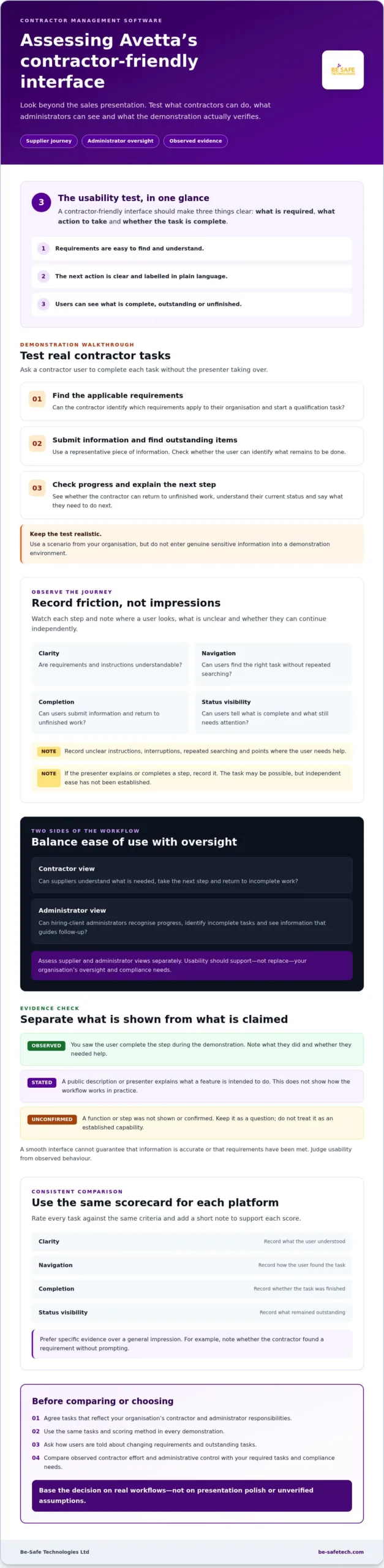
A contractor-friendly interface makes three things clear: what’s required, what action to take and whether the task is complete. This definition focuses on the steps a supplier must follow, not simply the platform’s overall promise of readiness or compliance. Contractor management may include activities such as prequalification and auditing, but the user experience depends on how these activities are presented and completed.
To evaluate the contractor management software company avetta on contractor-friendly interface, separate public claims from what you can observe. Published descriptions may explain what a feature is intended to do, but they don’t show how a contractor finds a requirement, submits information or returns to an unfinished task. Ask to see the current workflow in a live demonstration, and assess supplier and administrator views separately.
What should contractors be able to understand quickly?
Ask the presenter to follow a contractor’s journey from signing in to identifying what remains to be done. Can the user see which information or documents are required? Are the next actions labelled in plain language? Look for an explanation of what’s needed and why, rather than relying on familiar-sounding buttons or assumptions.
Check how an incomplete item is identified and how a user returns to it later. If the route is unclear, involves repeated searching or depends on someone explaining the next step, note that as friction to investigate. Repeat the task with a typical contractor scenario from your organisation. A polished demonstration using an idealised example may not reveal where everyday users get stuck.
Why does the client-side view matter as well?
Contractor usability is only one part of the workflow. Hiring-client administrators also need to know whether contractors have made progress and which actions remain outstanding. Ask the presenter to show how an administrator recognises an incomplete task and what information is available to guide follow-up. Treat any function that isn’t shown or confirmed as a question, not an assumed capability.
A useful assessment looks for less avoidable confusion on both sides. Contractors should be able to understand and act on requirements; administrators should be able to interpret progress and decide what needs attention. These aims need to support, not replace, your organisation’s oversight and compliance needs.
Clearer steps may make it easier for users to complete requested work, but a smooth interface can’t guarantee that information is accurate or requirements have been met. Base your judgement on observed behaviour, and distinguish product claims from what you’ve verified in the workflow. This gives you a more reliable basis for comparing usability with the control your organisation needs.
How to assess Avetta’s contractor journey through real tasks
A demonstration is most useful when it shows how people complete everyday work, not just a tour of screens. Before comparing Avetta with other platforms, agree a short set of tasks that reflects your organisation’s contractor and administrator responsibilities. Use the same tasks and scoring method for every demonstration to make the comparison fair.
Which contractor tasks should a demonstration cover?
Ask a contractor user to carry out the following tasks without the presenter taking over:
- Find the requirements that apply to their organisation and start a qualification task.
- Submit a representative piece of information and identify any items that remain outstanding.
- Check their current progress and explain what they need to do next.
Use realistic scenarios, but don’t enter genuine sensitive information into a demonstration environment. Observe each step: where the user looks, whether labels make sense and whether they can pause and return to unfinished work. Record unclear instructions, interruptions and any point where they need help. If the presenter explains a step or completes it for them, note that too. The task may be possible, but the demonstration hasn’t established how easily an independent user could complete it.
How should buyers record usability evidence?
Use a simple scorecard for each task. Rate clarity, navigation, completion and status visibility against the same scale for every platform, and add a brief note to support each score. For example, record whether the contractor could find a requirement without prompting rather than relying on a general impression that the screen felt straightforward.
- Observed: You saw the user complete the step in the demonstration.
- Stated by the vendor: The presenter described a function but didn’t demonstrate it.
- Unverified: The demonstration didn’t establish whether the function or behaviour is available.
Keep contractor feedback separate from administrator impressions. An administrator may value visibility of outstanding actions, while a contractor may focus on clear instructions and knowing what to do next. Include both perspectives, then compare the evidence using the same tasks and scoring method. This makes it easier to evaluate the contractor management software company avetta on contractor-friendly interface without treating a polished presentation as proof of day-to-day usability.
If central organisation of contractor information and site visits is also a priority, you could include Contractor Genie’s contractor management software in the same task-based assessment. Apply the same criteria and verify each capability during its demonstration.
How Avetta’s public claims compare with contractor-friendly evidence
Statements about faster onboarding, easier task completion or improved readiness can explain what a platform aims to do, but they don’t establish how straightforward it is for a contractor to use. Separate each claim from what you saw in the demonstration and what still needs checking. This keeps marketing language, observed behaviour and unanswered questions distinct.
| Area to assess | Public claim to verify | What to look for in the demonstration | Buyer question |
|---|---|---|---|
| Onboarding and requirements | Suppliers can become qualified or ready to work faster. | Whether a contractor can find applicable requirements and understand the next action without presenter prompts. | What does “faster onboarding” measure, which users does it include, and what is the comparison? |
| Task status | Users can complete tasks and track progress. | Whether outstanding items and current progress are visible and understandable to the contractor and administrator. | Can you show how each user sees a task that is incomplete or needs attention? |
| Mobile access and support | Any stated mobile or support options. | Whether the relevant task can be completed on the device and through the support route shown. | Can you demonstrate this workflow on a mobile device, and where would a user find help? |
| Time savings or risk reduction | Any claimed operational or risk-related outcome. | Whether the claim is supported by evidence relevant to the workflow and user group being assessed. | What evidence supports the claim, and does it apply to an organisation like ours? |
Which claims should buyers verify rather than assume?
Ask for the basis of each outcome statement, including the users covered, the process measured and the comparison used. If a testimonial describes a client administrator’s experience, it may not show whether a supplier can complete the same task easily. Likewise, network size or customer numbers describe scale, not interface usability. Treat testimonials and headline figures as context, then verify the relevant workflow yourself.
How should contractor and administrator needs be balanced?
Compare the effort contractors spend finding and completing requirements with the oversight administrators gain from the process. A control may be necessary for the client, but its purpose and instructions should be clear to the person asked to complete it. Fewer steps aren’t automatically better if they remove information administrators need. Extra steps aren’t automatically useful if they add effort without making requirements clearer.
Use the same criteria for both roles: clarity, visible status, practical access and the effort involved. Mark each finding as observed, stated by the vendor or unverified. This evidence-based approach helps you evaluate the contractor management software company avetta on contractor-friendly interface without treating a claim as proof or overlooking the client’s need for oversight.
What to ask before choosing Avetta for contractor management
A useful demonstration should reflect the work your contractors and administrators actually do. Prepare questions in advance, share representative scenarios with the vendor and ask to see each task completed in the platform. This helps you evaluate the contractor management software company avetta on contractor-friendly interface using evidence relevant to your own processes, rather than a generic tour.
What should a contractor-focused demonstration include?
Ask the vendor to show a contractor working through representative tasks without an administrator taking over. For example, request a walkthrough of how the user finds applicable requirements, identifies missing information, resolves a blocker and checks what to do next. Ask the presenter to explain any step that isn’t self-explanatory, then note whether the explanation comes from the interface or from the demonstration.
Check that the scenario reflects your contractor population and working practices. If requirements vary between hiring clients or types of work, ask how the relevant set is presented to each user. Follow the journey through a status change too: what does the contractor see, and how would an administrator know that action is needed? A demonstration should make the workflow visible to both roles.
Which operational questions should UK buyers raise?
Usability is only one part of the decision. Clarify how the platform would support your organisation’s requirements and approval process. Ask the vendor to distinguish standard functionality from any configuration or additional work being discussed. For data handling, ask who can access information, how access is managed, and which security details and contractual terms you should review.
Ask for a clear explanation of the proposed onboarding assistance and ongoing support arrangements. Find out what guidance is available to contractors and administrators, how users raise questions and what is included in the service. Don’t assume that help shown in a demonstration is part of the package. Confirm the details in the vendor’s proposal and contract.
- Which contractor and administrator tasks are included in the proposed workflow?
- How are requirements, status changes and outstanding actions communicated?
- What user guidance, onboarding assistance and support are included?
- What data access, security and contractual details should we assess before proceeding?
For wider selection context, consult the UK contractor management software guide and the health and safety risk assessment software buyer’s guide. Use their advice alongside your demonstration notes, and verify any feature or service detail directly with the vendor.
If central organisation of contractor information and site visits is a priority, review Contractor Genie as another option against the same questions and workflow criteria.
Choosing a contractor management platform after evaluating Avetta
Use your demonstration notes to decide how well each platform supports the work your organisation needs to do. Avetta’s suitability depends on the workflows you observed, the requirements set by your hiring clients and the level of oversight your administrators need. Don’t treat a strong result in one area as proof that every contractor task will be straightforward.
When might Avetta be the right fit?
Avetta may suit your organisation if the demonstrated workflows align with your contractor network and client requirements. Record strengths you observed, such as clear instructions or visible progress, and link each point to a task the user actually completed. Separate that evidence from features or outcomes described by the vendor but not shown.
Before procurement, list any gaps that could affect the decision. These might include an untested workflow, unclear user guidance or unanswered questions about access and support. Decide which gaps need a follow-up demonstration, written confirmation or review of the proposed terms.
When should buyers compare another contractor platform?
Compare alternatives if a required workflow remains unclear, proves difficult to test or appears to create more effort than your contractors can reasonably manage. Apply the same tasks and assessment criteria to each platform so differences in contractor effort and client oversight are visible, rather than relying on general impressions.
Use this fit matrix to bring the evidence together:
- Required tasks: Can contractors and administrators complete the activities your organisation needs?
- Contractor effort: Are requirements understandable, and can users identify what remains to be done?
- Client oversight: Can administrators see relevant progress and outstanding actions?
- Verified needs: Which capabilities were observed, confirmed in writing or left unverified?
Assess Contractor Genie if your priority is organising contractor information and site visits in one central location. It’s a relevant option to compare, not an automatic match: check how its confirmed capabilities align with your processes and oversight needs. This gives you a balanced basis to evaluate the contractor management software company avetta on contractor-friendly interface alongside another platform, without assuming one is suitable for every organisation.
Once you’ve recorded your fit matrix and resolved evidence gaps, explore Contractor Genie as another contractor management option to assess against your requirements.
Make your choice with confidence
A useful platform assessment starts with real tasks, not broad claims. Test whether contractors can find requirements, understand their next steps and see outstanding actions, then check whether administrators have the oversight they need. Record what you observe separately from vendor statements and unresolved questions.
To evaluate the contractor management software company avetta on contractor-friendly interface, weigh the evidence against your organisation’s contractor workflows and client requirements. Avetta may be a suitable fit when those needs are met in the tasks you’ve tested. If important steps remain unclear, compare another platform using the same criteria.
For organisations prioritising centralised contractor information and site-visit management, Contractor Genie is an option to assess. It’s designed to organise contractor activity and site visits in one central location. Be-Safe Technologies Ltd holds ISO 9001 and ISO 27001 certifications, which you can consider alongside your own security and supplier checks.
Explore Contractor Genie for centralised contractor management and compare its confirmed capabilities with your requirements. A careful, evidence-led evaluation can help you choose with clarity and confidence.
Frequently Asked Questions
Is Avetta easy for contractors to use?
Ease of use depends on the contractor’s tasks, the requirements they need to meet and how clearly the platform guides them. Don’t rely on general claims or a polished overview. Ask a contractor to complete realistic tasks during a demonstration, such as finding a requirement, submitting information and checking what remains outstanding. Note unclear instructions, extra steps and points where they need help, then compare the findings with your organisation’s needs.
How can I evaluate contractor management software usability?
To evaluate the contractor management software company avetta on contractor-friendly interface, use the same practical tasks and scoring criteria for every platform you consider. Assess clarity, navigation, task completion and visibility of progress for contractors, then check whether administrators can see outstanding actions. Record what you observed separately from what the vendor stated or couldn’t verify. This makes comparisons more consistent and helps you identify questions to resolve before choosing a platform.
Can contractors complete Avetta tasks without help?
Whether contractors can complete tasks without help needs to be tested in the current workflow. Ask a contractor representative to follow a realistic scenario without the presenter guiding each step or completing tasks for them. Watch how they identify requirements, deal with missing information and find their next action. If they need assistance, record where and why. One demonstration can inform your decision, but it doesn’t prove every contractor will have the same experience.
What should I ask Avetta during a software demonstration?
Ask Avetta to demonstrate the tasks your contractors and administrators actually need to complete. Find out how requirements are presented, how users see status changes and outstanding actions, and what happens when information is missing. Ask the vendor to distinguish what was shown from what was only described. Also clarify the proposed onboarding guidance, support arrangements, access controls, data handling and contractual terms before making a decision.
Does Avetta provide a contractor-facing platform?
Avetta is presented as a platform for both suppliers and hiring clients, so contractors have a role in its workflows. However, confirm the current interface and tasks available to contractor users in a demonstration. Ask the vendor to show the contractor-facing journey, including how a user accesses requirements, completes actions and checks progress. This helps establish what contractors can do directly and what may require administrator involvement or further clarification.
How does Contractor Genie differ from Avetta?
Contractor Genie is Be-Safe Technologies Ltd’s SaaS contractor management software, designed to organise a company’s contractor information and site visits in one central location. Assess it against the same requirements and tasks you use to evaluate Avetta, rather than assuming the platforms serve identical needs. Consider whether centralised contractor activity and site-visit oversight match your priorities, and confirm any specific capability directly before relying on it.
What makes contractor management software contractor-friendly?
Contractor-friendly software makes it clear what information is needed, what action the user should take and whether a task is complete. Contractors should be able to find requirements, understand instructions and recognise what remains outstanding without avoidable confusion. Administrators also need a useful view of progress and follow-up actions. Assess both experiences together: a simpler process can support task completion, but it can’t by itself guarantee accurate information or compliance.