



10 Facts That Show Why Digital Risk Assessments Matter for Local Authorities
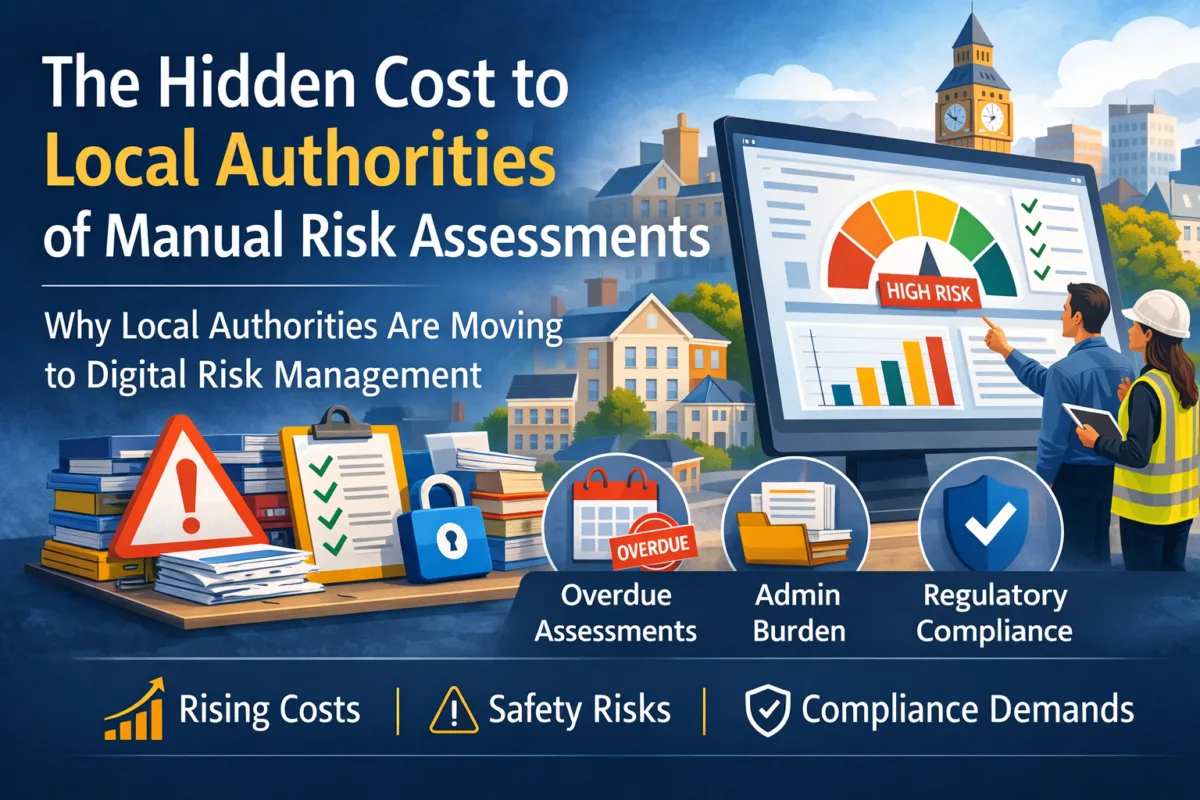
Local authorities manage some of the most complex operational environments in the public sector. From schools and housing to highways and waste services, councils must ensure risks are identified and managed effectively.
However, many organisations still rely on manual risk assessment processes. The following statistics highlight why digital systems are becoming increasingly important.
1. Workplace injuries cost the UK £20.7 billion annually
According to the Health and Safety Executive, workplace injuries and ill health cost the UK economy £20.7 billion each year.
Effective risk management is critical to reducing these costs.
2. 561,000 workers sustained a non-fatal workplace injury in 2022/23
These incidents highlight the importance of robust safety processes across all sectors, including public services.
3. 1.8 million workers suffer from work-related illness
Work-related illness remains one of the largest contributors to workplace absence and productivity loss.
4. The public sector employs more than 5.8 million people in the UK
According to the Office for National Statistics, the public sector workforce represents a significant portion of the UK labour market.
Local authorities are responsible for the safety of large and diverse workforces.
5. Local government employs more than 2 million people
Councils operate across hundreds of services including education, housing, transport, and environmental services.
Each service area introduces unique risk management challenges.
6. Thousands of risk assessments may exist within a single council
Larger local authorities may manage thousands of risk assessments annually across multiple departments and locations.
Tracking these manually can become increasingly complex.
7. Paper systems limit organisational oversight
Manual systems often make it difficult to identify:
• overdue assessments
• incomplete safety reviews
• recurring hazards
This can prevent organisations from identifying risk trends.
8. Manual processes increase administrative workload
Risk assessments often require:
• document completion
• approval workflows
• document storage
• periodic updates
Digital systems can significantly reduce this administrative burden.
9. Compliance documentation must be accessible
Under the Health and Safety at Work etc. Act 1974 and the Management of Health and Safety at Work Regulations 1999, organisations must demonstrate that risks have been assessed and controlled.
Digital systems provide clearer audit trails and documentation.
10. Digital safety platforms are transforming compliance management
Platforms such as Compliance Genie allow organisations to:
• standardise risk assessments
• track review deadlines
• provide real-time safety dashboards
• capture digital approvals
• manage contractor safety
These capabilities help councils improve oversight while reducing manual administration.
Conclusion
As local authorities face increasing operational complexity and financial pressure, improving efficiency in safety management is becoming increasingly important.
Digital risk assessment platforms provide a practical way for councils to modernise compliance processes while improving organisational visibility of risk.